By Miriam Barcenas
Trinity Times Correspondent
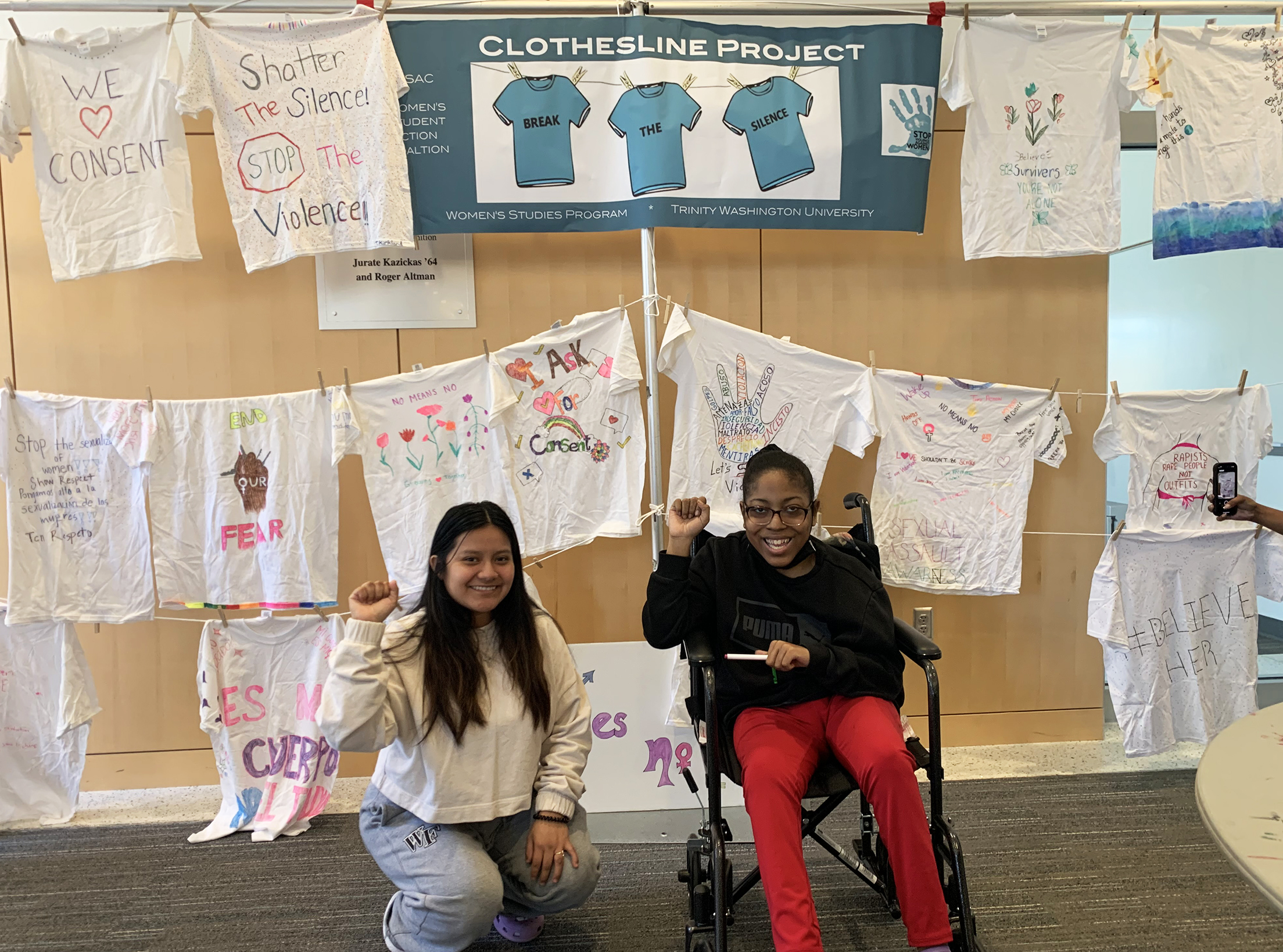
As Myra Strickland watched Trinity Washington University students decorate clothes with anti-women’s violence messages and hang them up on a clothesline, she was haunted by the fact that more than 90% of people with developmental disabilities experience sexual assault.
It’s a stunning statistic issued by the National Organization for Women (NOW), and it hit home to Strickland, a Trinity senior who has a disability herself.
“I feel like all women are vulnerable,” she said, “but as a person with a disability, I believe we need to start being each other’s equalizers, each other’s allies, even in the smallest ways, we can be the change we wish to see.”
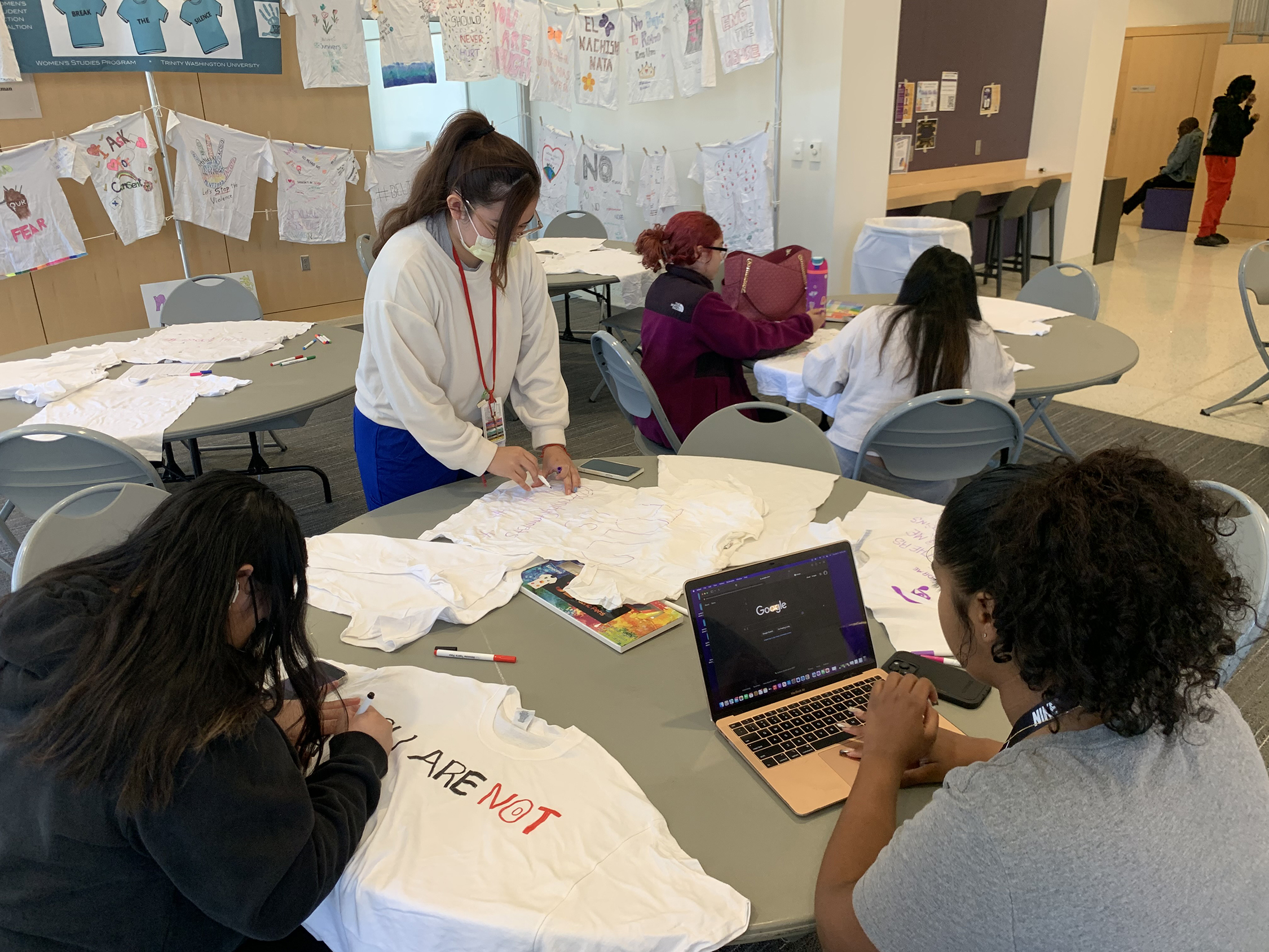
Part of that change was hanging in front of her in the lobby of Trinity’s Payden Academic Center April 4, 2023, as her fellow students decorated clothes with anti-women’s violence messages during the school’s annual Clothesline Project, a national program to increase awareness about violence against women and children.
This year marks the 22nd official anniversary of Sexual Assault Awareness Month (SAAM) in April.
It’s a month-long collective effort bringing awareness and prevention of sexual assault, harassment, and abuse.
The movement’s roots date back to the 1940s and 1950s and civil rights activist Rosa Parks was among the first Black women to bring forth a discussion about sexual assault and domestic violence.
According to NOW, as many as 40% of women with disabilities experience sexual assault or physical violence, along with more than 90% of all people with developmental disabilities who experience sexual assault.
Most cases are unreported because so many sexual assault claims made by disabled victims are ignored or the victim relies on the abuser for care and support.
Trinity’s Women’s Student Action Coalition (WSAC) demonstrated solidarity with sexual assault survivors by holding its annual Clothesline Project.
“This is the first time the Clothesline Project was approved to be done in the Payden Center,” said Noemi Sanchez-Cruz, a Trinity junior. “It is usually held in one of the rooms, but we don’t get as much visibility as having it here. I think it is really important to make space for women to tell and hear each other’s stories.”
Trinity encourages its students, staff and faculty to reach out to the campus health center if they are victims of violence so they can be given the resources they need for help, said Karen Gerlach, the university’s vice president for student affairs.
Intersectionality can play an enormous role in reducing sexual assault and domestic violence, allowing marginalized groups to work together to combat violence, organizers of the Clothesline Project said.
Solidarity among women and marginalized groups is also a way to ensure survivors feel supported.
Brillianto, the publisher for “Ideas That Matter,” posted a blog about solidarity in which they describe its benefits as creating closer communities, reducing conflict, and encouraging people to help each other when needed so everyone can benefit from being part of the same community.
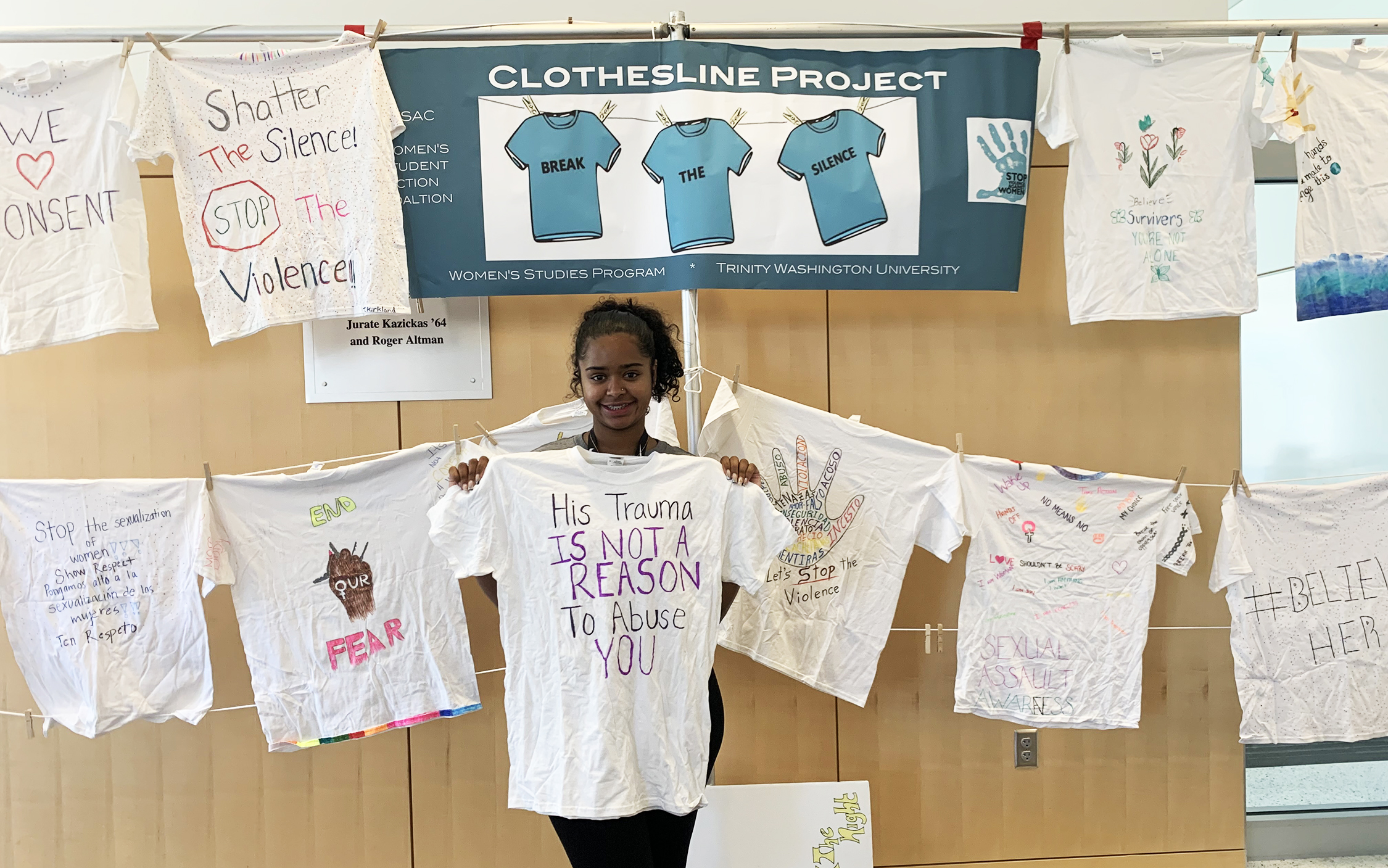
“As a woman of color there is not a lot of support or resources for us,” said Raylin Nunez, a Trinity junior who participated in the university’s 2023 Clothesline Project. “We are here giving hotline numbers and websites where women can go for help. We want to let women know they are not alone and there is a community at Trinity to lean back on if they need anything.”