By Erica Floyd
Trinity Times Correspondent
Speaking up in class should be simple, but for many Black women at Trinity Washington University, it can feel like walking a tightrope — engaged, but careful not to be mislabeled.
As Trinity dual enrollment student London Harvey puts it, there’s a constant pressure to make sure confidence isn’t mistaken for attitude — a tension shaped by the way Black women have been portrayed in the media for decades.
A 2021 survey conducted by the Oprah Winfrey Network and the National Research Group found that 80% of Black women said they wanted to see more complex portrayals of themselves on screen. Yet decades after the first Black women appeared on television, media continue to recycle narrow and aggressive stereotypes that shape how they are perceived on and off the screen.
Kathleen Callahan, a leadership scholar at Christopher Newport University whose peer-reviewed research in 2025 examined identity formation through media representation, says repeated television portrayals shape how viewers internalize power and authority.
Similarly, Eliyah J. Stevenson, whose honors thesis at Eastern Mennonite University focused on college-aged Black women and reality television, finds that media portrayals reinforce expectations about behavior and emotion. Stevenson said that through scripted dramas, reality television and social media influence audiences with misleading portrayals when interpreting emotion, confidence and authority in Black women.
Kimberly Monroe, a Trinity Washington University professor and historian specializing in Africana studies and African American women’s history, said many stereotypes originated during slavery.
“These stereotypes were created to perpetuate a monolith about Black women,” Monroe said.
Enslaved Black women were reduced to simplified caricatures that encouraged and justified their exploitation and control, she told Trinity Times.
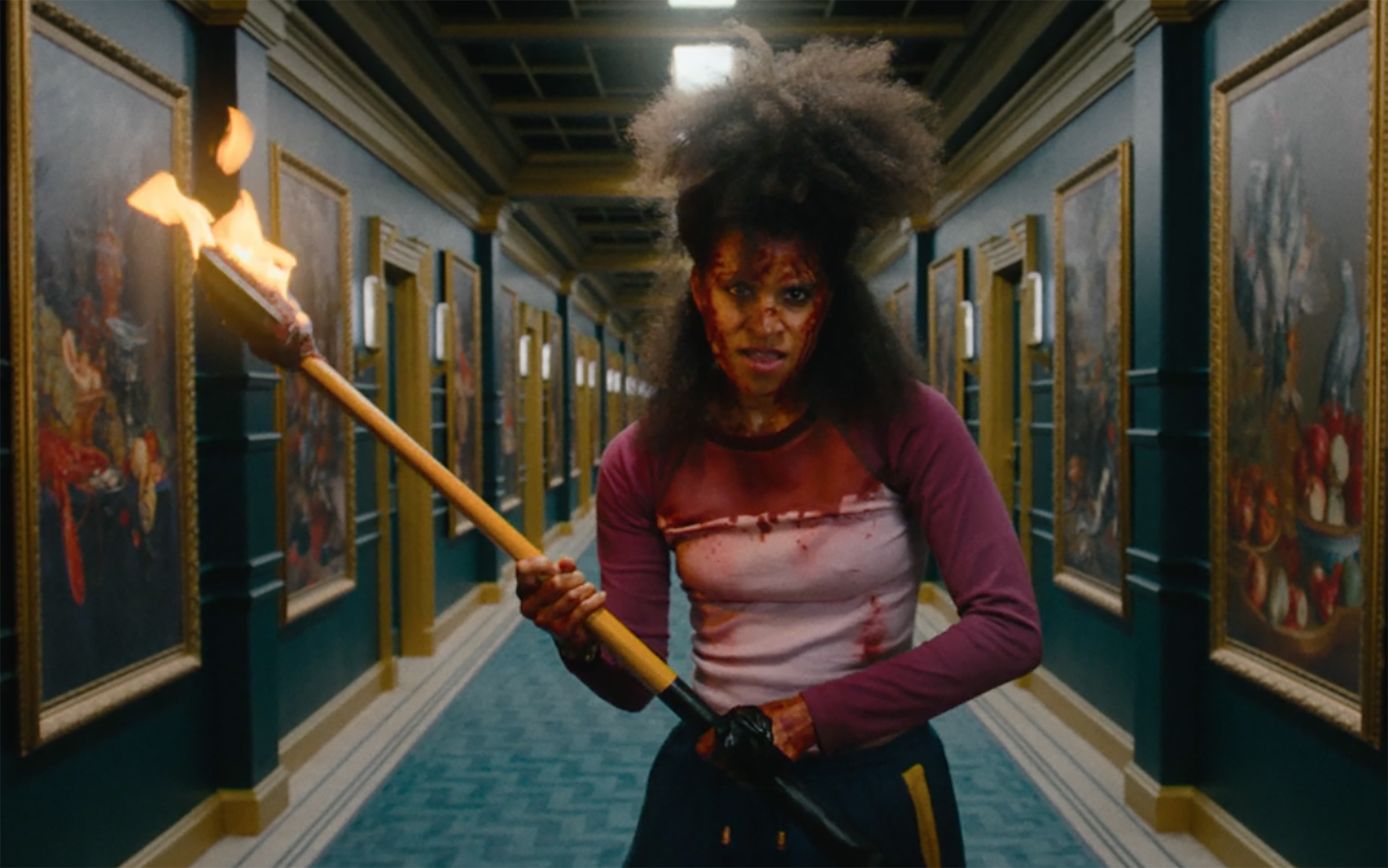
The “Mammy” figure portrays Black women as nurturing, self-sacrificing and desexualized, often existing only to serve others. The “Jezebel” stereotype frames Black women as hypersexual and morally suspect. The “Sapphire” trope, often described as the “angry Black woman,” presents Black women as loud, aggressive and difficult.
Through the rise of film and television, these roles were able to manifest beyond historical books. In early film and television, tropes were reproduced and popularized, becoming illustrious and heavily accepted by audiences.
Monroe points to characters like Hattie McDaniel’s Mammy in “Gone with the Wind” and more recent examples in popular films and television.
“Even today, we still see these same stereotypes recycled,” she said.
Callahan argues that media representation shapes how viewers interpret identity, behavior and social value. Critics claim that Black women are consistently portrayed as aggressive or confrontational, and audiences begin to associate assertiveness with hostility.
Callahan said difficulties emerge as character association makes its way off the screen and impinges into reality, carrying into classrooms, workplaces and everyday interactions.
Kia Joppy, a reading and writing specialist at Trinity who studies Black female identity and storytelling, said late 20th-century television offered limited but evolving portrayals. Shows like “The Jeffersons” and “The Cosby Show” introduced Black women who were not servants and who occupied respected positions within their families. In particular Clair Huxtable, the mother in “The Cosby Show,” represented a professional Black woman who balanced career and family.
“That portrayal was generally positive and hopeful,” Joppy said.
However, Joppy said progress is not linear. Reality television in the early 2000s marked a shift toward exaggerated conflict and aggression.
“These shows perpetuated stereotypes,” she said.
Ashley Hill, whose peer-reviewed graduate research at Virginia Commonwealth University in 2016 examined reality television’s effects on Black college women, and Stevenson, whose honors thesis analyzed the Sapphire stereotype in reality TV, found that Black women are more likely to be positioned as antagonists, reinforcing the idea that aggression is a defining trait.
Hill and Stevenson maintain that in the rise of dramatized media and reality television, Black women have been framed as volatile, combative and disruptive, lacking character depth and complexity. Because reality television is described as being truthful, audiences have learned to interpret these portrayals as real behavior.
Monroe said that for viewers with little real-life interaction with Black women, media become the primary reference point.
“If your only exposure is what you see on television, that’s what you come to believe,” she said.
For students, this can manifest itself in a variety of ways.
Harvey described how media representation influences her confidence.
“When you keep seeing Black women portrayed as loud or difficult, it makes you second guess how you speak up,” she said.
Harvey said she often feels pressure to soften her tone in class discussions to avoid being misread.
“It’s like you’re constantly editing yourself,” she added.
Modern television has introduced more multidimensional portrayals of Black women. Media scholars and industry researchers note that characters in shows like “Insecure” and “Grey’s Anatomy” demonstrate greater emotional nuance, professional competence and vulnerability.
This shift aligns with findings reported in 2021 by Tom Tapp, a journalist for the online entertainment news publication Deadline. Tapp analyzed large-scale industry studies from organizations like the Geena Davis Institute.
Tapp said nuanced, meticulous portrayals can disrupt harmful stereotypes and showcase the complexities of Black women.
Both Monroe and Joppy emphasized that meaningful change requires accountability from media creators and that society needs more cultural competence, historical awareness, and diversity behind the camera.
Great job.
Thank you writing this article! You’ve provided very important insight! Nice work.