By Nayeli Martinez
Trinity Times Correspondent
From sunrise to sunset, Moriah Turner is always walking around the Trinity Washington University campus.
That’s because Turner is a full-time student as a communication major with a minor in gender studies, and – like other students – she holds a job at the university.
Whether she’s on the way to a lecture or on the way to work, she can confidently proclaim that she’s spending most of her time on Trinity’s grounds
“I wanted to be a part of college life, but I also needed a job,” Turner said. “I figured working on campus would be the best way to kind of get the experience of both.”
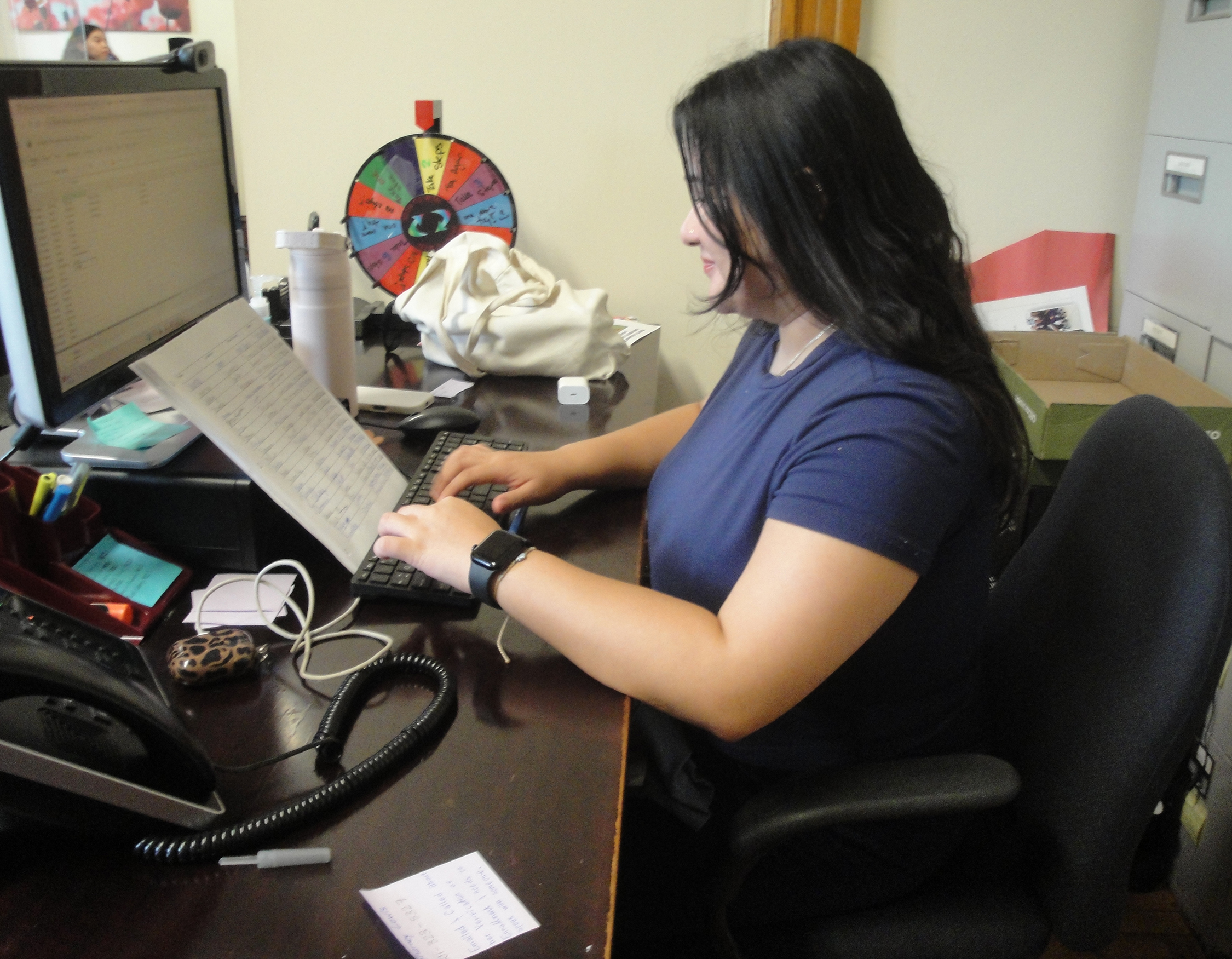
Turner works in Trinity’s financial aid office within Enrollment Services, with her main job serving as an administrative assistant to the financial aid specialists. Her position also gives her the opportunity to work closely with students daily.
“I pick up the phones, I take messages, and ask questions for students,” she told Trinity Times. “I also assist students whenever they’re at the computers, and it’s something that I am knowledgeable to help them with.”
Work study students like Turner spend a lot of time on campus. From sitting in lectures to helping out in their designated office. Having both a job and focusing on studies requires them to balance such a workload.
A growing number of students are employed on campus in a work study or work another job while completing their education. According to a 2026 study on Financial Aid by the Education Data Initiative, about 9.2% of American students complete a federal work study, a federally funded program that provides part-time jobs for students with financial need. While nearly 42% are student workers, who aren’t a part of a federal work study, but hold campus jobs.
From the moment students apply to a work position on campus, they have to keep in mind the workload that is incoming.
“We have job postings that we post from different departments or partners off campus,” said Hanan Adnan, a Human Resources specialist at Trinity, who explained how the application process worked and emphasized the university’s job postings are listed online. “Then we have a certain process that goes step by step about where to send resumes and to review the job postings before applying for at least two positions, if not one.”
The hiring managers in each department then review the student resumes and decide which ones warrant interviews, Adnan said. “If selected and hired, we just have them come in to complete onboarding documents. We also have information on our website as to what to bring to complete the onboarding documents.”
Students are urged to study up on any information available about job listings or the application process to understand what the hiring managers are looking for and what the job entails, Adnan said, adding that they are always welcome to come with questions during the interview if there’s any doubt.
While jobs on campus are sought after for financial gain, students have also discovered other perks that can come with these positions.
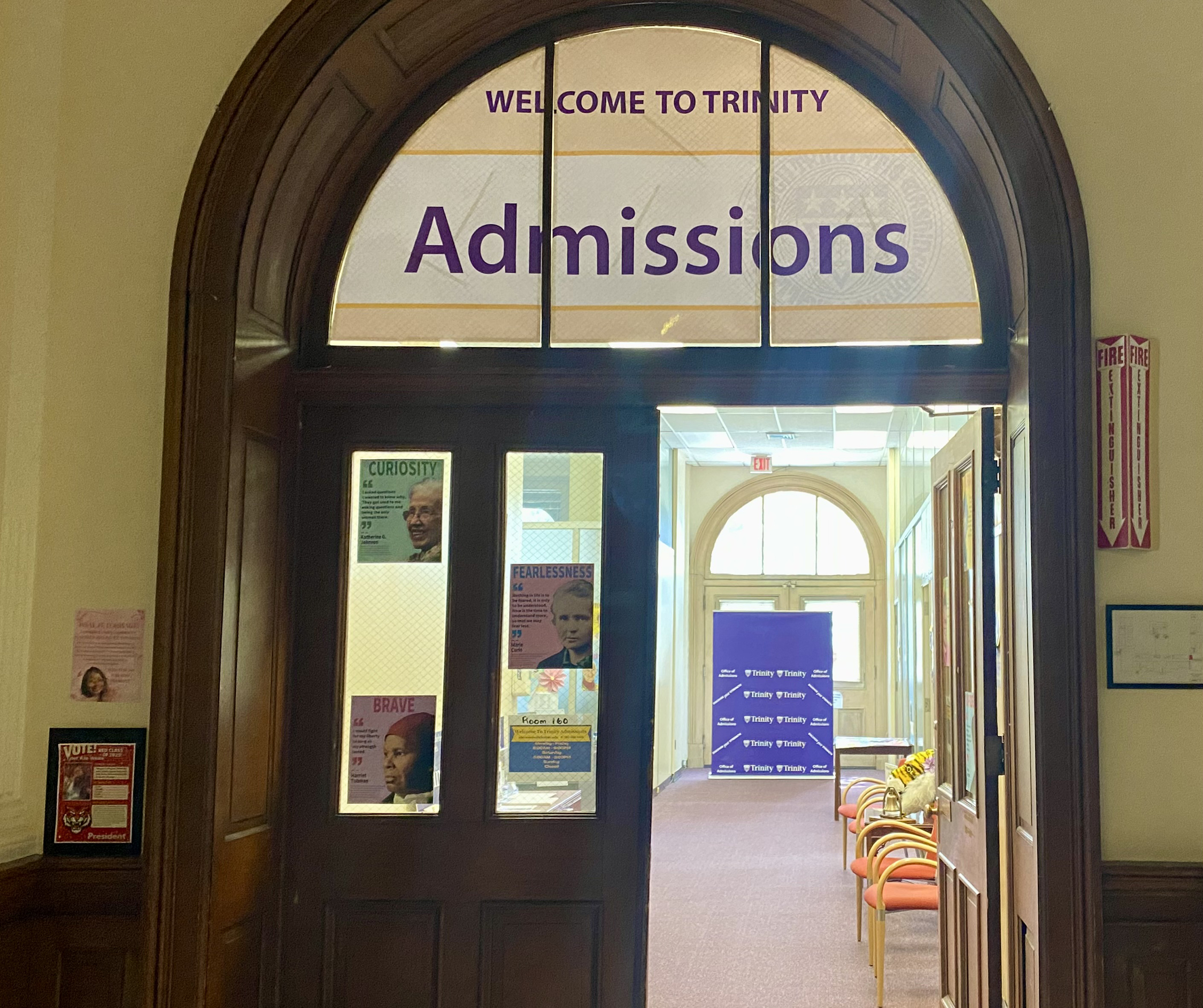
“[The schedule is] very flexible, and you can even do it after classes,” said Aniya Paey, a Trinity senior double majoring in global affairs and history, who works as an ambassador in the university’s admissions department. “I decided to do it before classes. That way, after work, I have the rest of the day off.”
In Paey’s role, she mainly gives tours to middle and high school groups, essentially aiding in the recruiting process on campus.
“It’s a lot of talking, a lot of socializing with people, and also event planning,” she told Trinity Times. “We plan open houses. We also host breakfasts at Trinity, and we even have a block party that we do over the summer. So it’s a lot of interacting with people.”
Flexibility around their class schedules has made working on campus more conducive to being employed while pursuing higher education, something both Turner and Peay said made them grateful for the university job opportunities.
Of course with all these responsibilities, students must find a way to balance their job duties with demanding college class work, especially when the stress level becomes heavier on certain days.
For Turner, her most stressful days are at the beginning of each semester. “I’m taking six classes, and then my schedule changed a few times,” she said. “So I’m having to get used to the new schedule change and the new classes, while trying to get the work in on time.”

That’s why department supervisors make it a goal to create an accommodating environment for their student workers. Supervisors offering flexible scheduling can help students with focus on their education while working.
“My priority when hiring student workers is school comes first,” said Nicole Rouse, assistant director for Trinity’s Center for Student Success, who works closely with Turner. “All of my student workers will know that is what they are primarily here to do.”
Rouse emphasized the importance of education and maintains an understanding that students have many things to manage at once, including school work, homelife and even a social life.
“I will be as flexible as needed,” she said. “If their schedule changes for whatever reason for school or an internship, I will adjust their hours accordingly. I don’t like to give them a hard time about that because they need to understand that I care about school first, and work comes second.”
Environments are a key factor in how a student performs at work. Trinity staff members pride themselves in offering many resources to get student workers through their college experience.
“I would say admissions is a very graceful department,” Peay said. “They’ll give us breaks to study or to do our homework while still working on the clock. I enjoy the admissions department. They’re all lively and create a good atmosphere, and it makes you really want to come to Trinity.”
Overall, Both Turner and Peay have relayed positive experiences in terms of working on campus and interacting with the student body, whether it be with their coworkers or the students they help out.
“We get a lot of different tasks sometimes together, and so we’re learning each other’s systems of how we figure things out,” Turner said.
Despite the stress of working while pursuing a college degree, she is glad to have a strong support system within the office she works in.
Peay is also highly appreciative of the connections her job has brought her.
“It has allowed me to get more involved and also make a plethora of friends too because I’m giving tours to incoming freshmen and with those freshmen, I end up having classes with or seeing around campus,” she said. “It’s allowing me to meet new Trinity sisters.”
That was a very nice article about work study. I first went to Howard University in 1981 and I began doing work study me second year. It was and obviously still is a great way to get an education and earn money while in school.