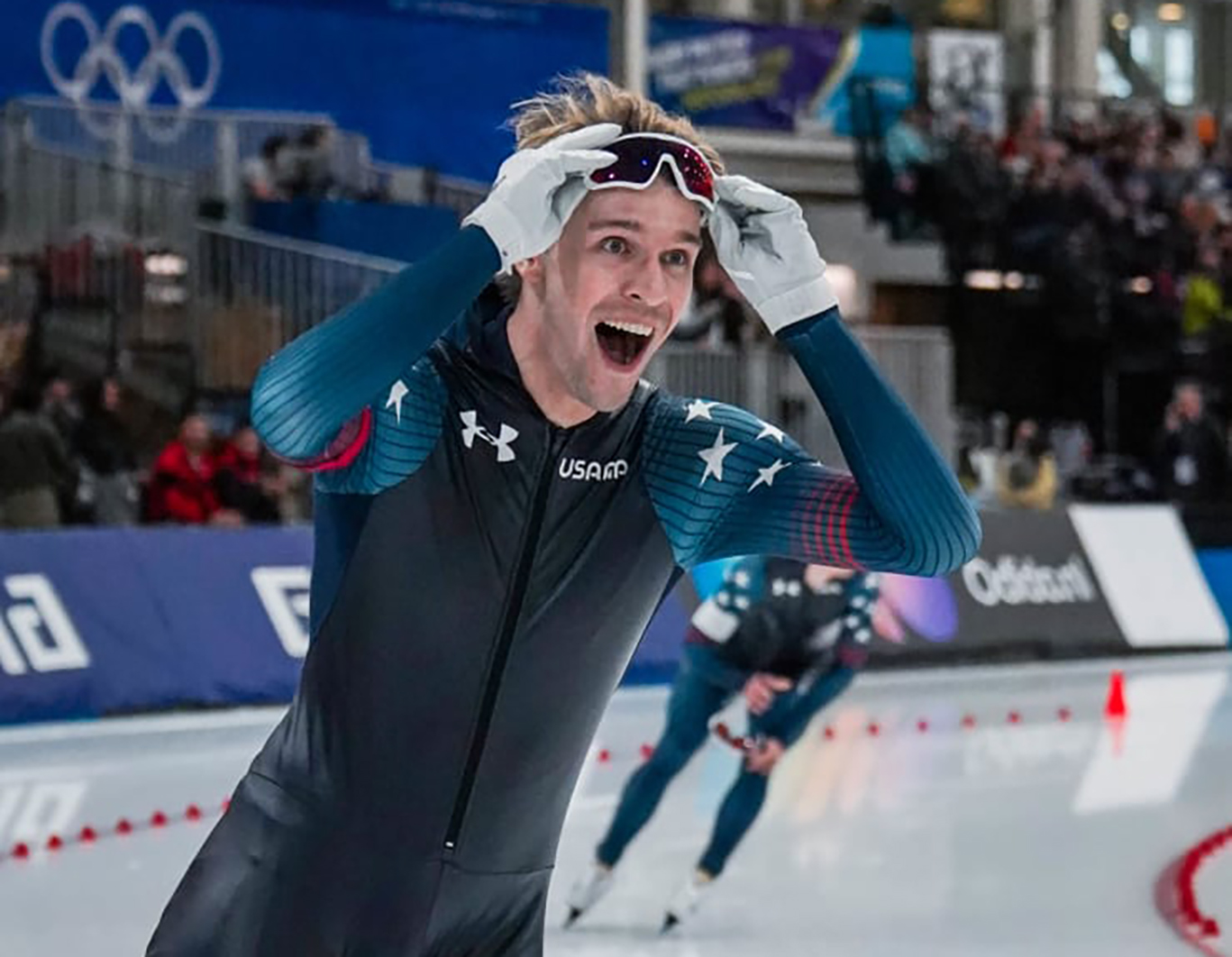
Olympian Speed Skater Conor McDermott-Mostowy reacts after skating 1000 meters in 1:06.91 in 2024, becoming only the fourth American to ever skate that fast. (Trinity Times photo/courtesy Thomas Mostowy) 
This is a 2012 photo of future Olympian Speed Skater Conor McDermott-Mostowy skating at the 12-year-old age group at the Speed Skating National Chamships. (Trinity Times photo/courtesy Thomas Mostowy) 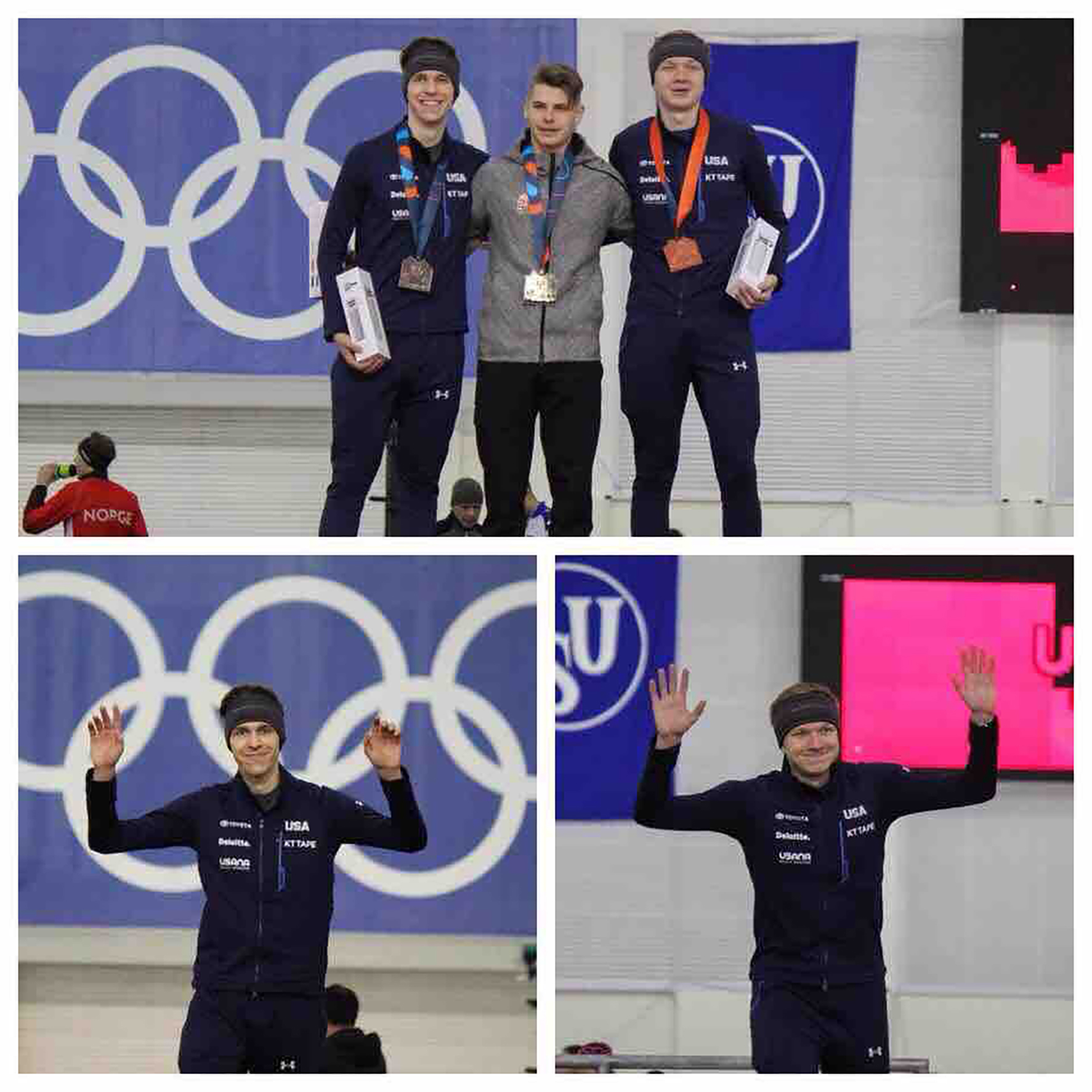
Future Olympian Speed Skater Conor McDermott-Mostowy poses for photos with teammates after winning his first international medal at the Junior World Cup in 2018. (Trinity Times photo/courtesy Thomas Mostowy) 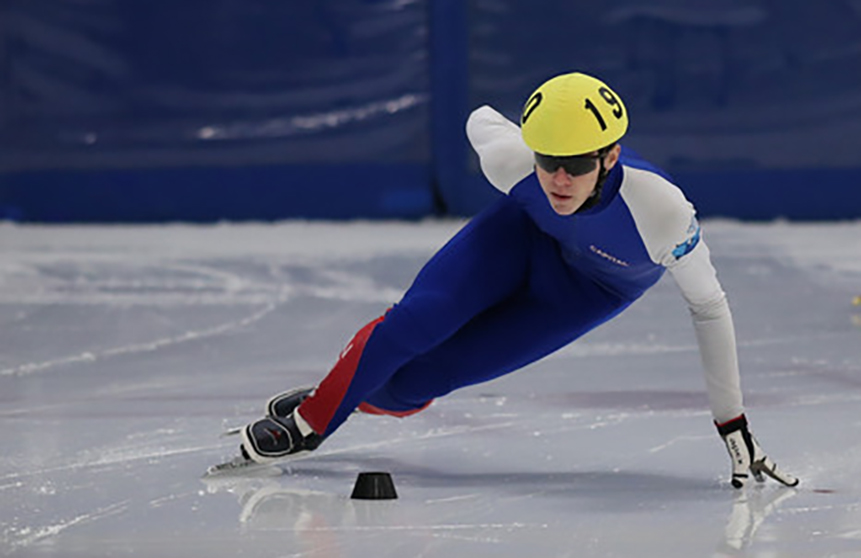
Future Olympian Speed Skater Conor McDermott-Mostowy competes in the 2016 National Championships at the age of 16. (Trinity Times photo/courtesy Thomas Mostowy) 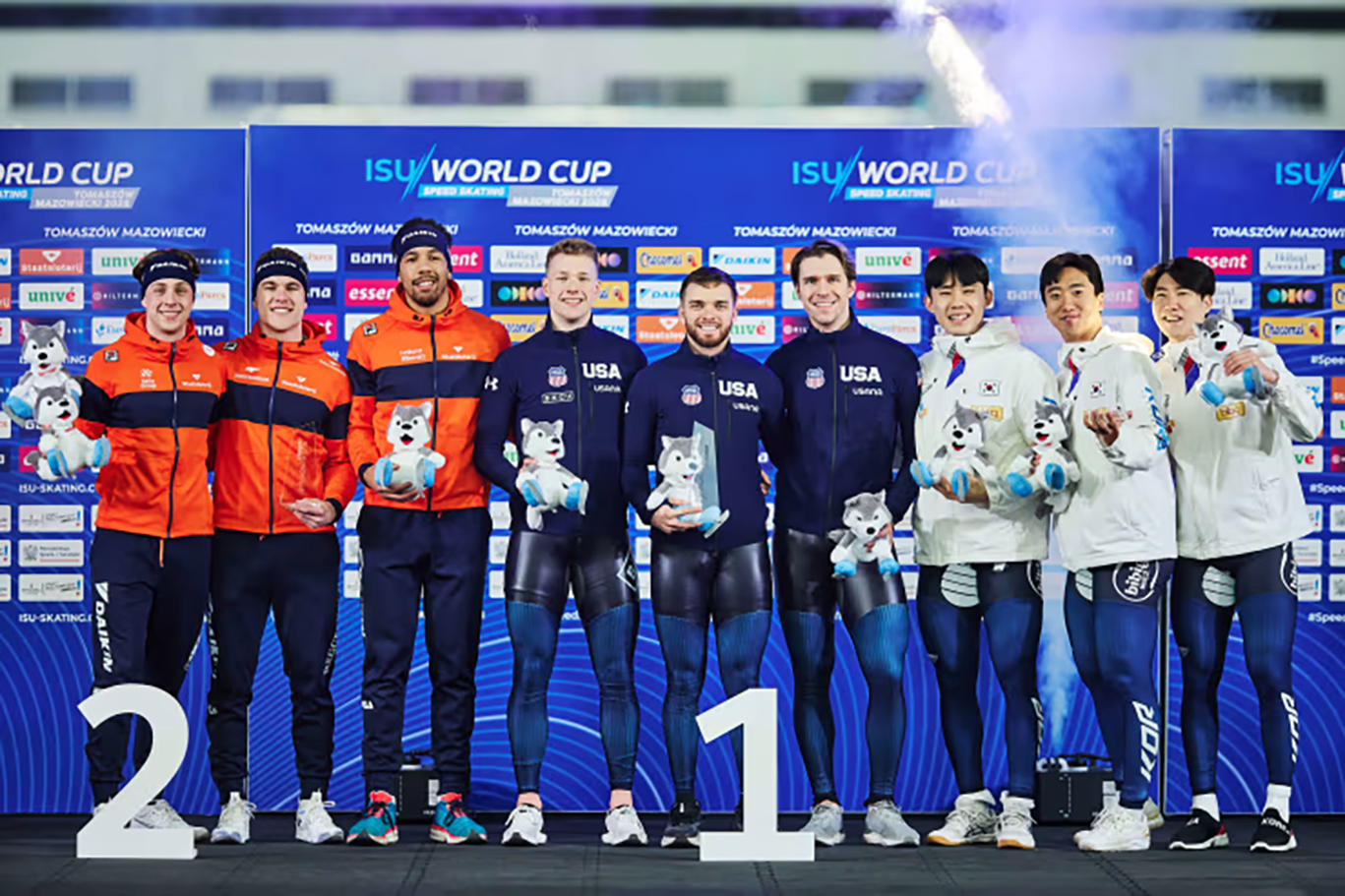
Olympian Speed Skater Conor McDermott-Mostowy, fourth from right, poses with his teammates after winning gold in the ISU World Cup Team Sprint in 2025. (Trinity Times photo/courtesy Thomas Mostowy)
By Sydney Ware
Trinity Times Correspondent
As a companion to this week’s podcast, Trinity Times correspondent Sydney Ware takes us to the front row of the Winter Olympics in Milan for a Q and A with Thomas Mostowy, Trinity Washington University’s Dean of the School of Professional & Graduate Studies. Mostowy’s son, Conor McDermott-Mostowy, placed 9th during his 1000m race in Milan, maintaining his place as the ninth best speedskater in the world.
Can you tell me a bit about the particular event Conor competes in?
Conor is a speedskater, sometimes referred to as “long-track speedskating.”
There are two types of speed skating at the Olympics; long-track where skaters skate in pairs around a 400-meter oval, but basically compete against the clock.
[Whereas] in short-track, skaters compete against each other in a series of heats, with the top two advancing to the next round. The track is set up on a hockey ring and measures 111 meters, so a 1000 meter race is nine laps.
Conor’s specialty is the 1000-meter race. He also skates 500 meters, 1500 meters and on the team pursuit team during World Cup competition, but only three competitors are allowed for each country during the Olympics and Conor was 4th in the other three events at the US trials.
What are some of the most stressful parts of competing?
Conor has said he is more stressed at national competitions, where he is trying to make the international team, than in the international races, where he just hopes to do well. He did admit on Instagram that he felt much more nervous at the Olympics though!
Do you remember when and how your son became interested in speed skating?
My kids learned to skate when they were 2 years old. In my family, skating is like swimming or riding a bike. It’s just something you do as a kid. When [Conor] was in 3rd grade, the canal by the Potomac River froze over. It was President’s Day weekend, so the family was skating on the Canal and a guy skated by on speed skates. Speed skates are unusual in that the blade is attached to the front of the skate, on a hinge, while the back of the blade can release from the boot but then claps back to the boot for the next stride, You can hear the blade as it claps back to the boot (they’re called “clap-skates). Conor took one look at that and said “I want those skates!”
What are some things that went through your mind when you watched him qualify for the Olympics?
Relief. He had been skating so well this season with a handful of top-10 finishes, but you have to perform on that one day under a lot of pressure.
Conor has spoken about the importance of visibility in sports and the power of representation. Do you think his openness as a gay athlete will help other young gay athletes feel more comfortable participating in their sports?
My wife and I are more proud of the man he has become and his visibility and promotion of inclusiveness than we are of his skating accomplishments. His best friends on the team are Erin Jackson, the first black woman to win a gold medal in the winter games, and Brittany Bowe, an out gay athlete herself. Like a lot of other US athletes at these games, he was able to use his platform to get his message across.
What are some of the qualities you see in your son that you think have helped him do so well in his athletic career?
Discipline and perseverance. When he wasn’t a top skater, he kept working at it until he became one of the best in the world. I remember when he was in high school, I would get up at about 8 am on a Saturday to make breakfast and he was already in the living room, hunched over his laptop doing schoolwork. He knew that he had two practices, totaling 4-5 hours each that weekend (plus travel time) and this was the time he could get his schoolwork done, so he did it. He missed out on parties and dances, but did participate in choir and dance as extra-curriculars. He had more self-discipline at 15 than I did at 50.
What were some of the moments you enjoyed most while supporting Conor in Milan?
Hearing his name announced as he went to the start-line for his race! And just the experience of being there – but for a reason, not just a spectator.
As a parent of an athlete, what has it been like to see Conor progress and reach such amazing achievements in his sport?
[Conor] was never a prodigy like a lot of elite athletes – he skated because he liked it. None of us were thinking about the Olympics or international competition.
He lost a lot when he was young, but kept coming back. About the time he was 12 or 13, things seemed to click into place. His motto, which he repeats whenever he is talking to kids, is “a loss is only a failure if you learn nothing from it.”
Follow Conor on Instagram at @conor.mm
He don’t even go here :/