By Tamaria Palmer
Trinity Times Correspondent
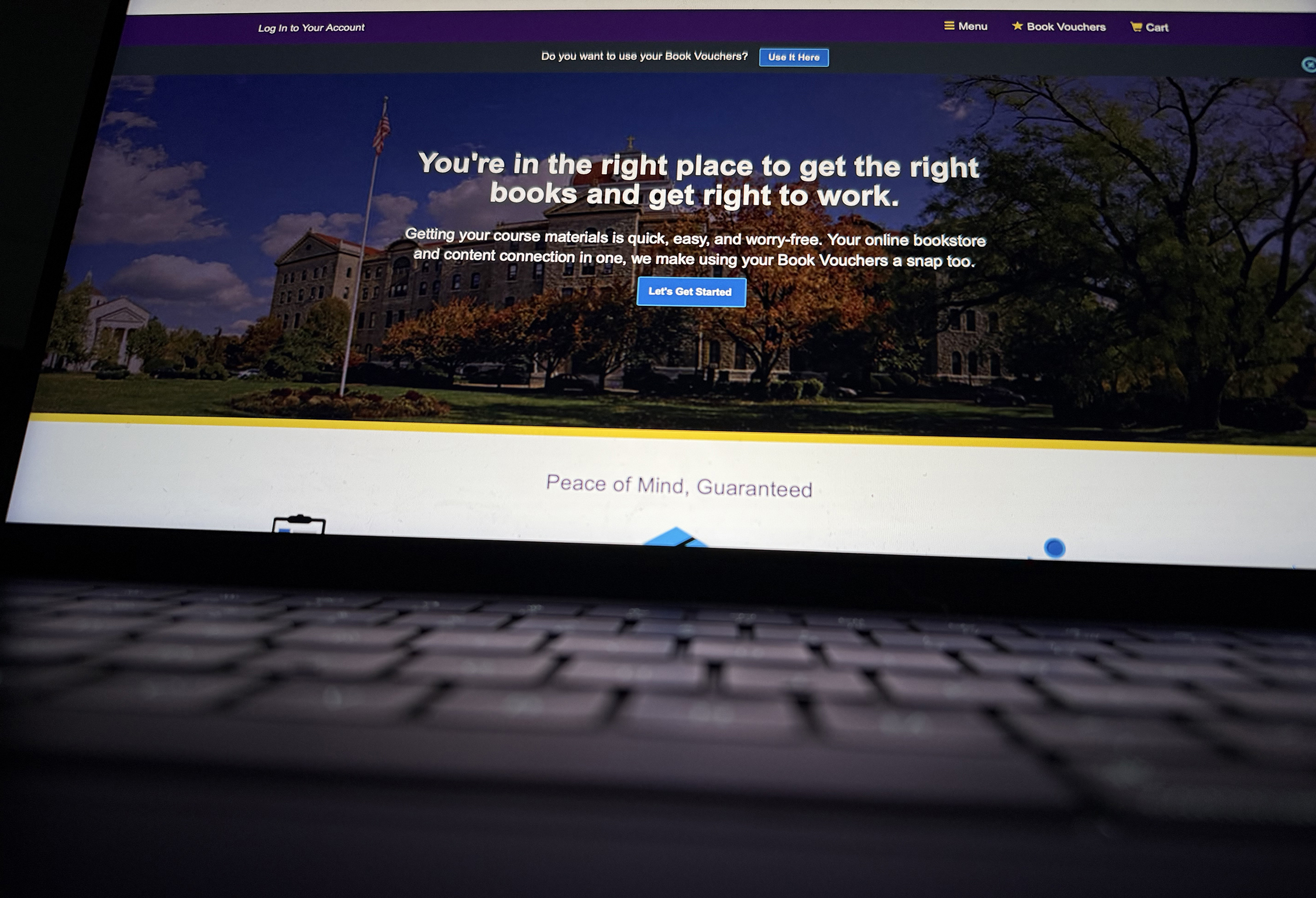
At many universities, students can walk into a campus bookstore and leave the same day with the textbooks and supplies they need. At Trinity Washington University, that option no longer exists.
Without an on-site bookstore, students must rely on an online ordering system, wait for shipping, or travel off campus to obtain required materials. For some, the absence of a physical bookstore is more than an inconvenience – it reshapes the traditional college experience and requires additional planning at the start of each semester.
During the COVID-19 pandemic, bookstore operators were negotiating financial challenges. Trinity’s physical store – once a central location for textbooks, supplies and university merchandise – was replaced with an online-only model.
President Patricia McGuire, who has led Trinity since 1989, said the change was not unique to the university.
“In 2022, coming out of the pandemic, Barnes & Noble told us that they would no longer operate the bookstore on campus,”McGuire wrote in an email interview. “They were losing a great deal of money on the physical bookstore and that was also true for bookstores across the country.”
As online shopping increased nationwide, fewer consumers relied on in-person bookstores for course materials. That broader retail shift made it increasingly difficult for vendors to maintain physical storefronts.
National data reflects that trend. According to CivicScience tracking data, 53% of Americans hold a favorable view of Barnes & Noble, but positive sentiment does not necessarily translate into frequent visits. The same data shows that in May 2022, 59% of respondents did not visit a Barnes & Noble location.
Nearly half of Gen Z consumers reported visiting a physical bookstore two or more times during that same period, a higher rate than older age groups. Although this suggests that younger shoppers still value in-person retail experiences, inconsistent foot traffic has made sustaining brick-and-mortar bookstores financially challenging, particularly on college campuses.
McGuire said the virtual platform offers “excellent pricing for rentals and book returns,” adding that affordability remains a top institutional priority.
The transition also aligned with Trinity’s efforts to reduce educational costs. McGuire said university leadership has focused on expanding open-educational resources, allowing students to access materials at little to no cost when possible.
University apparel and branded merchandise can still be purchased, but only through a Barnes & Noble-operated virtual store. Rather than maintaining large inventory in a physical space on campus, items are produced on demand, increasing operational efficiency while still providing access to university gear.
Although administrators emphasize affordability and efficiency, some students wish the physical bookstore would return.
Hownisha Reed, a 2020 alumna who also worked part time at the university until 2022, recalled when the campus bookstore was fully operational. Reed said the store once served as a convenient, central location for students.
“[It] was located… directly across from the mailroom, making it simple for students to pick up packages and grab required materials in one trip,” Reed said.
During her years at Trinity, she did notice declining student traffic. As a result, the store began closing earlier than usual. It then transitioned entirely online.
Beyond losing some level of convenience, there were broader campus impacts, Reed said. Student workers and staff lost on-campus jobs when the bookstore closed, and there were concerns about relying exclusively on digital systems.
“A computer is not human,” Reed said, noting that in-person staff could quickly identify required textbooks and resolve issues immediately. Technical errors, website outages or ordering mistakes can create additional stress for students preparing for classes.
For current students, like nursing major and transfer student Brenda Cairo do Rego, the online system is both practical and limiting.
While she appreciates the flexibility of shopping digitally, Cairo do Rego told Trinity Times that shipping delays require additional planning. Most textbooks take more than a week to arrive, she said, although more popular reading materials can arrive within two days. “That’s a little bit annoying.”
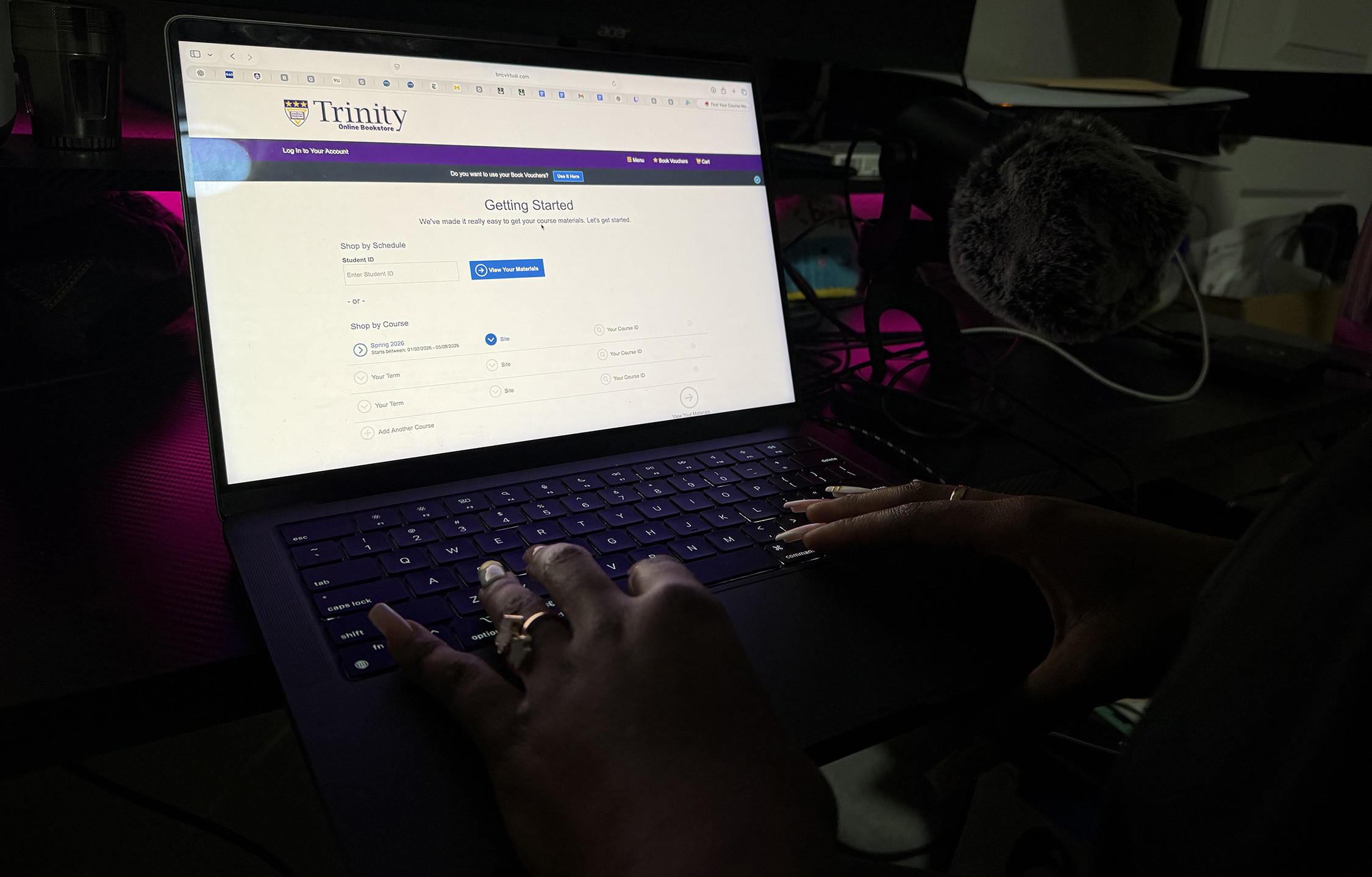
Cairo do Rego recalled an instance when an older lab textbook arrived late, creating a challenge at the start of her course.
Despite occasional delays, Cairo do Rego said she is still able to obtain materials within a reasonable time frame.
“It actually helps me in a way. I can find better pricing [online] rather than just accepting whatever the bookstore on campus is offering,” she said. “It’s convenient because I can just go online when I feel the need to buy books, look for the best pricing, and see when it will be delivered.”
Overall, Cairo do Rego expressed mixed feelings about the transition. While she values the convenience and flexibility of online ordering, she believes something intangible has been lost.
“I think it takes away a little from the experience,” she said. “Actually opening the book helps you understand the necessity for a specific class before you even meet the professor.”