By Lissbeth Garcia-Rodriguez
Trinity Times Correspondent
“They’re bringing drugs, they’re bringing crime, they’re rapists, and some, I assume, are good people,” President Donald Trump said during his 2015 campaign announcement. Statements like this have continued to shape public conversations about immigration in the United States and influence how immigrant communities are perceived.
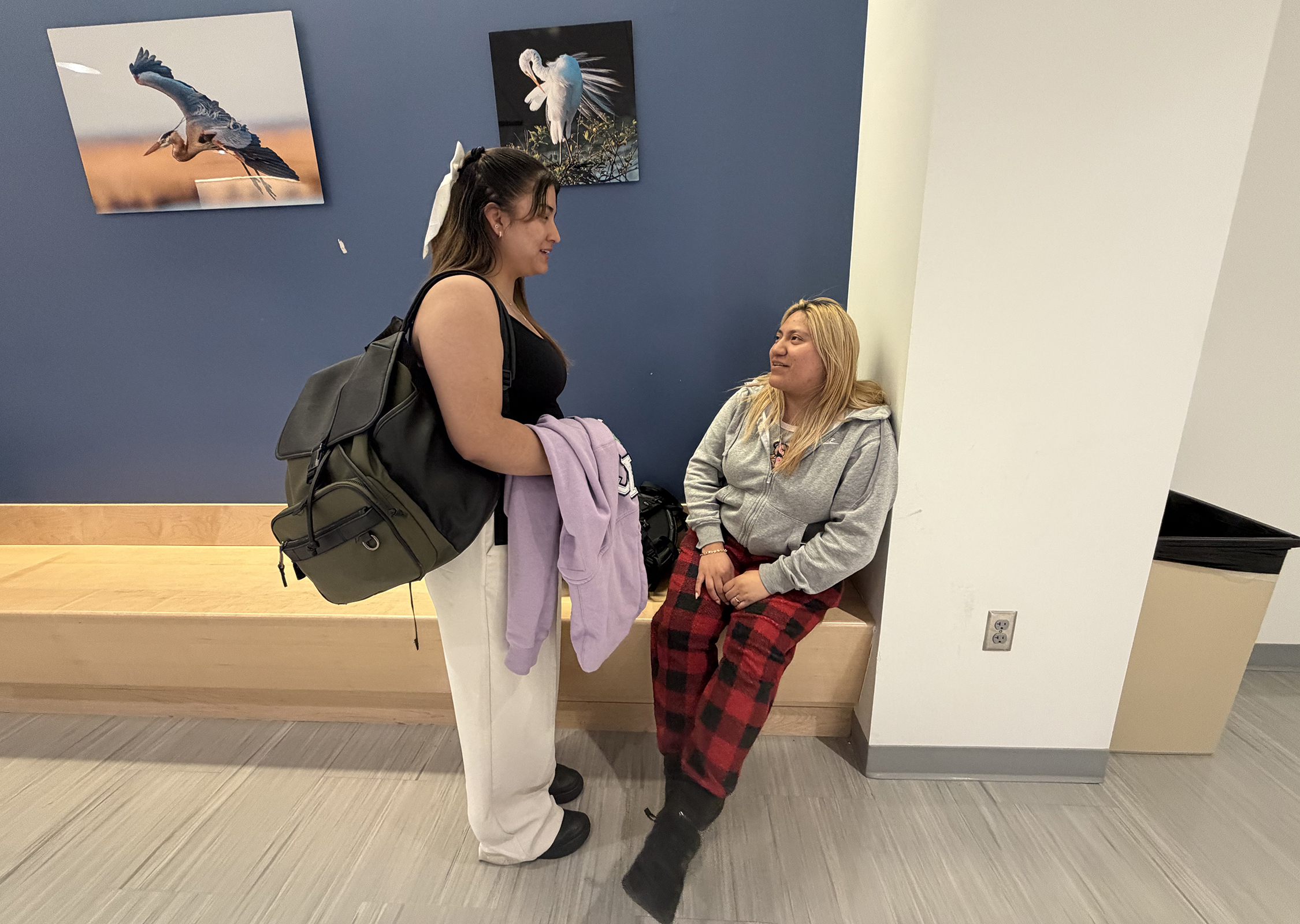
At Trinity Washington University, students and faculty described how these remarks are felt beyond politics and into everyday life. Hellen Cardona-Lara, a freshman criminal justice student, said the impact is both emotional and constant.
“I feel bleak every time the president makes horrible comments towards Latino and Hispanic people,” she said. “Latinos do not come to the United States just because they feel like it; they come because of the dangers of their homeland and want to have the opportunity to start their lives over again. I know the immigration process in America is difficult, but most Latinos come to America with no intention of hurting someone.”
Dulce Martinez-Juarez, a freshman nursing student, said she feels frustrated when immigrants are blamed as a group for the actions of individuals.
“It hurts because my family is made up of immigrants, and he incriminates all Latino people for the actions of a few,” she said. “There are cases of shootings and other crimes, but they don’t always make a big issue out of it unless it’s an immigrant. Meanwhile, other groups can do the same things, and it doesn’t get the same attention.”
Martinez-Juarez added that discrimination is not only political but also personal.
Dulce Menjivar-Pineda, a sophomore nursing student, described an experience on public transportation that stayed with her.
While riding the Metro, she said a woman became hostile after a small accident while paying and began making racist remarks, telling her to “go back to your country” and saying she did not belong in the United States. Menjivar-Pineda said the interaction left her feeling hurt and targeted, even though she was born in the U.S. and her family immigrated from El Salvador.
“I felt bad because I did not immigrate personally, but my parents did,” she said. “We get judged for things we don’t do.”
Political language about immigrants can have broader consequences than many people realize, Trinity Sociology Professor Essence Wynter said.
When immigrants are associated with criminality or danger in public speech, it can reinforce stereotypes and influence how communities are treated, Wynter told Trinity Times.
This kind of framing has existed in U.S. political history before and is often targeted toward specific groups, she said.
“This is a link that has been made in political language for decades against the Black community,” Wynter said. “So it is not a far stretch for politics to switch its target. But the major problem is that a lot of what is being said about immigrants and criminality is untrue.”
The impact of this language depends on where people hear it, she said.
While scholars and researchers may challenge these claims with data, Wynter said many people outside academic spaces may take political statements at face value, especially when they come from a president.
This can shape how people view entire communities and influence everyday interactions, she said.
“When we are having conversations about immigrants, we are really talking about identity and belonging,” Wynter said. “A lot of immigrant students feel torn between wanting to be American and feeling like America doesn’t fully accept them.”
This experience can create a deeper sense of confusion for students who have grown up in the United States but are still told to “go back” to countries they may not know or have never lived in, she said.
“There is no simple ‘go back,'” Wynter said. “For many people, this is the only home they know. Being told to leave creates this feeling of not belonging anywhere.”
Despite these challenges, students at Trinity said they continue to focus on their goals and education while navigating how they are perceived in society. Many described wanting to be treated with respect and not judged based on stereotypes or immigration status.
Understanding this issue requires recognizing the power of language, Wynter said, especially when it comes from leaders.
“When you are in a position of power, your words don’t just stay words,” she said. “They spread, they shape opinions, and they can either build understanding or create harm.”
As a freshman, Cardona-Lara said, “I recommend to people who associate with individuals who believe a lie like ‘Latino people are not hardworking,’ to stop talking to those people because if you keep hanging out with those people, then you’ll start believing that nonsense.”
When national leaders speak about immigration, their words rarely stay in the political arena: they ripple into classrooms, conversations, and everyday encounters, Wynter said.
At Trinity Washington University, students and faculty say those messages shape how immigrant communities are perceived and how individuals experience belonging in the United States.
“they come because of the dangers of their homeland”
Even more ironic, is that in most cases, those dangers have been caused, or exacerbated, by US polices that directly interfered with democratic rule in those countries, resulting in corruption and dangers from both the government and non-government organizations..