By Tyra T. Blackwell
Trinity Times Correspondent
On a weekday afternoon in September, psychology major and commuter student Aniyah Payne waited at one of Trinity Washington University’s shuttle stops, expecting a smooth ride to the Brookland-CUA Metro Station. But as the minutes stretched longer than usual, her patience wore thin.
For Payne, the shuttle is more than just transportation – it determines whether she arrives on time and feels safe traveling between Trinity’s campus and the Metro station. When delays pile up, so does frustration.
“There should be more shuttle buses provided by (Trinity’s Department of Public Safety) DPS,” Payne said, barely hiding her irritation. “The wait times are bad.”
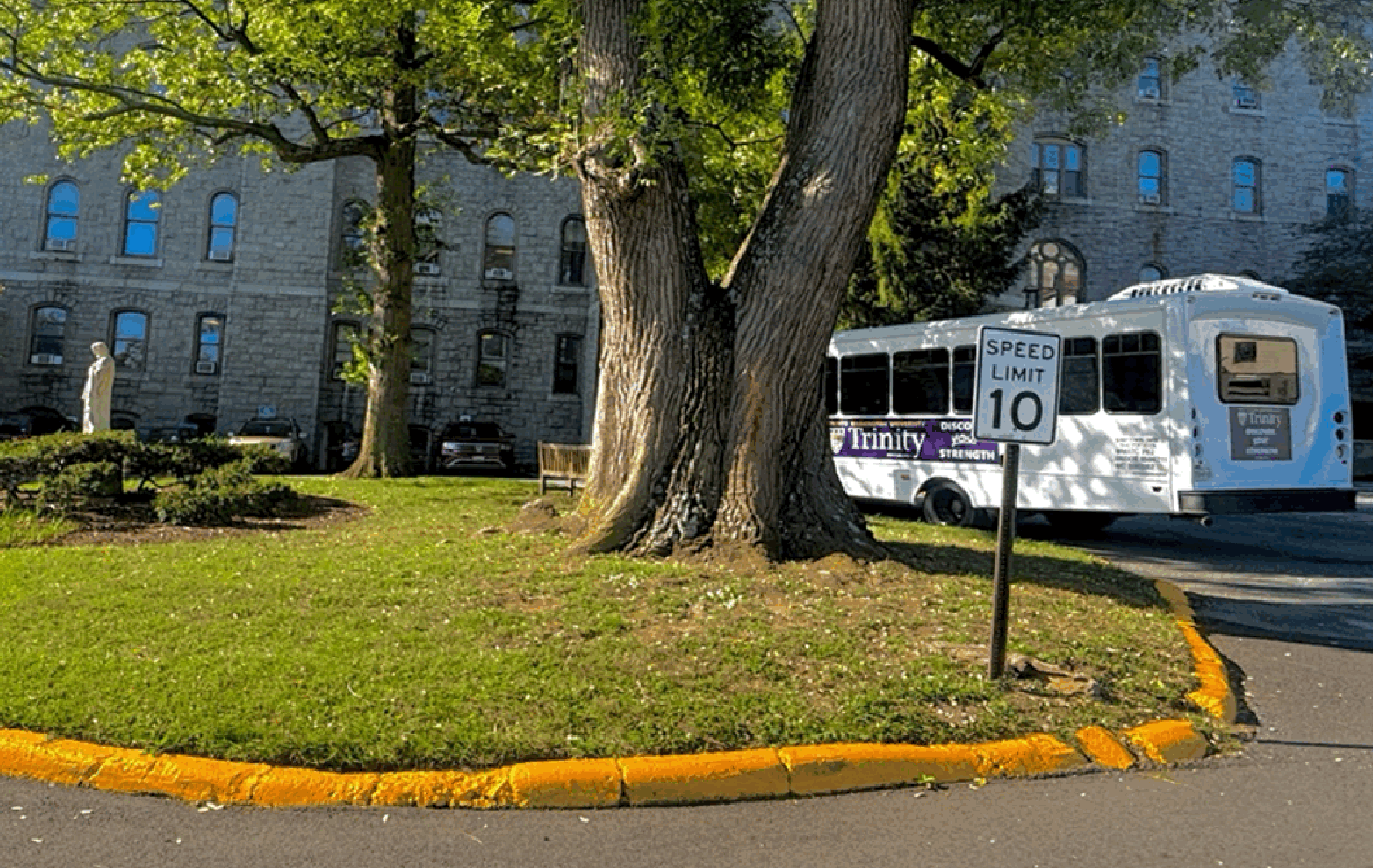
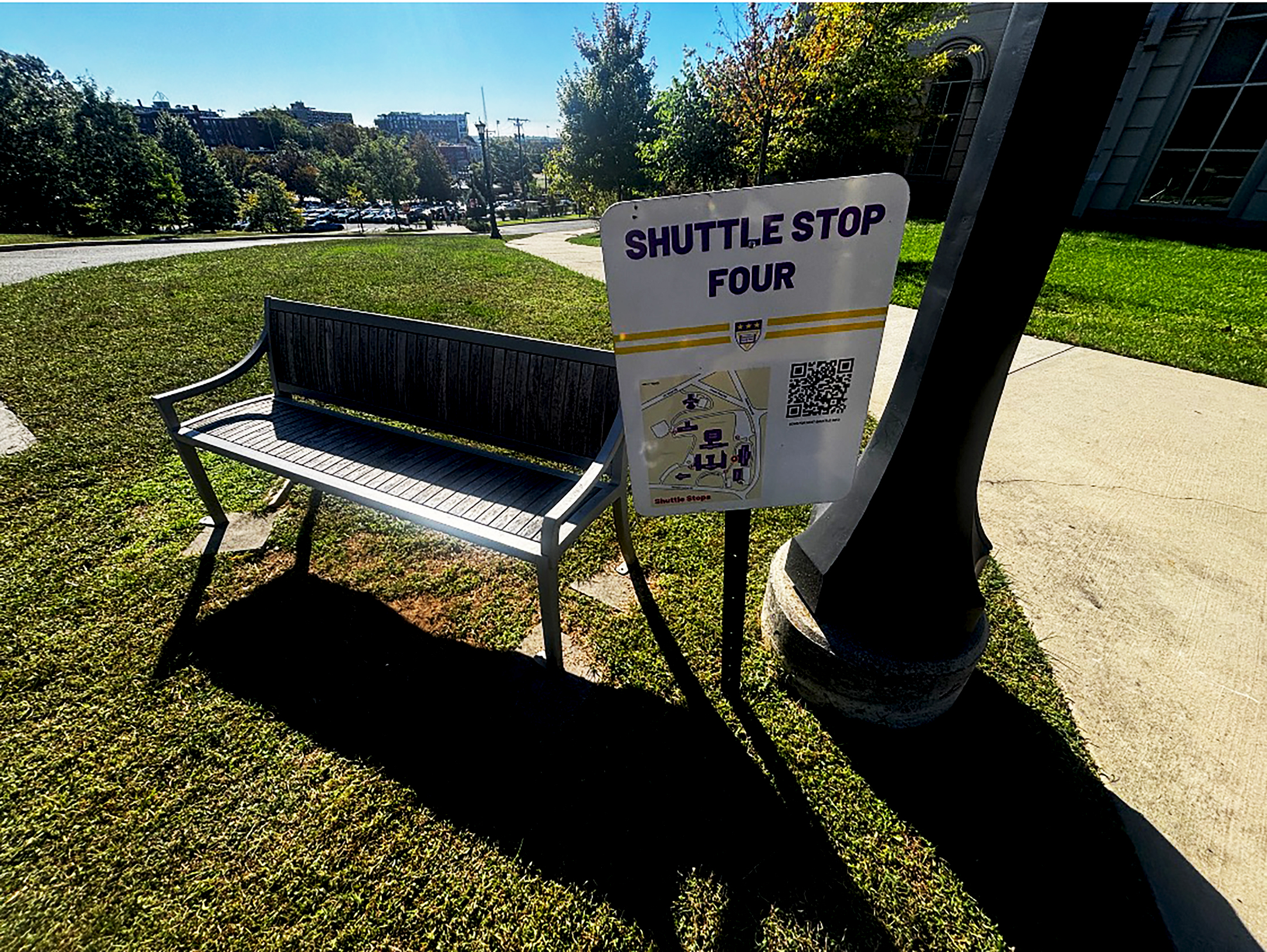
The university’s shuttle system is managed by Student Affairs and overseen by the Department of Public Safety (DPS). According to Trinity’s Public Safety webpage, the shuttle operates Mondays through Fridays 7 a.m.–10 p.m.; Saturdays 7 a.m.–7 p.m. between the campus and the Brookland-CUA Metro Station, with five stops in between, making two loops per hour. Sunday service is not listed on Trinity’s schedule.
The Public Safety webpage notes the restricted hours and advises students to use Metro Bus as an alternative when the shuttle is not available. But some students say that’s not always a safe or practical option, especially for those concerned about increased federal law enforcement and Immigration and Customs Enforcement (ICE) activity in public areas.
Some students told Trinity Times that such enforcement can disrupt the lives of undocumented students, and several have argued that the shuttle’s limited hours, lack of Sunday service and frequent delays make it unreliable.
While many view Trinity’s shuttle as the safer choice, students like Payne believe more should be done to improve service. She suggested expanding shuttle routes to other Metro stations, such as Rhode Island Ave-Brentwood and Fort Totten, and adding an overnight route.
“Maybe we could have one shuttle run 24 hours a day since lots of students have late classes,” Payne said.
Other D.C. universities have adjusted their shuttle schedules to better meet student needs. American University’s AU shuttles run past midnight on weekdays and weekends, according to the school’s website. Georgetown University’s GUTS and SafeRides shuttles connect students to nearby neighborhoods and four Metro stations, providing broader coverage and additional safety measures.
Payne said those comparisons highlight the gaps in Trinity’s transportation system. She often passes the time scrolling on her phone while waiting, resigned to arriving late.
Not all students view Trinity’s shuttle service as inadequate, however. Shahara Coy, a business administration major, said she’s confident about getting around campus and to nearby destinations.
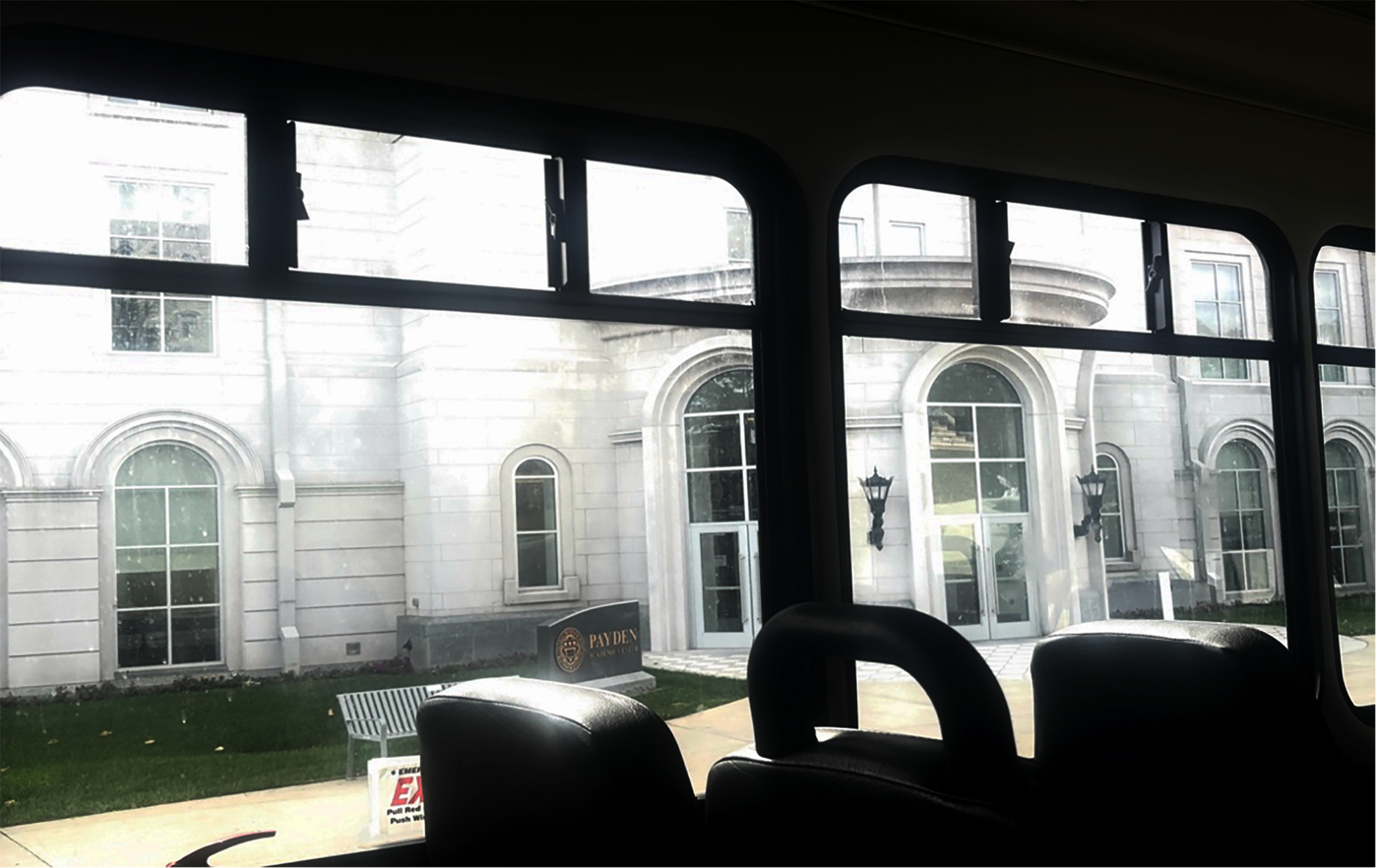
“I use the shuttle during the week as I have classes in Payden and Main Hall,” Coy said.
Trinity’s shuttle service is free for all faculty, staff and students, but a valid Trinity ID must be presented when boarding.
“If we have guests coming and getting on at the Metro, we ask them to identify who they’re going to see,” said Karen Gerlach, vice president for Student Affairs.
That policy ensures reliability and safety by verifying university affiliation, Gerlach said, noting that the shuttle stops at the Cuvilly security booth and the Main Hall loading dock. Those stops, she added, make it less likely for unauthorized individuals or federal authorities to interfere with students’ travel.
Coy said she doesn’t believe the shuttle needs major changes – just one or two improvements.
“The only improvement that should be made by DPS would be the emergency numbers,” she said.
Having clear emergency contact numbers available on or near the shuttle, Coy said, would make it easier to reach Public Safety in the event of a breakdown or other issue.
While Trinity is not part of the Washington Metropolitan Area Transit Authority’s U-Pass program, which allows eligible college students to ride Metro for $1 a day, it does offer a Capital Bikeshare discount – an annual $25 membership available with a campus promo code. Students who rely on Metro, however, must continue purchasing SmarTrip cards at full price, a cost that adds up quickly for commuters.
Trinity encourages students to share feedback and make frequent use of the shuttle to demonstrate demand for the service. Still, there are currently no plans to expand shuttle hours or add another bus, Gerlach told Trinity Times.
That could change, she said, if demand increases. “Students can email me, or email Chief (Andrea) Glascoe, who oversees Public Safety.”
Back at the shuttle stop, Payne watches the minutes pass – wishing for what she believes would be better, safer transportation for Trinity students.
For those who rely on the service, the shuttle’s limitations may seem like more than just lost time – they test students’ patience and balance between campus and commuter life.
I agree—the shuttle bus should serve additional stations, not just Brookland. Recently, I’ve had to wait up to 30 minutes for the shuttle. I take afternoon classes at Payden, and it gets dark and cold, which makes waiting feel unsafe. There was one day when I waited the full 30 minutes, and the shuttle driver passed right by me. I then had no choice but to take the Metro bus and wait another 15 minutes after already waiting so long for the shuttle.
Tyra Blackwell thank you for your efforts to acknowledge this very important circumstance.