By Anette Perez
Trinity Times Correspondent
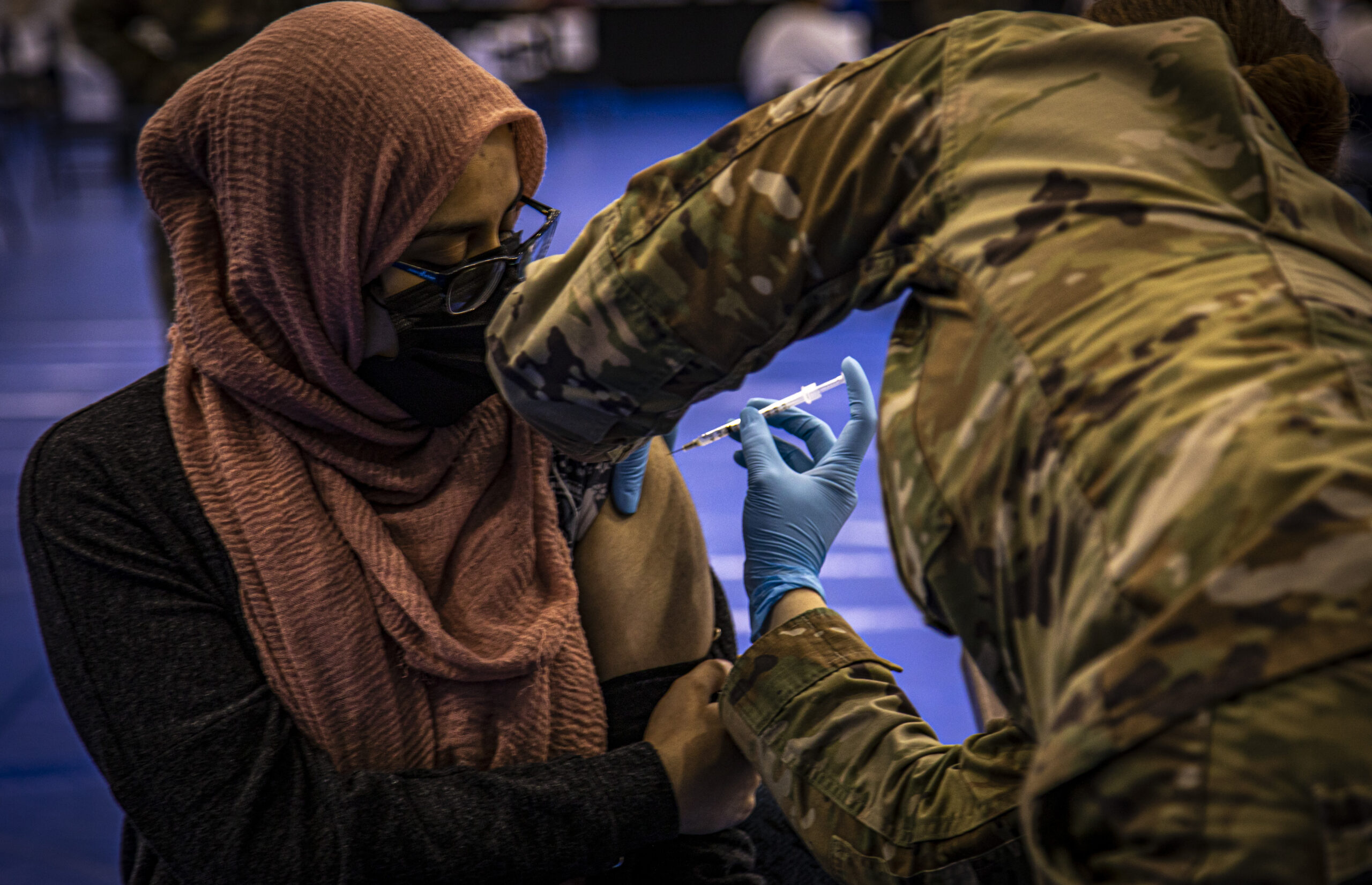
Though vaccines have been a healthcare triumph since their introduction in the 18th century, recent politics surrounding approved immunizations have escalated skepticism, prompting Trinity officials to address the topic with an April 9 event.
Trinity Washington University will host a public viewing of the documentary film Shot in the Arm at 1:30 p.m. in Room 104 of the Payden Academic Center, followed by a question-and-answer session as part of the Campus Conversations series on vaccines.
“It’s an important topic for the university to focus on, especially given the current political moment in the United States,” said Fernanda Rivas, a senior majoring in business administration.
“I think a lot of people are misinformed on vaccines, and they feel scared to get them, or they think something will happen to them or their kids especially,” Rivas told Trinity Times. “I know a lot of people who are very wary about getting vaccines.”
The appointment of Robert F. Kennedy Jr. — who has a long history of anti-vaccine activism — as the 26th U.S. Secretary of Health and Human Services has alarmed healthcare professionals nationwide, who fear it will further reduce the number of people receiving vaccines.
This concern was one of the reasons why Trinity Global Affairs Professor James Stoker and the university’s Program Director for Public Health and Health Services, Nicole Betschman, wanted the school to host the vaccine event.
“With RFK Jr. being the head of HHS, I feel that it’s going to really make our health system decline because people are going to question whether or not the information is going to be true,” Betschman said.
“It’s very easy for individuals who are not aware of all this research to look at something like a vaccine and think, ‘Well, I’m not going into a clinic where someone’s going to stick a needle in my arm and they’re going to put something into my body that I don’t fully understand,'” Stoker said.
This past March marked five years since the World Health Organization (WHO) declared COVID-19 a global pandemic. The health emergency, which lasted from March 2020 to early 2023, resulted in approximately 7 million deaths worldwide.
In December 2020, Pfizer-BioNTech became the first COVID-19 vaccine to receive emergency use authorization from the U.S. Food and Drug Administration (FDA).
Since then, extensive research has been conducted by experts like the National Center for Biotechnology Information (NCBI), which found that COVID-19 vaccines helped prevent an estimated 14.4 million deaths based on the current global death count. Despite the evidence offered by the NCBI and other experts, vaccine hesitancy continues to persist.
Several Trinity students told Trinity Times they know at least one vaccine-hesitant person.
Trinity student Katherine Ramirez, a strong proponent of vaccines, trusts healthcare providers when they say immunizations are in place to protect everyone.
Vaccine hesitation has existed since the development of the first vaccine for smallpox in the 1790s.
However, in the past two centuries, medical professionals have consistently communicated that vaccines not only protect the individual but also safeguard those around them.
Vaccines work by introducing inactive germs of a virus into the body to help the immune system recognize and fight off the microorganisms without causing illness. They train the immune system to create antibodies and build resistance to viruses. After vaccination, the immune system remembers the disease and can quickly fight and destroy it before symptoms appear.
The immune response to vaccination may cause tiredness and discomfort for a day or two, but the resulting protection is long-term, sometimes lasting a lifetime, according to accredited health researchers.
Science, however, is often baffling to people, which is why vaccine skepticism persists, Stoker said.
“With many scientific matters, individuals often draw the conclusion that no one understands it, when, in fact, people do understand vaccines really very well,” he said.
Skepticism often stems from misinformation, such as the debunked theory that vaccines cause autism, which was previously promoted by RFK Jr.
President Donald Trump also has a history of spreading anti-vaccine rhetoric and encouraging his supporters to follow similar beliefs.
In 2021, Kennedy referred to the COVID-19 vaccine as the “deadliest vaccine ever made,” alarming many of his followers.
Despite the Trump administration launching Operation Warp Speed to develop the COVID-19 vaccine in record time, Trump has implied that vaccines should not be mandated and are unsafe, using social media posts to spread this message. He also refused to televise his own COVID-19 vaccination.
When public figures cast doubt on vaccines, a segment of the population is persuaded and spreads these beliefs online. As a result, social media and internet search results can propagate myths about vaccine safety, efficacy, and long-term effects.
Because of the overwhelming misinformation online, filtering reliable information has become difficult, making it harder for people to find trustworthy sources, Stoker said.
Religious and cultural beliefs are also often cited by individuals less likely to get vaccinated, according to a 2022 report by the NCBI.
The turmoil surrounding drastic cuts to the federal workforce and the Trump administration’s push to strip government websites of vaccine information and references to diversity, equity, and inclusion (DEI) has raised concerns among U.S. healthcare professionals that vaccine skepticism will continue to grow.
Recent outbreaks of measles in 20 U.S. states are largely attributed to a drop in vaccine coverage among U.S. kindergartners, which decreased from 95.2% during the 2019–2020 school year to 92.7% in the 2023–2024 school year, leaving approximately 280,000 kindergartners at risk during the 2023–2024 school year, according to a March 28, 2025, report from the U.S. Centers for Disease Control and Prevention.
Professors on campus, especially in the Nursing and Health Professions fields, have resources ready to share with any student seeking trustworthy information. The campus Health and Wellness Center is also available for students to learn about vaccines, what they do, and where to get them, Betschman said.
The American Public Health Association is another valuable resource for individuals seeking information on vaccines, she said.
The documentary Shot in the Arm, being shown at Trinity on April 9, explores vaccine hesitancy both historically and in today’s context.
“People need to be educated enough to understand the research that lies behind government decisions and scientific knowledge,” Stoker said. “When they don’t have the background to do that, that becomes a real problem.”