By Erica Caraway
Trinity Times Correspondent
At Trinity Washington University, journalism students are not just learning theory in the classroom — they are practicing what it means to be journalists through hands-on reporting, writing and multimedia storytelling.
Across the Journalism and Media Studies program, faculty members say the goal is to prepare students for real newsroom environments by giving them experience that mirrors professional media work before graduation.
A Program Built on Real Journalism
The Journalism and Media Studies program underwent major changes in 2023 to strengthen that hands-on focus, said journalism professor Chaz Muth, who serves as both chair of the Journalism and Media Studies program and Trinity’s newsroom director. One of the biggest shifts was building a new state-of-the-art digital newsroom on campus and relaunching Trinity Times as a digital publication.
“Before that, there was no student news organization operating,” Muth told Trinity Times. “Students were learning journalism theory, which of course they must do, but there was no outlet for publishable work that meets journalistic standards.”
With funding from a grant provided by the Evelyn Y. Davis Foundation in 2022, the university built a multimedia newsroom, reestablished Trinity Times after a 13-year absence and expanded its digital journalism offerings, including podcasting, video storytelling and broadcast-style news production.
“We developed classes where students produce news articles, podcasts, video stories, and digital content for a real audience,” Muth said. “Everything is intended for publication on a real platform with real journalistic standards.”
He added that students in the Journalism and Media Studies program take classes that function as part of a professional news organization, operating more like working journalists than traditional college students.
“Basically, you all become staff members while you’re learning,” he said.
Muth emphasized that the structure is designed to prepare students for careers in journalism.
“It’s difficult to become a journalist by just studying it,” he said. “You become a journalist by doing it.”
Hands-On Learning in the Classroom
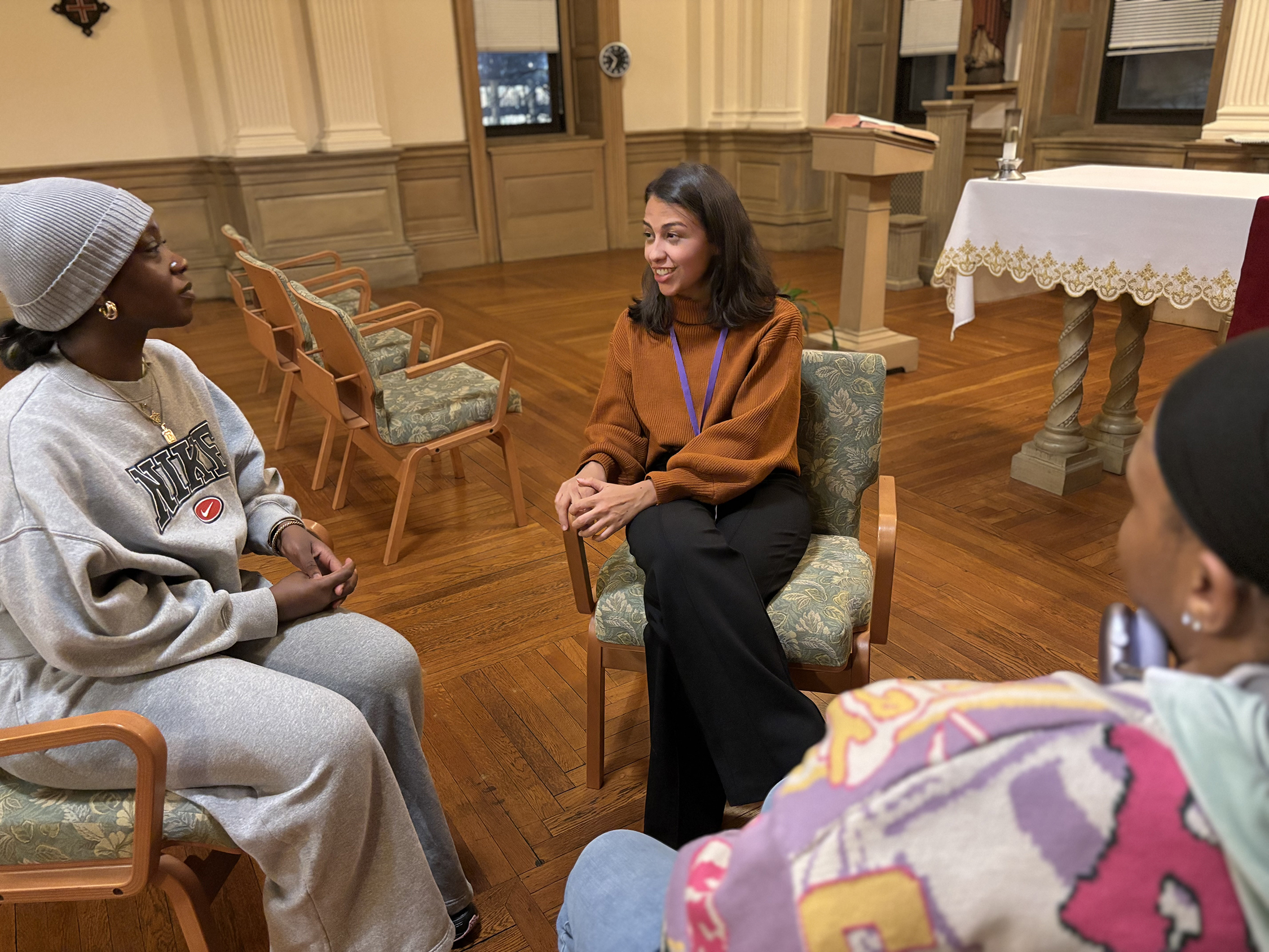
The approach is intentionally practical, focusing on real reporting experience, said Joshua Romney, an adjunct professor in the program.
“Journalism is just one of those things that you learn by doing,” Romney said. “There’s really no substitute for getting out there and doing it.”
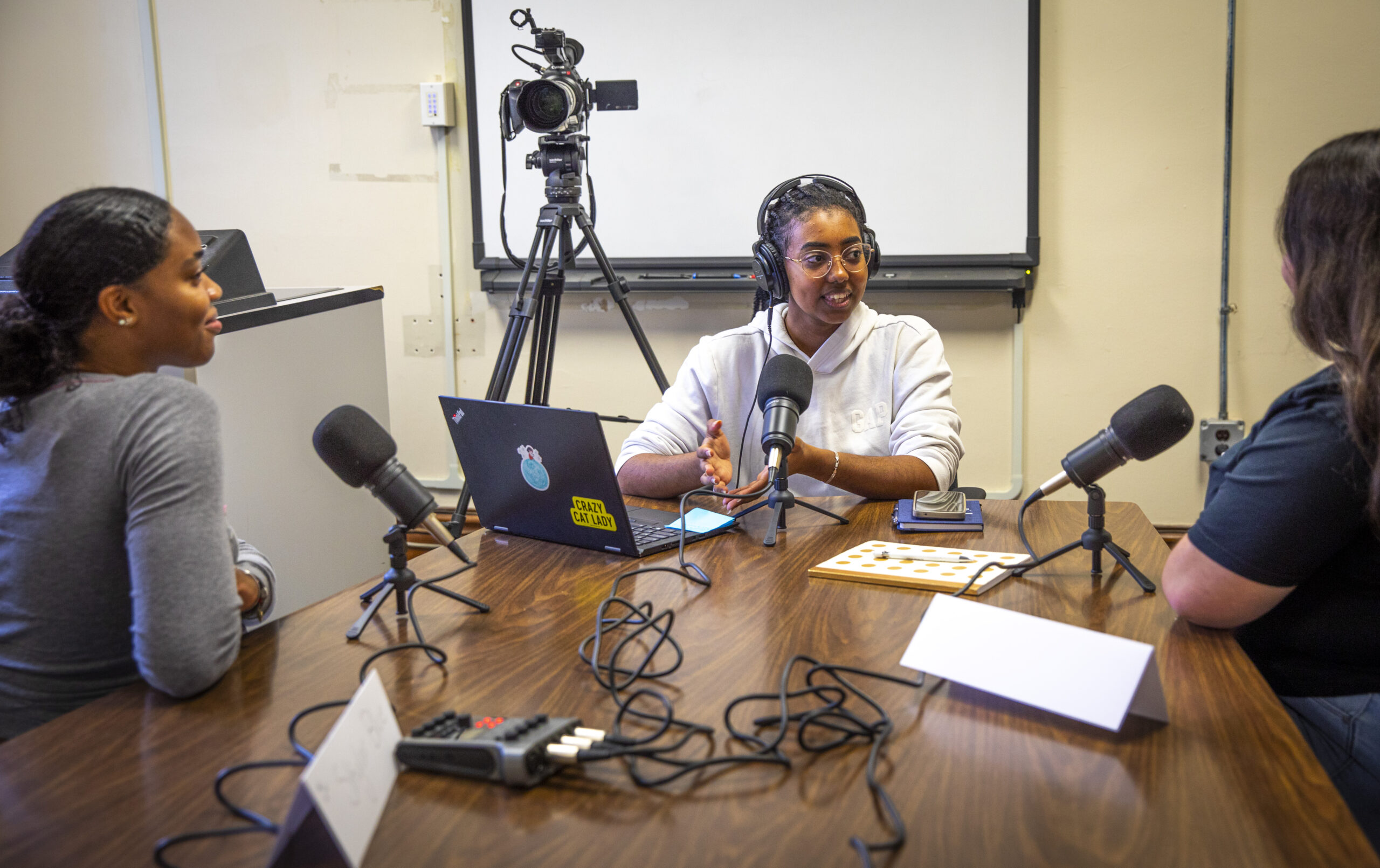
In classes such as podcasting and audio journalism, students quickly move from learning techniques to producing real content.
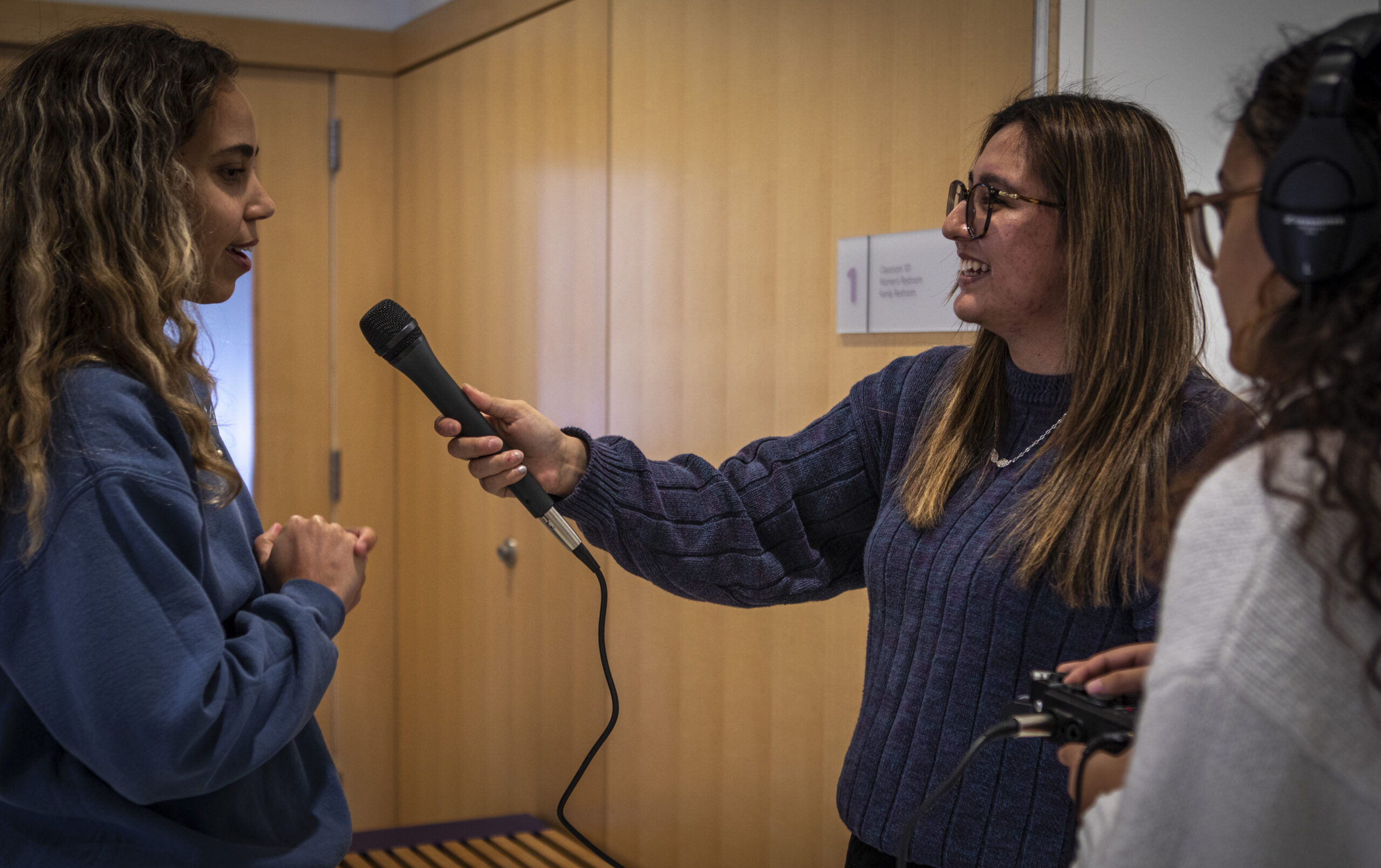
“We have a crash course in on-location sound recording,” Romney said. “Students are expected to go out with microphones, record interviews, gather sound, and start editing right away.”
He added that this type of training reflects what modern newsrooms expect.
“If you can walk into an interview with skills in recording, editing, and social media,” Romney said, “that gives you a huge advantage.”
He also pointed to how journalism has evolved with digital media.
“One of the real powers of podcasting is that listeners feel like they’re getting an intimate, real connection,” Romney said.
Inside the Student Newsroom
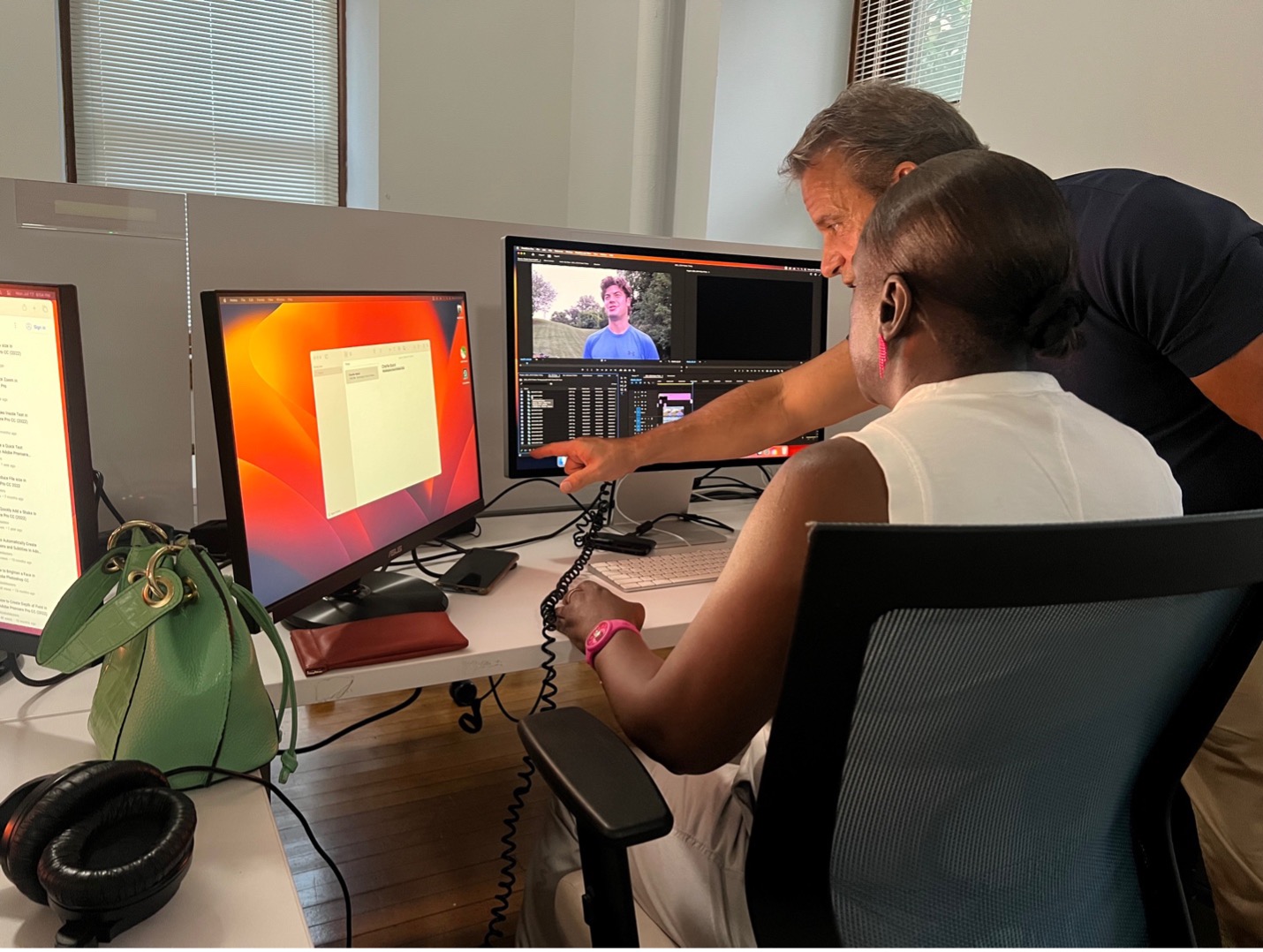
Working on the publication gives students direct experience with the real process behind publishing stories across multiple digital platforms, said Saron Gebereegziabhier, managing editor of Trinity Times, whose main beat is STEM, or science, technology, engineering and mathematics.
“Students learn how to report, interview, revise, meet deadlines, and work as part of a team,” Gebereegziabhier said. “They also see that journalism is not just writing a story and turning it in.”
Student journalists working for Trinity Times — whether for a class or as part of the extracurricular staff — quickly learn that producing stories requires planning, communication, editing and accuracy before anything reaches the public, Gebereegziabhier said.
Students gain strong writing, reporting, interviewing and editing skills while also learning how to collaborate with editors and other writers, she added.
Gebereegziabhier won nine collegiate awards from the Catholic Media Association in 2026, including a first-place award for Best Multimedia or Digital Storytelling and a third-place honor for Student Journalist of the Year.
“Because publication also involves preparing stories for the website, students gain a better understanding of digital publishing and the importance of having all supporting materials ready for an audience,” she said.
She believes Trinity Times mirrors many aspects of a professional newsroom.
“There are deadlines, story development, revisions, and teamwork involved, which are all part of a real newsroom environment,” she said. “Students are writing for a public audience, not just for a class grade.”
At the same time, she said the student newsroom allows room for learning and mentorship.
“That is one of its strengths, because students get real experience while still being supported as they grow,” Gebereegziabhier said.
One challenge many students face is learning the difference between academic writing and journalistic writing.
“Many students are used to essays, but journalism requires a clearer, more direct style,” she said.
Confidence can also be a challenge when students begin interviewing sources or asking follow-up questions, Gebereegziabhier said.
As an editor, she helps students improve through revision and coaching.
“I try to help them strengthen their leads, organize their ideas better, and be more specific in their writing,” Gebereegziabhier said. “Strong journalism starts with strong reporting.”
One of the most rewarding parts of her role is watching students grow into confident storytellers.
She said it can be intimidating work at first, but watching students grow from uncertainty into confident journalists who tell stories with clarity and purpose is one of the best parts of the job.
Gebereegziabhier said outlets like Trinity Times are essential to campus life because they give students a platform to inform the community and document student experiences.
“Student media matters because it gives the campus community a record of what students are thinking about, experiencing, and questioning,” she said.
Student Impact and Growth
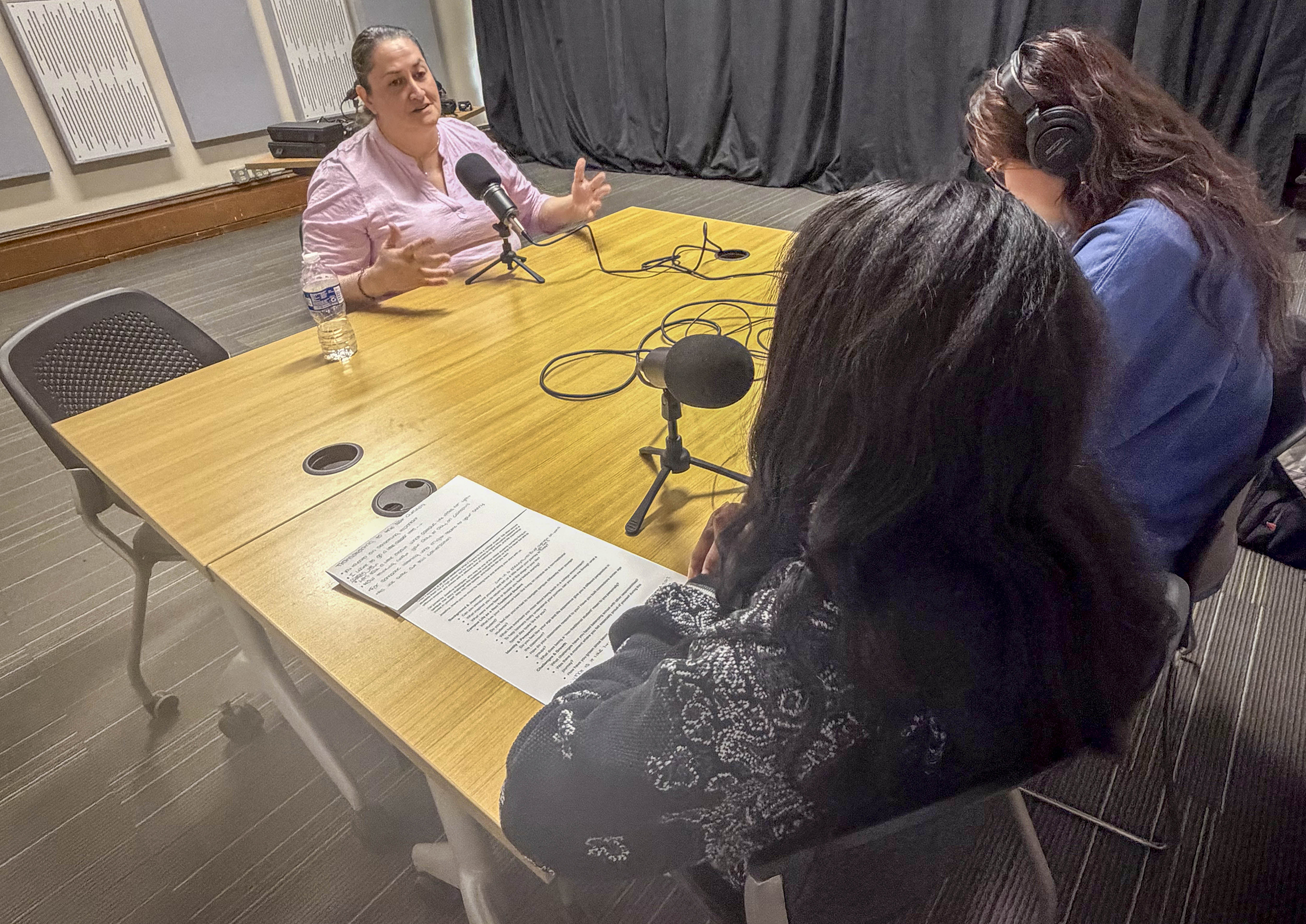
Students in the program say the hands-on structure has helped them build confidence, improve their skills and better understand the realities of journalism.
Abigail Ofous, who graduated in May and served as an environmental reporter for Trinity Times during her final year, said the program gave her a broader understanding of the important role credible journalism plays in society.
“Journalism wasn’t my original major,” Ofous said, “but once I got into the program, the professors really helped me grow.”
The classes provided practical experience through writing, photography, podcasting and reporting for a real audience, she said.
“Through these experiences, I’ve been able to really learn a lot and tell stories to the students here at Trinity,” Ofous said, adding that the experience improved both her writing and confidence.
“Before I started here at Trinity, I didn’t really enjoy writing,” Ofous said. “But now I enjoy it more because I can express my ideas and follow real journalistic standards.”
One of her biggest challenges was overcoming nervousness when approaching people for interviews.
“What helped me was pushing myself to go up to people even when I felt nervous,” she said.
The program’s hands-on approach has been both challenging and rewarding, said Anette Perez, a senior majoring in Journalism and Media Studies and video editor for Trinity Times, who won four collegiate awards from the Catholic Media Association in 2026, including a first-place award for Best News Story.
“Overall, my experience has been extremely valuable,” Perez said. “The work we do is very hands-on, and I think it will pay off greatly.”
Working with Trinity Times helped her grow as a writer and learn professional standards such as AP style.
“My writing has improved since my first classes, and I’ve been surprised with how much I’ve learned every semester,” she said, adding that those skills prepared her for her 2026 summer news internship with Streetcar Suburbs Publishing, which publishes three newspapers in Prince George’s County, Maryland: Hyattsville Life & Times, College Park Here & Now and The Laurel Independent.
The experience also changed how she views journalism.
“You have a team that is all working toward producing content,” Perez said. “Whether it’s working on a story together, helping with photos, or connecting each other with sources.”
Working for the publication also made her feel more connected to campus life.
“It really makes me more involved and immersed with campus on a deeper level,” she said.
Like many students, Perez said stepping outside her comfort zone was one of the biggest challenges.
“I had to fight my introverted tendencies and learn to be comfortable approaching strangers,” she said.
There are also challenges with scheduling, as many journalism courses at Trinity are held in the evening, Perez said.
Still, she said the experience is worth it and offered advice to incoming students.
“Don’t be scared to push yourself outside of your comfort zone,” Perez said. “It’s an extremely rewarding experience, but don’t get in your own way of success.”
A Program That Feels Like a Newsroom
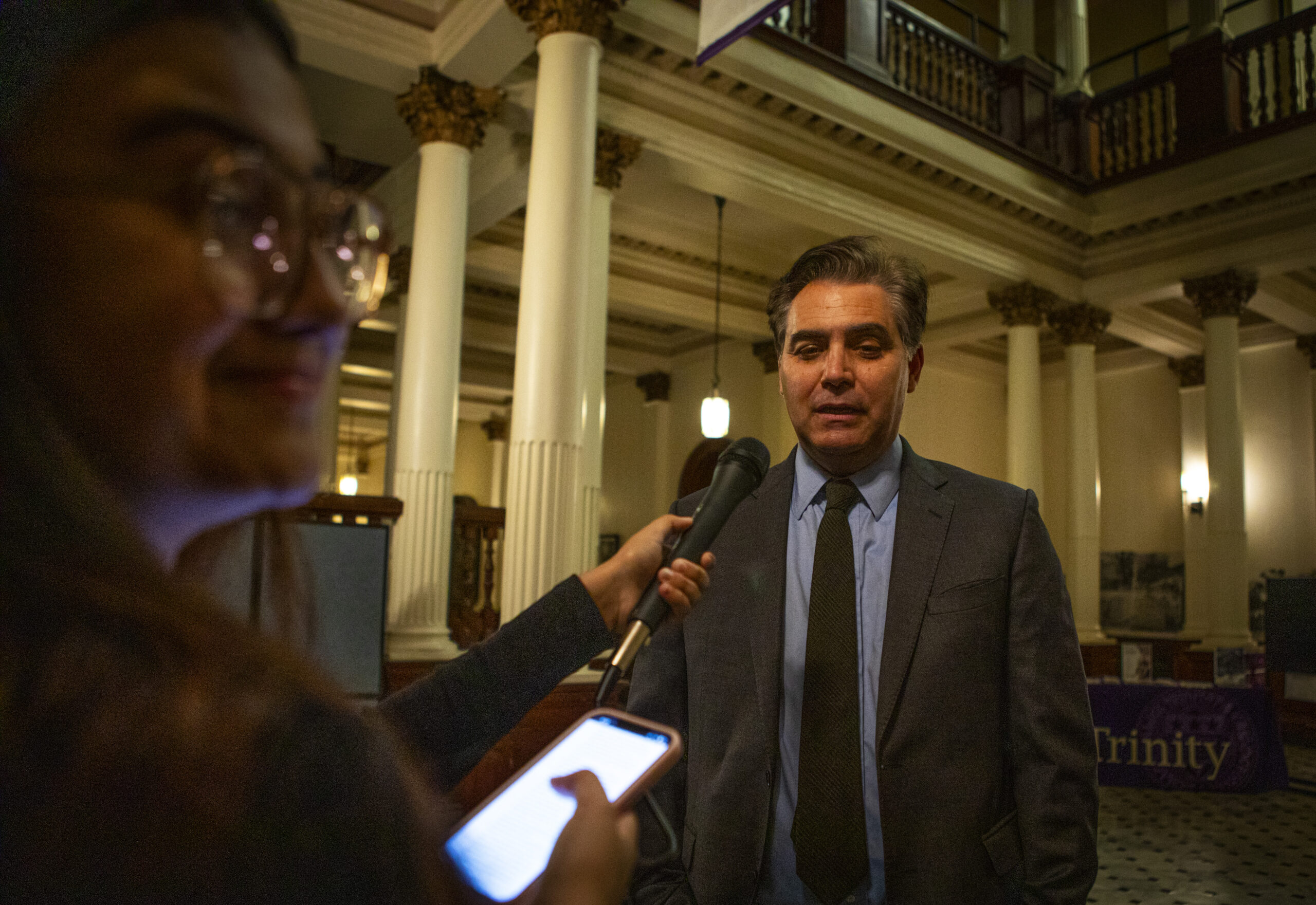
Faculty members said this type of growth is exactly what the program is designed to achieve.
“The more they do it, the stronger their writing, reporting, and storytelling becomes,” Muth said.
He added that by their final year, many students are already prepared for entry-level newsroom work.
“By the time they’re seniors, many of them could walk into a newsroom and start working as rookie reporters,” he said.
Across faculty and student experiences, one thing is clear: Journalism at Trinity is no longer just academic — it is active, practical and deeply connected to real-world media work.
Students are not just learning how to write stories. They are learning how to be credible journalists.