By Genesis Bu-Chinchilla
Trinity Times Correspondent
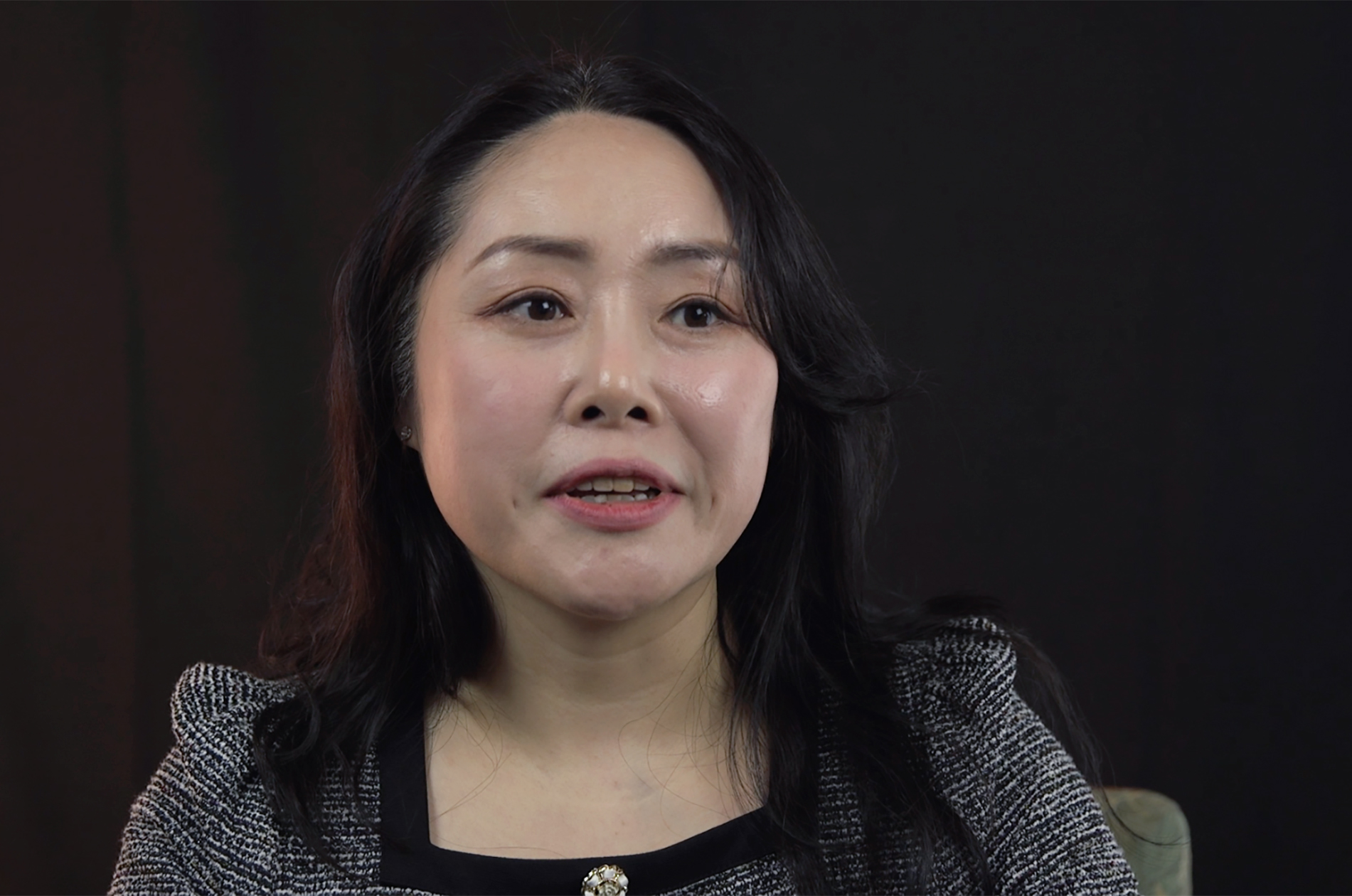
Veronica Kim was 5 the first time she performed for an audience, her voice blending with the church choir. Decades later, after years of hard work and personal trials, she fills a classroom at Trinity Washington University with beautiful sounds, where she teaches students how to find their own voices.
Kim is a classical soprano opera singer, music director and music scholar trained in ethnomusicology, which studies the music of different cultures across the world.
In January 2022, she began teaching applied voice and music-related liberal arts courses at Trinity. The school’s mission resonated with her.
As a first-generation college student in South Korea, she initially studied history and law at Sogang University. Financial hardships required her to take a practical path, but she remained passionate and committed to her music. This experience makes her sympathetic when she sees her students in similar situations.
“Many Trinity students are navigating real-world pressure while working toward their degrees, and I understand that reality personally,” Kim said.
“I see my role as both musical and practical: helping students develop skills, discipline and self-trust, and also creating a classroom where they feel safe to grow in.”
For students like Cinthya Calderon-Hernandez, the impact of Professor Kim’s lessons is deeply personal. Calderon-Hernandez is a senior global affairs and political science double major who is taking one-on-one voice lessons with Kim, which she described as a transformative experience.
“She definitely tries to connect on a deeper level,” she said. “It’s not just about the content. She reads her students really well and incorporates that into what and how she teaches. It makes me more excited about class.”
That attentiveness, which Calderon-Hernandez finds so captivating, is rooted in Kim’s own difficult journey.
“At 27, despite not holding a music degree, I applied to a graduate program in voice,” Kim said. “Being admitted was a turning point, and I promised myself that I would not be the person who gives up on my own dream.”
She worked full time on weekdays while also training, rehearsing and performing on weekends.
“For the first time, I felt like I was not merely surviving but living,” Kim said. “I was building.”
Her studies have also taken her across Europe. She lived in Leipzig, Hamburg and Berlin from 2007 to 2010. During that time, she decided to transition into advanced musical study, so she split her time between Berlin and Milan in 2010, where she completed advanced training at the G. Verdin National Music Conservatory of Milan and earned a European doctorate in opera performance and Baroque vocal music.
These are studies that now captivate Calderon-Hernandez.
“She just has so much knowledge,” Calderon-Hernandez said.
“When we were picking pieces for my recital, she was bringing in classical pieces from Spain. She has knowledge on Italian pieces and South Korean music too,” Calderon-Hernandez said. “I told her I like EDM, and she even showed me EDM/classical songs. She has such extensive knowledge, it’s like a holistic view of her passions.”
But Kim’s journey was shaped by more than academic and artistic success.
In 2004, Kim was involved in a devastating car accident in a suburb of Seoul, South Korea, which left her immobilized for months.
“Rehabilitation became my daily work of learning how to live again,” she said. “‘Step by step’ became literal, and it became my new way of thinking.”
Although doctors were not positive she would ever return to the stage, she refused to give up.
“Ten months after I left the hospital, I boarded a flight to Berlin with a wheelchair and crutches and began again,” Kim said.
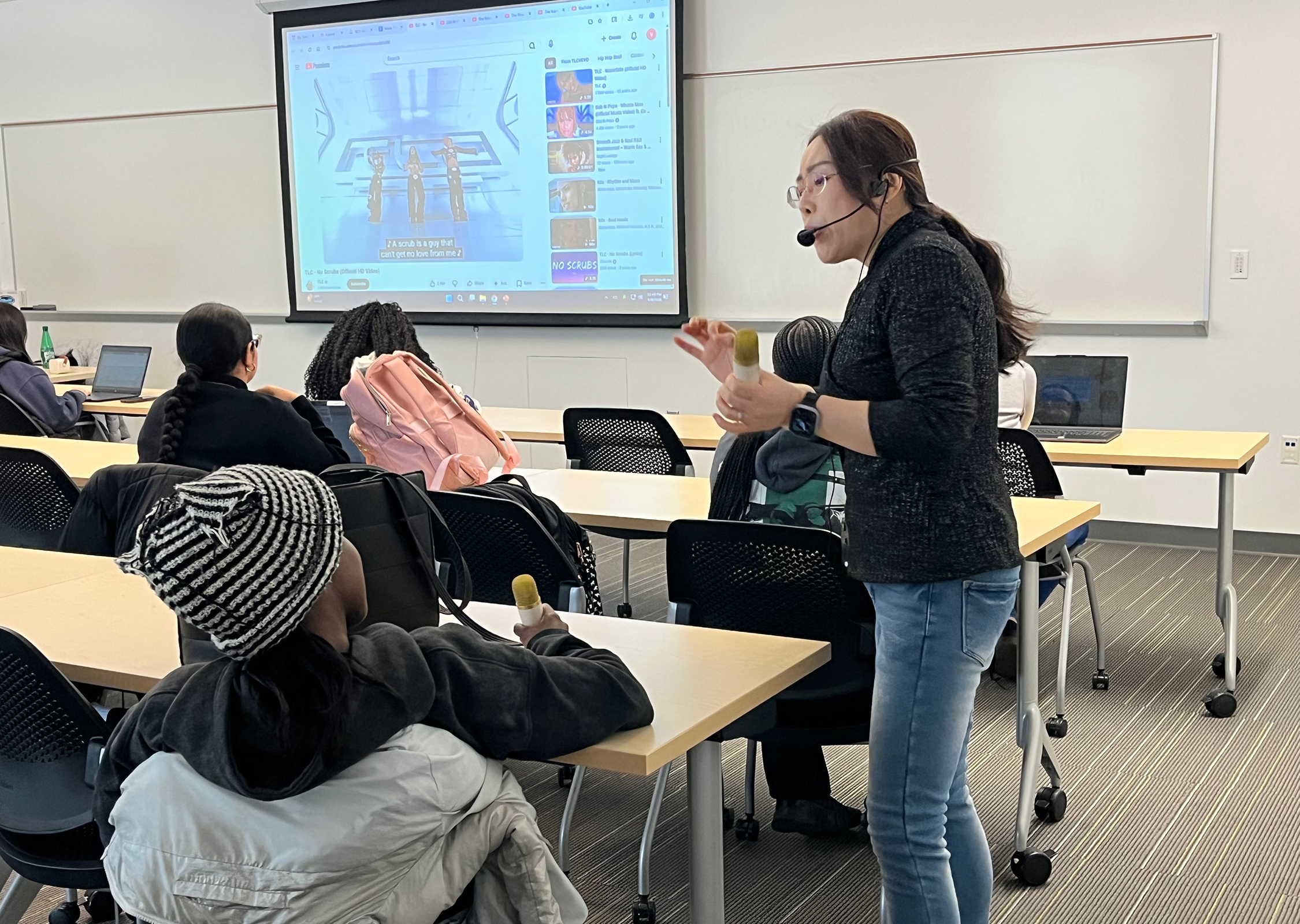
After years of study and performance in Europe, Kim later moved to the United States. She studied at the Peabody Conservatory at Johns Hopkins University in Baltimore from 2016 to 2018, where she earned her Graduate Performance Diploma. She then completed her Doctor of Musical Arts degree at the University of Minnesota, Twin Cities, in December 2022.
Today, that resilience is what shapes her teaching. In her applied voice lessons, Kim emphasizes preparation, consistency, but most importantly, recovery when mistakes happen.
“I want students to understand that their voice matters, literally and metaphorically,” she said. “And I want them to leave my classroom not only with knowledge, but also with a stronger self-trust and a clearer sense that they deserve a meaningful future.”
Jamilehy Ramos, a Trinity business administration major, said that message stands out clearly in her teaching.
Ramos said she first met Kim during her sophomore year when she took the applied voice course at Trinity. Although Ramos had experience performing since elementary school, she said the nerves never really go away.
“You’re on stage and you have to make sure everything is perfect,” she said. “But it’s really fun. I enjoy it.”
It was Kim’s teaching that helped her find calm while performing. She described Kim as both nurturing and deeply supportive.
“The best way I can describe it is motherly,” Ramos said. “Life happens, and sometimes I’m struggling, and so many things can affect your voice. She’s just so supportive and always tells me, ‘You got this.'”
Ramos also emphasized Kim’s ability to engage with students on a deeper level in the classroom.
“She’s very interactive,” Ramos said. “My class is very quiet, but she plays a lot of music, sometimes artists people might not know, and some you do know, and she makes sure everyone participates in discussions. She just has this good energy and this vibe where she’s trying to bring the mood up, and she’s just so funny.”
Beyond being a supportive educator, Ramos said Kim taught her a lesson that has changed her perspective when approaching a challenge.
“One thing she told me was ‘If you’re anxious, it’s because you are not practicing enough,'” Ramos said. “I guess what she said to me really changed the way I went throughout school. If I get anxious before a presentation or when writing a paper, it’s because I’m not prepared enough and I am not fully understanding what I’m learning. So I go back, and I make sure I review all my materials.”
Calderon-Hernandez echoed similar sentiments.
“She really does stand out,” Calderon-Hernandez said. “Everybody I’ve talked to who has had her [as a professor] has a completely different experience, but it’s always lively and connecting. She seems so passionate about it. I feel like she’s carrying the fine arts of singing on her back. I’m going to work hard for her every day. I just want to make her happy.”
As of spring 2026, Kim prepares to leave Trinity after the semester concludes, to begin a new chapter. She will be attending the University of Minnesota Law School on a 50% scholarship.
Inspired by students facing barriers such as immigration and DACA-related challenges, she said she wants to expand her impact beyond the classroom by becoming a public defender.
“Some DACA students asked me for my help,” Kim told Trinity Times. “Then I felt depressed because I knew I couldn’t help them directly. I want to be able to protect people’s rights and give my helping hand in a more direct way.”
Still, she noted that the identity she’s built during the last two decades will follow her into this next chapter.
“I am still a musician. I am still a soprano. I am still a teacher,” Kim said, later adding that she hopes her journey as a first-generation student will remind others that there are no limits, “as long as you don’t give up your dream.”