By Sydney Ware
Trinity Times Correspondent
For Trinity Washington University’s on-campus resident students, dorm rooms become more than just a place to sleep – they can become a home away from home. But when the fall semester ends, those students head home for a much-needed break before returning in January to start the spring semester.
Typically, the process of checking out of dorms at Trinity and returning for the second semester is fairly straightforward. Trinity students have told Trinity Times that in the final weeks before the semester ends, Campus Housing sends emails asking students to follow the housing checklist, lock their doors, and turn in their keys to Campus Housing. When students return in January, they retrieve their keys and reenter their on-campus quarters with everything exactly as they left it.
Unfortunately, this was not the case for one student when she returned in January. When junior Shy-Anne Thomas opened the door to her dorm room in Kirby Hall, she found that nearly all of her belongings were missing – down to her bedsheets.
In the nearly two years Thomas has attended Trinity, she has lived on campus. She spent her first year on campus in Cuvilly Hall and truly enjoyed having her own space.
“I did like having a little piece of home in D.C. because this is where I feel like my future is as a criminal justice major going into law,” Thomas told Trinity Times.
Still, living on campus came with its challenges, and Thomas was often very vocal about any issues she experienced in the dorms. When there were issues with hot water during cold winter months or concerns about security of the dorms, she often sent emails to members of Trinity’s administration but said they were not always responsive.
“I feel like the university should at least hear you out on your discrepancies and concerns,” she said.
Though there were minor issues in her first year on campus, in a city where rent and housing affordability are increasingly high, she believed it was important for her to remain an on-campus resident. Returning for her second year at Trinity, she moved into Kirby Hall.
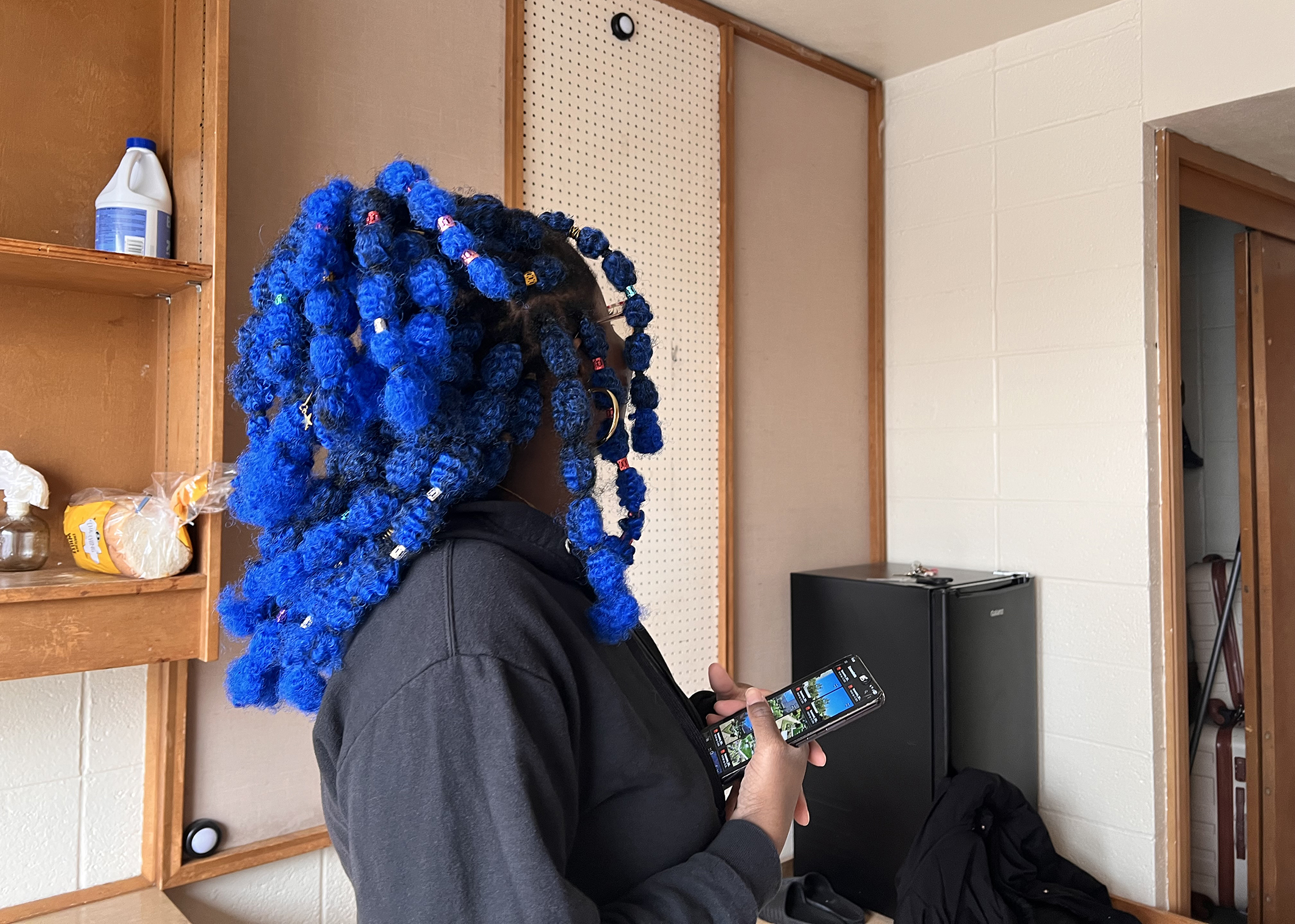
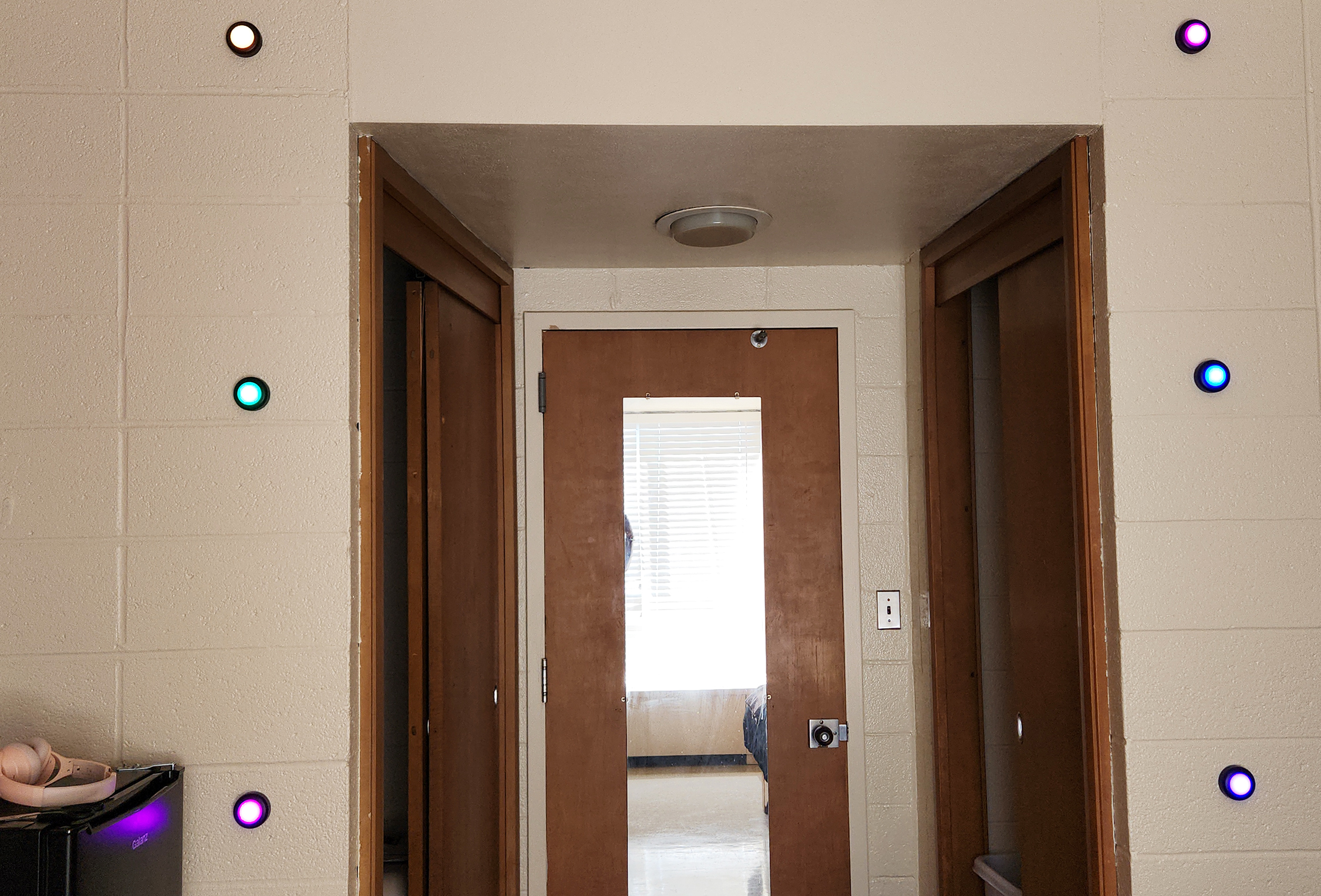
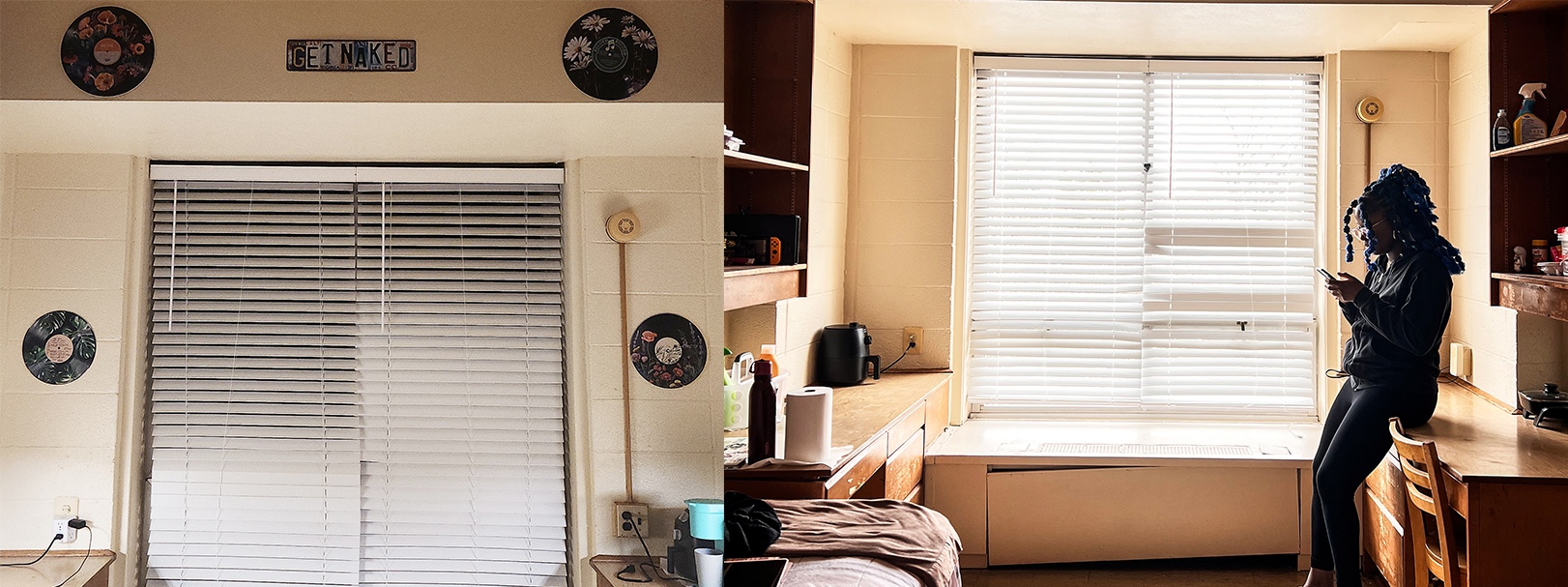
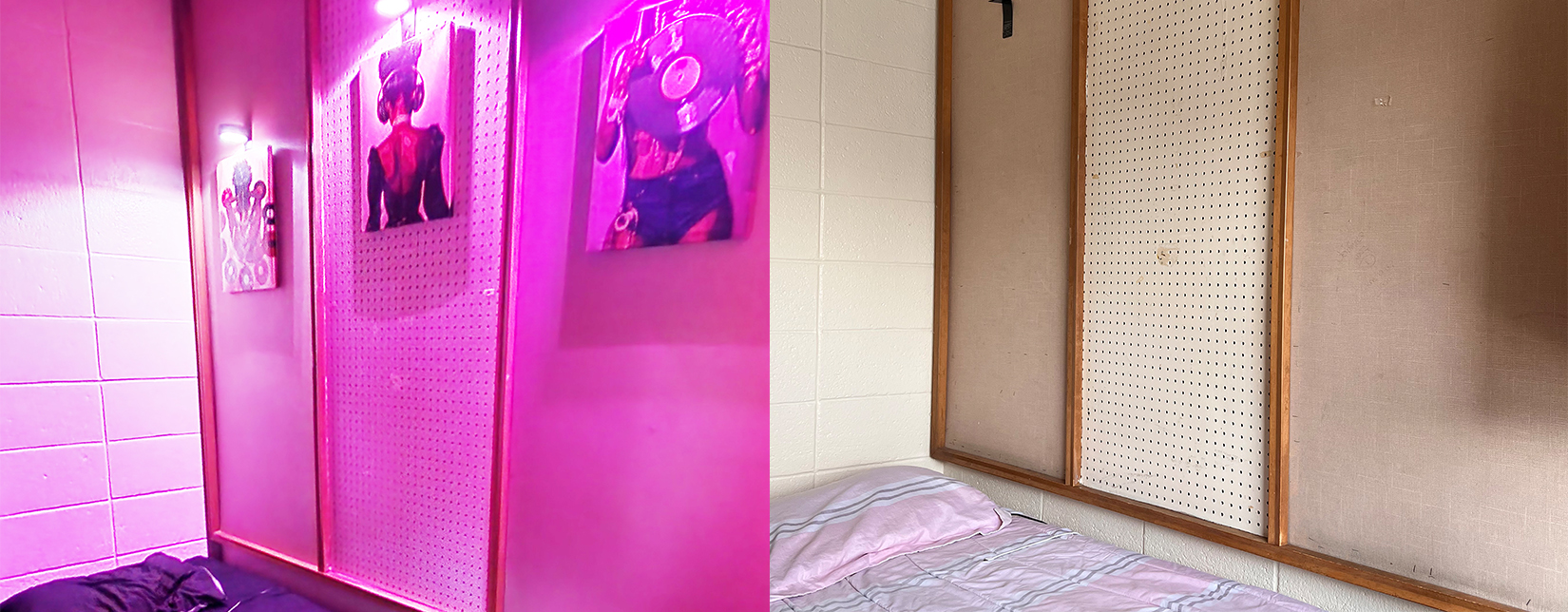
Thomas was one of many students who personalized her room with decor, additional lighting, and precious keepsakes. She is a big lover of music, having grown up playing a variety of instruments, and she decided to transform her dorm to resemble a record store. Her room was adorned with records, paintings and LED lighting fixtures on the walls, and hanging from one of her walls was a Haitian flag, a symbol of her pride in her heritage. Thomas said these items were displayed to fill the space with a piece of herself.
She also kept several items in her dorm that were irreplaceable, including an expensive bag gifted by her mother and a book signed by activist Angela Davis.
All of these items remained exactly where Thomas placed them throughout the fall 2025 semester. At the end of the semester, she received the housing checklist, completed it, and returned the form and her room key to housing Dec. 12, 2025.
Thomas returned to campus early on the morning of Jan. 17, 2026, and went to housing to retrieve her key. She walked up the steps to her fourth-floor room, put the key into her locked door, and opened the door to find a bare room.
“I could hear myself echo off the walls,” Thomas said. “The only things that were in my room were my mini fridge and one of my mattress toppers. And that was it.”
Thomas describes her reaction as going through the five stages of grief. Her immediate response was to walk to Main Hall to the housing director to find answers.
Campus Housing and Trinity’s Department of Public Safety (DPS) could not determine how her belongings went missing, she said.
“I wanted an explanation and they didn’t have one,” Thomas said. “They still don’t have one. The only thing that they could tell me was no one was permitted to come into my room during break.”
In her recounting of the events that followed, Thomas said a member of campus housing returned with her to her dorm and told her that despite looking throughout the building, she was unable to find any of her belongings. Immediately after, housing offered to help her purchase necessary items that had been taken, such as soap, shower shoes and bottled water. Thomas added that other important items like her birth certificate and Social Security card are not so easy to replace, and have caused her to feel like her safety is compromised.
Suspecting that no one on campus would be able to locate her belongings, Thomas called the police, but she was disheartened when officers spoke with a DPS representative in Main Hall before speaking to her.
“He said ‘[DPS] will handle it in house, so we can’t really do anything, but here’s our card,’ then left,” Thomas said.
She has been unsatisfied with the university’s handling of the situation from that point, telling Trinity Times that emails were left unanswered and weeks went by where she was uncertain if she would ever find her belongings.
“I feel like I’m very vocal about my opinions about how Trinity can better their security,” Thomas said, “how they can better their quality of life for their students. I think this was handled very poorly.”
She said the situation has been damaging to her mental health, preventing her from feeling truly comfortable in her room.

“It’s been really hard, especially because I’m away from my family. I don’t have any family in D.C., and I wish my family was here to support me because there’s only one of me,” Thomas said. “And I do have to fight for justice with my things being stolen, but I’m also still a college student.”
Trinity’s Department of Public Safety (DPS) could not speak about the details of this individual case, but told Trinity Times that various measures are in place to address students’ safety and concerns.
Head of DPS Andrea Glascoe described several means of security throughout campus, including the access control office in Main Hall, DPS campus patrols and building checks several times a day, surveillance cameras, emergency phones around campus, and direct phone lines to DPS on each floor of the dorms. She also said the locations of surveillance cameras cannot be disclosed, and camera footage is not accessible to anyone other than the proper authorities.
To prevent issues like theft, DPS enforces 100% identification checks for those entering campus, guest registration, assurances from students that guests aren’t left unattended, and advises students to report suspicious or unusual activity. If a student does experience a theft, they are expected to start an internal investigation with DPS, who will then go to the area where it occurred and review security footage, interview people, etc.
“DPS does not take these situations lightly,” Glascoe said.
When students leave campus at the end of first semester, DPS maintains these same standards. Their security procedures are in place, meaning even when the rest of the school is gone, DPS remains present. Glascoe explained that the same patrols, identification checks and access control occur, and only authorized personnel are allowed in spaces whether it be from administration and DPS.
Chief Glascoe believes that it is important for students to know how to contact DPS, regardless of if the situation is emergent or nonemergent.
“First make the notification to DPS immediately. It is important to know where DPS is located and to save their number as a contact: 202-884-9110 or 202-884-9111. Let them know where the situation is and the details of the situation so that they can properly handle the situation and notify whatever additional services may be needed. If additional authorities are needed, DPS will not hinder those services, but is the first step in the process of reaching those resources,” Glascoe said.
When it comes to the regulations in place to prevent students from having their security compromised, many campus policies are maintained through an honor system to prevent students from having to go through multiple security checks to access their dorms. Glascoe does not want students to believe DPS is trying to hinder freedom, but is in place to protect students and their concerns.
“I stress a lot to people that I’m here, I’m always here,” Glascoe stated. “I want people to understand that DPS cares. We’re not just here to stop you from going here or there, but to make sure there aren’t people wandering from the area into our gates.”
Thomas told Trinity Times that she was informed the school’s investigation into her claim has been closed, and she was offered compensation for her losses – though reluctant, she chose to accept the offer. She remains dissatisfied with the outcome of the investigation, which did not recover her property or identify the person responsible for the theft.
Trinity President Patricia McGuire explained how Trinity handles coverage of resident students’ assets.
“Trinity’s housing contract for students states, ‘Residents should carry insurance on their personal property. Resident property insurance will be the first coverage for any claim.’ In the past, we expected resident students to have such insurance through the homeowner’s or renter’s insurance that their parents or guardians usually have. Such insurance covers the loss of property due to damage or theft according to the terms set by the insurance company,” McGuire said.
Having renter’s insurance is a familiar concept for Thomas, who transferred from Howard University to attend Trinity. According to the Howard University Student Affairs page on the institution’s website, renter’s insurance is required to live on campus. She has no recollection of the insurance being mentioned in her Trinity housing contract, or discussed during housing meetings at the beginning of fall semester.
In the future, the policies concerning renter’s insurance for Trinity’s on-campus residents are subject to change. President McGuire shared this statement in regard to future requirements:
“Previously, Trinity has not asked for proof of resident property insurance, but Trinity will change this practice for the 2026-2027 academic year. We will require proof of renter’s insurance either through a parent’s policy or through purchase of a specific policy for dormitory residential insurance. We are currently seeking bids for this service and will have the pricing soon and more information about how it will work in terms of the insurance contracts, type of coverage, cost, length of contract, etc. We will let students know when we have this information, and before housing contracts are issued for next year. Our goal is to make it easy and affordable to make sure that student resident property is covered.”
Thomas believes that this is something the school should require, rather than recommend, and hopes that updates to additional policies regarding security can prevent this from happening to other students in the future. She believes measures like having cameras in dorm stairwells and having security desks in the dorms can prevent policies from being broken and incidents of harm from occurring in the dorms.
Over the last few months, Thomas said she has also had an investigation opened with a detective from the Metropolitan Police Department of D.C. (MPD) and believes there has been slight progress since this investigation began. A representative from the MPD Public Information Office confirmed the investigation is still ongoing, but there presently is not an update on the investigation’s progression.
Though Thomas is still uncertain of where all her belongings are, she is determined to continue pushing for answers.
“I am a couple of months away from my senior year and I just want to graduate at this point, so it’s like I have to split my mind into two,” Thomas said. “One side is focused on work, one is focused on the theft, but mentally it’s really draining. I would say that so far I haven’t really had a happy semester because it’s been completely overwhelming.”
She is advising other students who experience any issue on campus to report it and continue to push for proper support.
“I would definitely say just be an advocate for yourself,” Thomas said. “I feel like a lot of times things do happen in the dorms that I see and I talk to other girls about it, and they say ‘Oh well, I’ll just ignore it or I’m not getting a response so I’m just going to brush it under the rug and forget about it.’ It is important that we don’t do that, because they have an obligation to us.”