
By Emily Guzman
Trinity Times Correspondent
Trinity Washington University is taking on the stigma around sexual health head-on.
Through its Health and Wellness Center, the university encourages open conversations about topics many students grew up avoiding.
“Sex was super taboo in my family,” said Pamela Jaber, a freshman at Trinity. “Even to the point where a lot of people from my culture think a tampon can take your virginity.”
Jaber knows that different cultures and religious backgrounds can shape how people view human sexuality.
Leaders at Trinity are working to break barriers and offer guidance to encourage overall health and safety. No matter what racial or ethnic culture students come from, sexual health is considered human health.
Trinity’s Health and Wellness Center provides resources for all aspects of a student’s mental, physical and sexual health. General gynecology services and cervical cytology tests, known as Pap smears, are available to students.
Discussions about women’s mental and sexual health were not part of Jaber’s experience at home, where abstinence was the primary – and sometimes only – talking point.
“There’s such a stigma around sexual education,” Jaber said. “And depending on where they went to school, they may not have received any kind of proper sex education there either.”
Jaber, who comes from an Arabian and African cultural background, added, “Both are heavily religious, so coming from those kinds of households, I wasn’t taught anything about sex or sexual education.”
“A lot of the students who come here are from Black or Hispanic households,” said Anne Cosimano, a licensed clinical social worker and counselor at Trinity’s Health and Wellness Center. “Those households tend to lean more toward abstinence. They just don’t talk about sex.”
Despite the reluctance in some cultures to discuss intimacy and sexuality, sexual health is a vitally important part of human health, Cosimano said, adding that it affects a person’s overall mental, emotional and physical well-being.
“We definitely have a sexual side,” Cosimano said. “Sexual health is important to pay attention to.”
Trinity offers counseling services to students free of charge.
“Certain people don’t have the proper resources outside of school, or money for therapy, or people to talk to,” Jaber said. “So I think it’s really good that those resources are here on campus.”
Trinity also focuses on broader themes such as combating sexual exploitation and domestic violence. “Take Back the Night” and “The Clothesline Project” are two popular events on campus, both held periodically during spring semesters since 2014.
“Take Back the Night” educates students on sexual violence, including human trafficking, rape, sexual assault, stalking, dating and domestic abuse, and child sexual abuse.
“The Clothesline Project” captures visual displays of violence such as assault and abuse by having students make T-shirts. Each shirt symbolizes a survivor of violence or a loved one who has been impacted or lost to this pernicious form of violence.
Trinity’s Health and Wellness Center Director Angela Anderson said events like the Clothesline Project are part of a broader effort to promote awareness and prevention.
When it comes to sexual health, Anderson said, “I think it’s very important for us to know about risk management and violence prevention and body awareness.”
One of Jaber’s friends attends Towson University, about 20 minutes north of Baltimore.
“The [university] had a whole thing about female orgasm,” Jaber said. “The title is funny, I guess, but it’s basically talking about women’s sexual health. Like, that’s what the whole event was. And it was open to all students.”
Sexual education or maturation courses can be inconsistent because the District of Columbia has no regulation requiring “medically accurate” sex education in K-12 schools and no laws about teaching sexual education in higher education.
According to the Sexual Education Collaborative, which tracks state-by-state curriculum, “Sex education is mandated in public schools in the District of Columbia, but is not required to be medically accurate.”
This means that while sex education is required in D.C. public schools, the curriculum doesn’t have to align with current scientific or medical standards for accuracy.
Only a few states, such as California and New Jersey, have codified rules requiring lessons on topics like consent and healthy relationships.
The National Conference of State Legislatures reports that as of Oct. 1, 2020, “Twenty-two states require that if provided, sex and/or HIV education must be medically, factually or technically accurate. State definitions of ‘medically accurate’ vary, from requiring that the department of health review curriculum for accuracy, to mandating that curriculum be based on information from ‘published authorities upon which medical professionals rely.'”
Though D.C. requires some form of sex education for grades K-12, not all students must participate, and not all topics are covered equally. Sexually transmitted diseases and pregnancy prevention are the most commonly taught topics.
Only 19 of the 50 U.S. states require medically accurate sex education. The American Public Health Association reported in a 2025 study: “Number of states requiring education to cover abstinence (34 states), HIV (34 states), sexually transmitted infections (32 states), and child abuse prevention (31 states). Five states require opt-in parental consent; 34 allow parents to opt children out. Nineteen states mandate medically accurate content for any topic.”
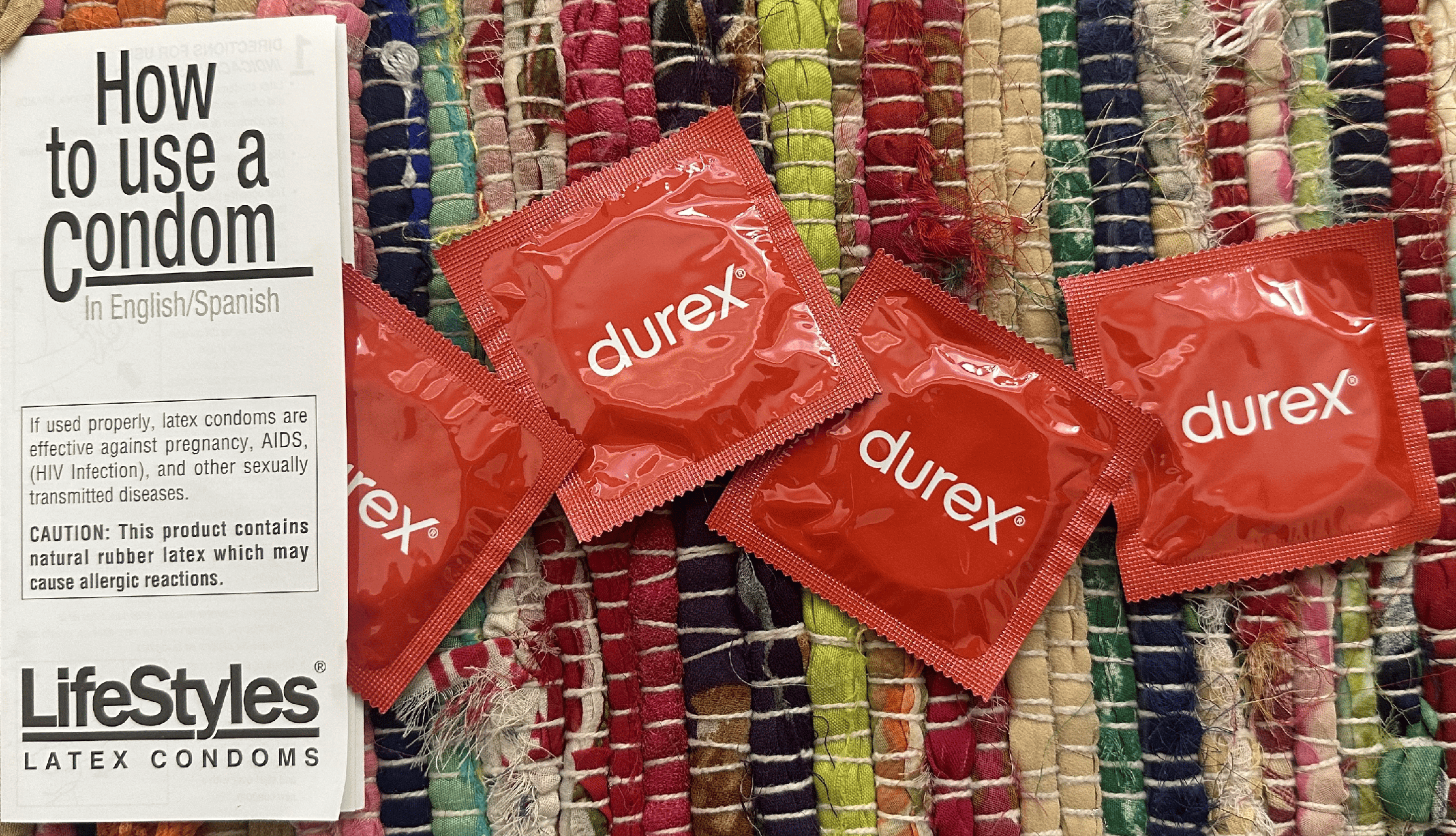
With such a patchwork approach to sexual health education, students entering college may not have received comprehensive instruction. Trinity takes active steps to help students obtain that knowledge, regardless of cultural or geographic background. The Health and Wellness Center provides students with resources such as condoms, health pamphlets, STD testing, pregnancy testing and rapid HIV tests.
Even with university resources available, some students say they still have cultural barriers to overcome before they feel comfortable seeking help.
A 2015 study from the National Institutes of Health found that culture plays a significant role in how young people learn about sexual health. “The attitude of parents toward sexuality, [as well as] parenting style, peer relationship, and cultural influences are the important social factors which decide the sexual attitude of the adolescent,” the study states.
“I didn’t think they would have resources for sexual education at Trinity,” said Chloe Robinson, a freshman chemistry major from New York. “Growing up, my mother always thought it was a good idea to educate me on sex ed, STDs and AIDS, but [above all the message was] ‘don’t have sex.'”
“As human beings, [sex] is a part of who we are,” Anderson said. “I think even those who choose celibacy are still impacted by sexuality.” Learning about sexual health is important, she continued, because “education is power.”
In 2019, the World Health Organization reported that “sexual education equips children and young people with the knowledge, skills, attitudes and values that help them to protect their health, develop respectful social and sexual relationships, make responsible choices and understand and protect the rights of others.”
Anderson said the Health and Wellness Center’s mission is to keep Trinity’s student body safe, informed and supported, even in the face of cultural and social barriers.
“Sexual health doesn’t mean you have to be engaging in intercourse,” Anderson said. “It’s just about your knowledge and education.”