By Ellen Armstead
Trinity Times Correspondent
In the age of artificial intelligence, Trinity Washington University stands at the crossroads of innovation and tradition.
Students, faculty and administrators are navigating uncharted waters, balancing the promise of cutting-edge technology with the values of academic integrity and ethical responsibility. Trinity has taken a proactive stance on AI integration, recognizing its potential to revolutionize education while ensuring responsible use.
These can be challenging waters to navigate, as Trinity sophomore Genesis Bu-Chinchilla told Trinity Times during a recent recording of the Enlightened Exchanges podcast.
“I try not to use AI platforms like ChatGPT and Claude because I want my own words to be used,” she said. “I want my work to sound like me, right or wrong.”
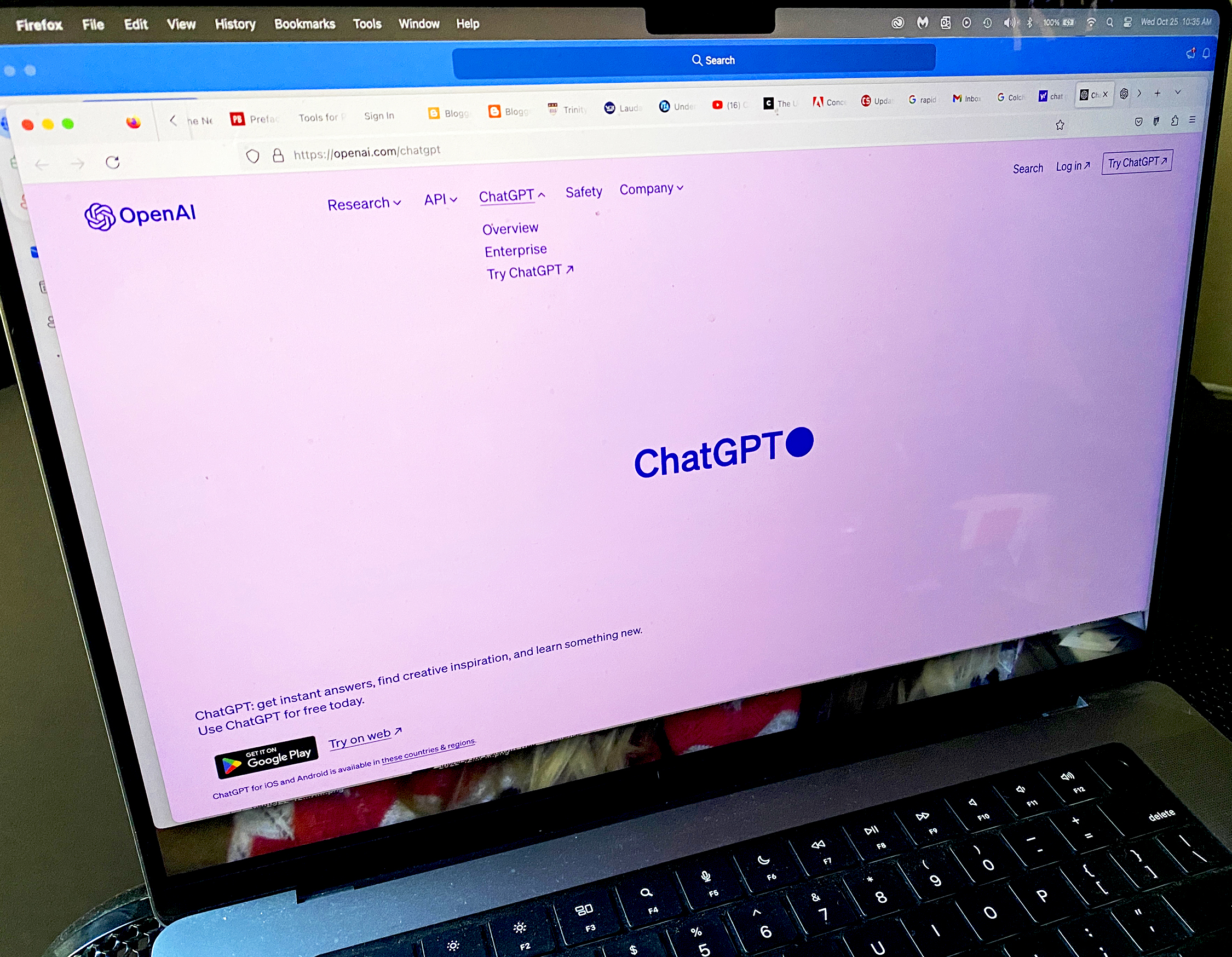
Bu-Chinchilla admitted to using Grammarly for some assignments but seemed unsure whether advanced writing tools qualified as AI.
Faculty members at Trinity are also exploring the implications of AI in their classrooms. Some incorporate AI into their teaching methods, using enhanced tools to create more engaging and effective learning environments. Others exercise more caution, working to ensure their courses uphold Trinity’s academic integrity policies.
Trinity English professor Jill Weiler recalled the first time she used the “newfangled technology” of a personal computer as an undergraduate student.
“It was my senior year of college, and I was frustrated logging in and logging off,” Weiler said. “I swore I would never use a computer again. But now, almost 40 years later, I realize we can’t live without it.”
She compared artificial intelligence to other technological advancements.
“AI is a tool,” Weiler said. “And like any tool, if you use it well, it can really help you, and if you don’t, it can be hurtful and harm people.”
As a professor, Weiler said she has been impressed with students like Bu-Chinchilla, who are committed to maintaining academic integrity rather than relying on AI-generated work.
Because she values the writing process and the importance of owning one’s work, Weiler begins her English classes with discussions on the ethical use of AI. She addresses the distinction between AI-assisted help and outright plagiarism.
Her classes include frank conversations about how AI-generated papers are detected and what appropriate consequences should be for students who take unethical shortcuts, Weiler told Trinity Times.
Trinity’s AI Policy
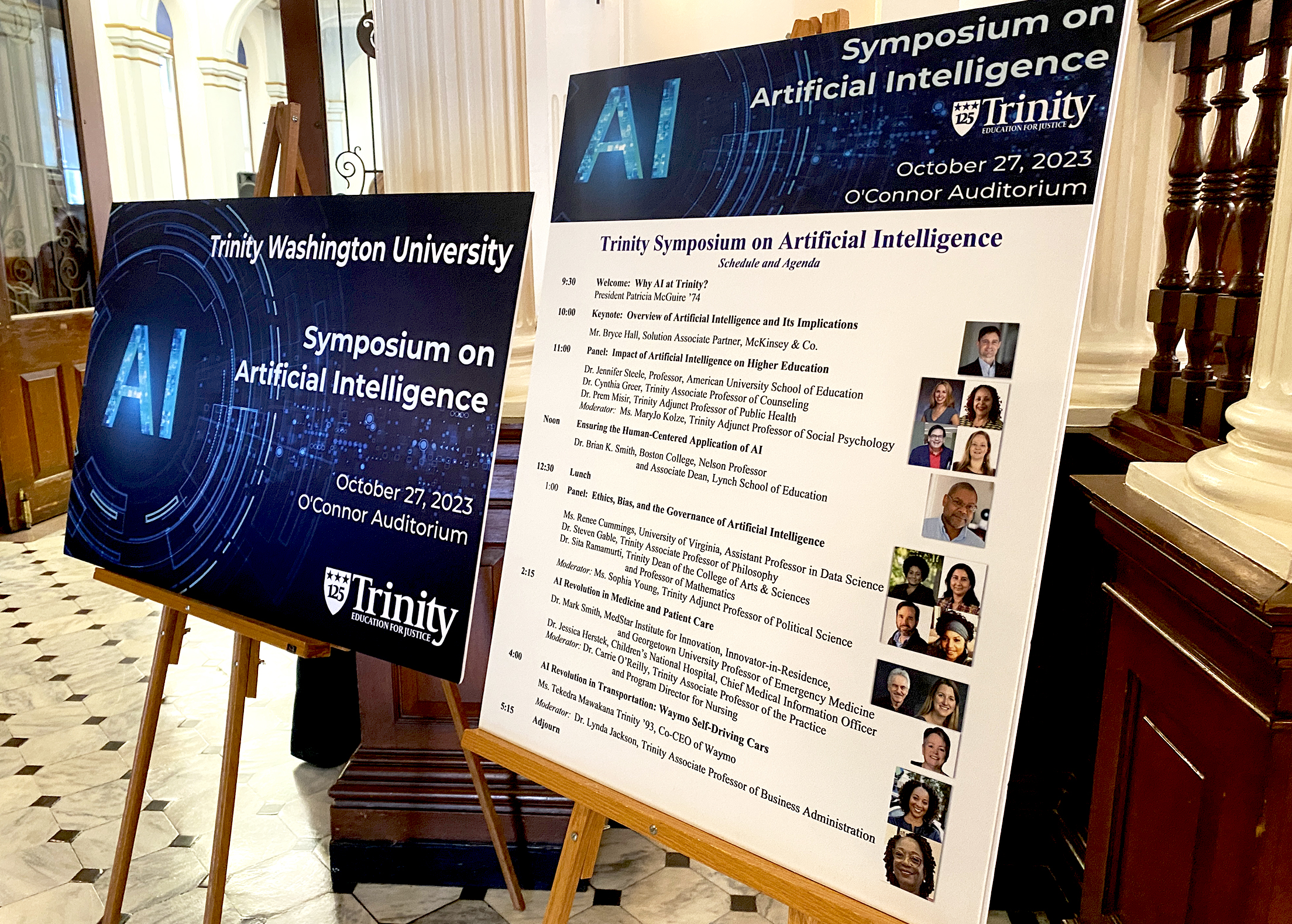
Trinity established its Policy Statement on the Appropriate Use of AI in Coursework in 2023.
“AI tools include chatbots, search engines, predictive text, grammar checkers, or citation generators,” the statement affirms. “They can support academic work but not replace the creativity and critical thinking required to earn a college degree.”
The policy states that “AI tools can be used when studying, prewriting, source gathering, and in other preparatory tasks related to coursework. AI tools should only be used to support student learning, not replace it.”
The university takes a firm stance against AI use during exams.
“Testing assesses a student’s understanding of specific information and knowledge,” the statement reads. “It is the student’s responsibility to generate and recall this knowledge.”
The policy also outlines expectations for ethical AI use, including proper citation.
“Any AI-generated text should be used sparingly, appropriately, and in service of supporting one’s own ideas … When using AI-generated material in an assignment (if permitted), it must be cited appropriately and with the required citation style for that course.”
Lastly, the university issues a stern warning about violating these guidelines.
“Inappropriate use of AI-generated material is a form of cheating. Processes and penalties for cheating are covered in Trinity’s honor policy.”
Looking Ahead
Thomas Mostowy, Trinity’s dean of the School of Professional and Graduate Studies, said it is important for students to understand the university’s position as AI tools rapidly expand.
According to a survey by the Digital Education Council, of nearly 4,000 undergraduate and graduate students interviewed, 66% reported recently using ChatGPT. Grammarly and Microsoft’s Copilot followed at 25%.
“As we learn more about how artificial intelligence is used,” Mostowy said, “we’re going to revisit this on a regular basis and try to figure out what that line should be between what you can do and what you shouldn’t be doing.”
The use of AI at Trinity extends beyond the classroom. Faculty and staff are implementing AI-driven tools to streamline administrative tasks such as admissions, scheduling, and student support services. These tools have improved efficiency and accuracy, allowing staff to focus on more strategic initiatives.
“The rise in AI usage forces institutions to see AI as core infrastructure rather than a tool,” wrote Alessandro Di Lullo, CEO of the Digital Education Council. “Universities need to consider how to effectively boost AI literacy to equip both students and academics with the skills to succeed in an AI-driven world.”
The Digital Education Council’s survey found that 86% of students use AI in their studies, with 24% reporting daily use and 54% using it at least weekly.
Trinity remains committed to balancing AI innovation with academic standards, ensuring that technological advancements enhance rather than undermine the educational experience.
It can be a difficult balance to strike, but the university’s leadership is working to prepare its academic community for a future where technology and tradition coexist.