By Ja’sai C. Simmons
Trinity Times Correspondent
There is no denying that queer representation on American television has dramatically increased in the past two decades, but Trinity Washington University students like Bailey Squire want to see more accurate and less clichéd depictions in the shows they watch.
Historically, television has been a prevalent portrayal of an era in America, as it can reflect society and its ideals in that given time, and although queer representation has increased compared to its predecessors, members of the LGBTQIA+ largely agree that it still isn’t sufficient.
“I don’t think there’s enough of it,” said Squire, a Trinity senior majoring in English, who uses the pronouns they/them, on the topic of queer representation in American television and film. “And I think what there is can sometimes be based on stereotypes.”
Squire used the example of the film Rent and how the movie portrays a queer character as a part of the A.I.D.S epidemic, depicting the stereotype of an LGBT individual with some type of sexually transmitted disease.
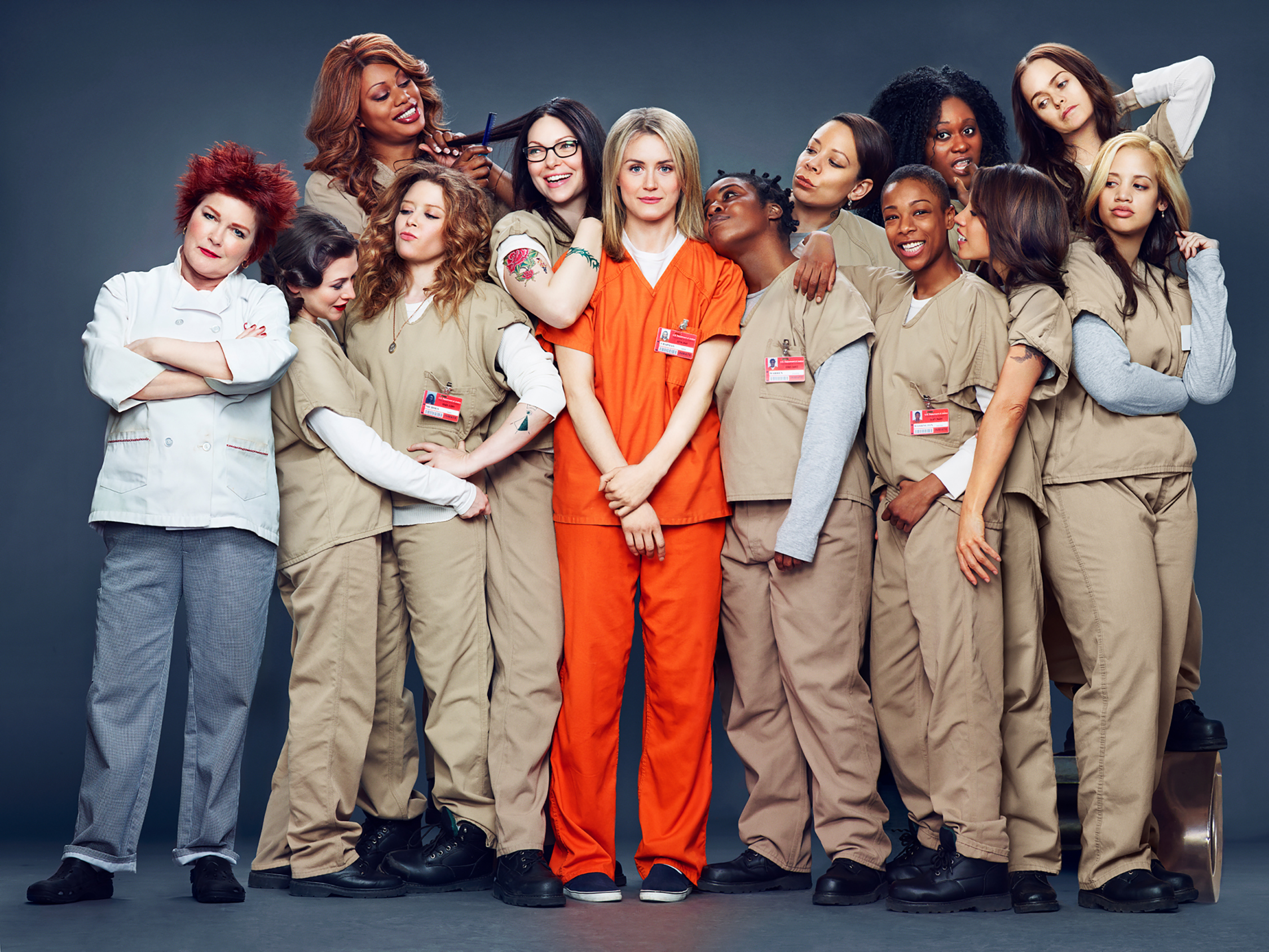
In the television show Orange is the New Black, Squire views the depictions of queerness and queer characters as predatory and that reiterate the butch stereotype for LGBT women.
Of the 454 television series in scripted broadcasting, there’s only been 39 that have been LGBTQ+ focused as of the 2023-2024 season, according to the Gay & Lesbian Alliance Against Defamation (GLAAD).
This means that up to 8.6 percent of all scripted broadcast shows have been dedicated to queer showcasing, GLAAD said in its “Where We Are on TV Report 2023-2024.”
This indicates to GLAAD there are real limits on queer representation, showing how LGBTQIA+ individuals aren’t as embodied in television, streaming platforms or cable.
To make a comparison, GLAAD notes in its “Where We Are on TV Report 2023-2024“ that bisexual representation is 24% while bisexual adults in the U.S. makes up as much as 58.2% of LGBT adults, according to Gallup’s 2023 report that shows U.S LGBT identification is steady at 7.2%.
“But it’s even transgender people. They’re still not represented or non-binary people,” said Trinity student Corazon Gomez-Lezama on the topic of how queer representation on television and film currently has limits. “There’s still a lot of aspects we need to work on.”
Though still unsatisfied with the current amount of LGBTQIA+ representation in media, many in the Trinity community acknowledged there has been growth in the diversity and methods of exposure.
“There’s been a lot of changes in the last 30 years representing LGBTQ people in mainstream television,” said Jamey Ann Piland, associate professor of communications at Trinity. “I think that with streaming, there’s been a lot more representation, so I think there’s been a large, tremendous growth.”
Regarding series regulars in the introduction of streaming platforms, it is true they’ve gained a total of 327 LGBTQ characters as of the 2023-2024 TV season, according to GLAAD’s report.
“Shows like Pose or Orange is the New Black gave more of a representation that was a little more diverse in those relationships,” Piland said, “and certainly things like Schitt’s Creek and other shows gave them more detailed portrayals of those experiences.”
Pose, an FX Original; Orange is the New Black, a Netflix Original; and Schitt’s Creek, a Prime Video Original; all have queer characters.
Pose is a show based on drag and the underground runway shows, and Orange is the New Black is set in a women’s prison ward.
Pose has transgender characters such as Blanca Rodriguez, played by Michaela Jae Rodriguez; Angel Evangelista, played by Indya Moore; Lulu, played by Hailie Sahar; and Elektra Evangelista, played by Dominique Jackson.
Orange is the New Black has transgender, bisexual, and lesbian representation.
Schitt’s Creek has a protagonist by the name of David Rose, played by Dan Levy, who happens to follow gay male tropes while being a show of pansexuality instead.
Even though Gomez-Lezama believes queer representation on television is still too small, she is pleased to see more diverse characters on contemporary shows.
“I think it’s getting better,” she said. “I think it’s not at the point where it’s like ‘I’ve seen myself represented yet,’ but I definitely do think that we have come a long way from before.”
Gomez-Lezama was raised in a culture where queerness was taboo and rarely acknowledged, so as she grew into adulthood, she appreciated more exposure to the LGBTQIA+ community.
“There’s definitely more queer representation than there has been in the past, which is a good thing,” Trinity Sociology Professor Hans Momplaisir told Trinity Times, adding that the current diversity isn’t limited to just race.
There are now some good examples of accurate and diverse queer representation in current media, most notably on some of the animated television series, Squire told Trinity Times.
“Animated shows have stuff like Garnet from Steven Universe, and they were two gems,” Squire said, referring to the character Garnet – a fusion comprised of the two gems by the name of Ruby and Sapphire. “I did enjoy Garnet and Ruby and Sapphire, and their little marriage ceremony.”