By Saron Gebereegziabhier
Trinity Times Correspondent
Democracy was given a thorough examination under a brilliant canopy of purple drapery and vibrant banners marking the 125th anniversary of Trinity Washington University, as students, alumni, and experts gathered in an atmosphere that was both celebratory and purposeful.
The Oct. 25, 2024, “Democracy on the Ballot” symposium pulsed with the energy of reconnection as alumni warmly embraced old friends and engaged in animated conversations about the pressing challenges to democracy in the United States today, most notably in the upcoming U.S. presidential election.
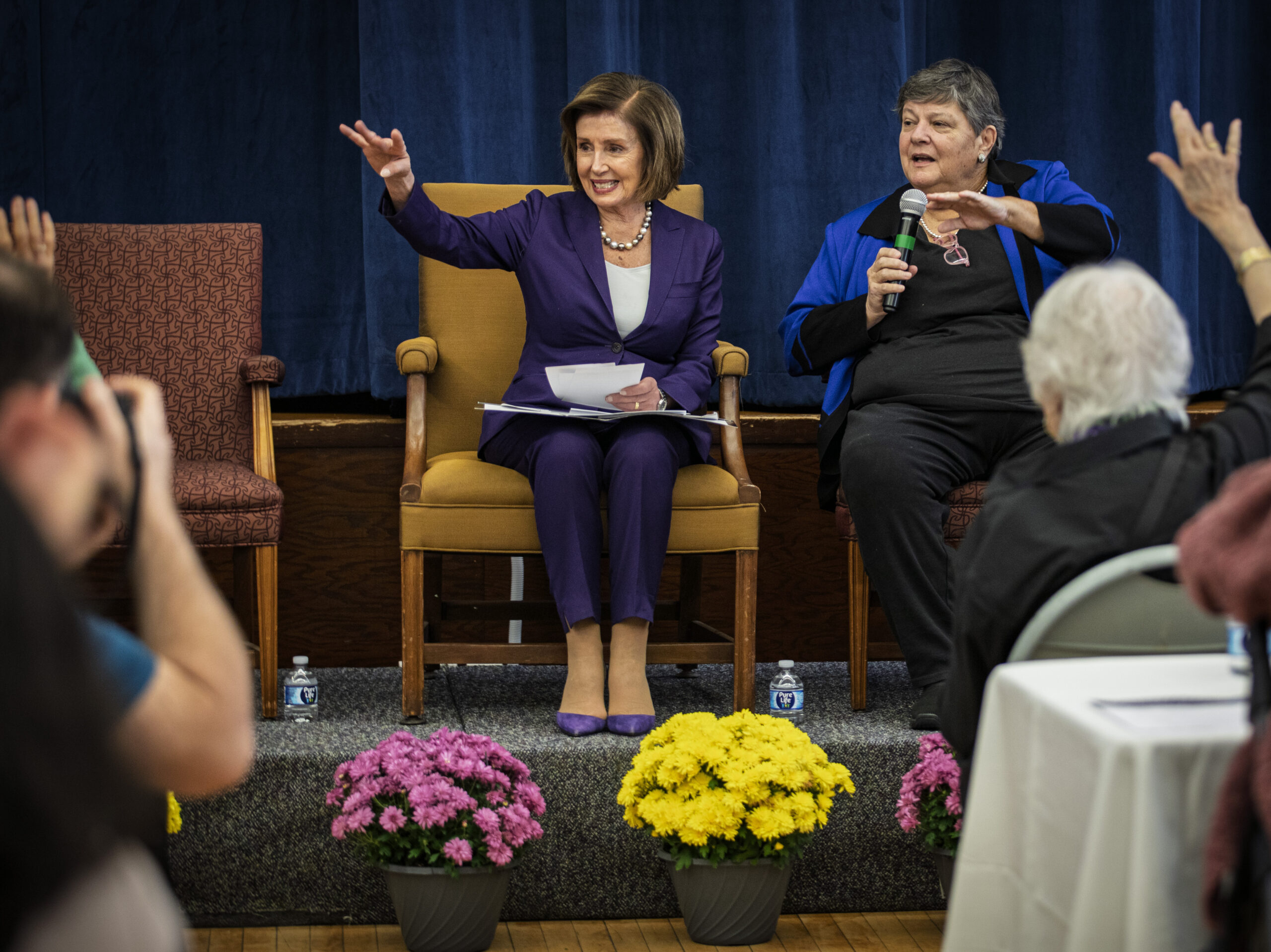
The university hosts a symposium during its reunion weekend celebrations each fall, and this year’s timely topic was augmented by a keynote speaker, Rep. Nancy Pelosi, D-California, the former Speaker of the House of Representatives and a 1962 Trinity graduate.
Lively panel discussions echoed through the university’s O’Connor Auditorium and into the hallways, focusing on topics that deeply resonant in today’s discourse: the vital role of women in political organizing, social justice as it relates to immigration, the rise of religious nationalism, and the media’s influence on political dialogue.
Trinity’s signature purple adorned every corner, imbuing the campus with a sense of unity and history as participants and experts alike engaged in dialogues, underscoring that democracy is not only on the ballot but in the hands of those ready to shape the nation’s future.
The “Democracy on the Ballot” symposium offered a timely exploration of the 2024 presidential election’s pressing issues as part of Trinity’s anniversary celebrations.
Trinity’s leadership hoped these discussions would empower the community to understand what’s at stake in the election and inspire informed, active participation in the democratic process.
The event brought together an impressive roster of speakers, including prominent figures such as Washington Post columnist Jennifer Rubin; Chonya D. Johnson, chief of staff to Rep. Troy Carter, D-Louisiana; U.S. Commission on International Religious Freedom Chair Stephen Schneck; and Trinity alumna and ABC political reporter Beatrice Peterson.
A team from the NETWORK Lobby for Catholic Social Justice also spoke, including Senior Policy Director Laura Peralta-Schulte, Government Relations Director Ronnate Asirwatham, and Government Relations Advocate Rev. Christian Watkins.
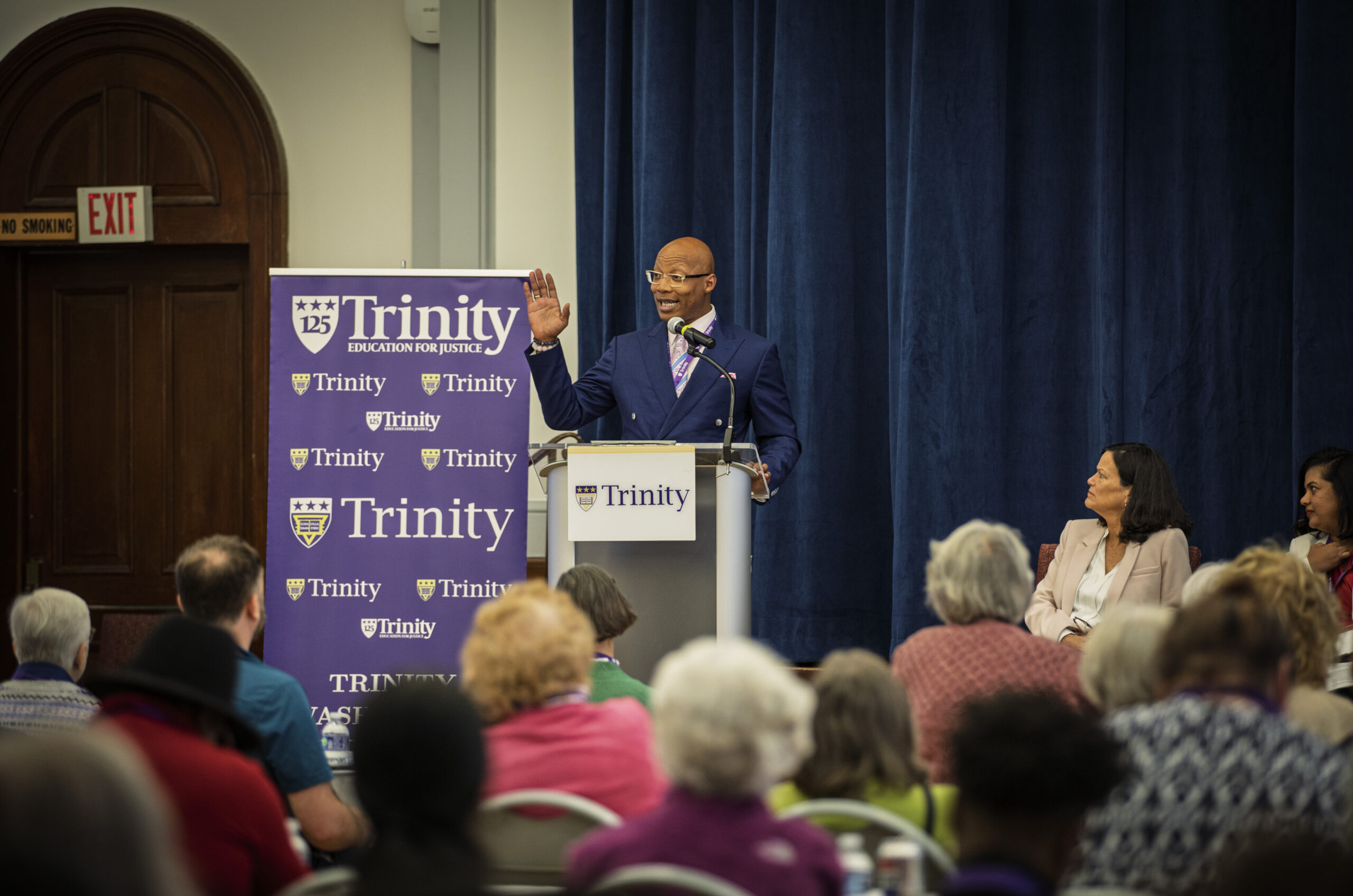
Their collective expertise offered a multifaceted view of election issues, delving into topics like media integrity, cultural inclusion, and grassroots political action.
By uniting these diverse perspectives, Trinity fostered a conversation underscoring the critical role of engaged citizenship in upholding democracy.
Students and alumnae left the symposium with renewed purpose for the 2024 election.
“I won’t lie, coming into this, I was a little skeptical,” said Andrea Montano, a second-year political science major, reflecting on her initial hesitation to vote for candidates who haven’t outlined their support for Palestine, an issue she holds close.
However, the symposium gave Montano new clarity.
“I feel confident about how I want to vote and,” she said, “most importantly, what I can expect from my vote.”
Trinity President Patricia McGuire noted that the event was meant to foster reflection on standing up for democracy and sharing.
“It surpassed my expectations,” McGuire said, “especially with Speaker Pelosi here to encourage us. The audience participation was fabulous, and I was proud to see our students leading the discussions.”
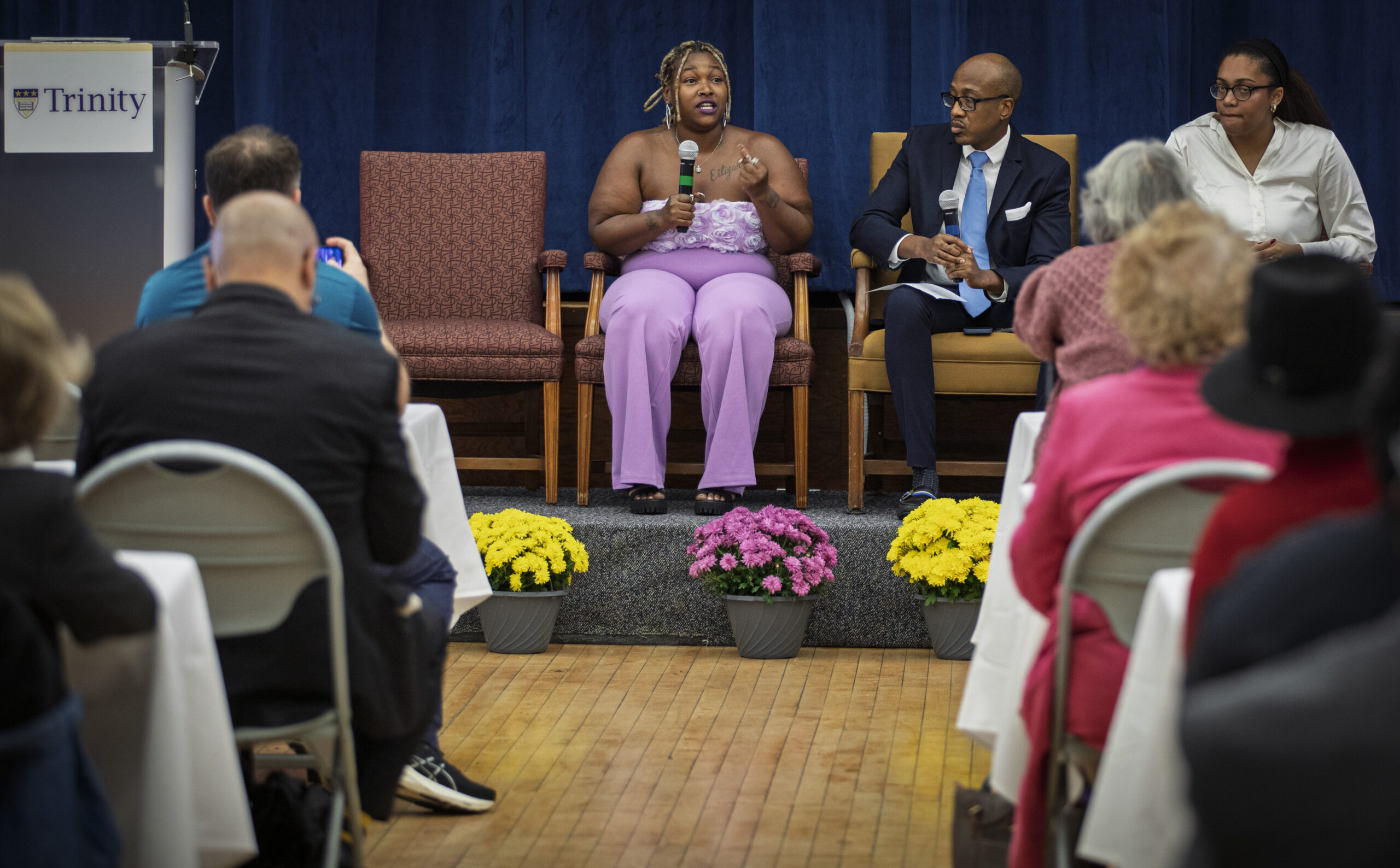
Alumnae from Trinity’s Class of ’74 echoed these sentiments, praising the event’s thoughtful organization and vibrant student involvement, with several members saying “It was smart,” “a great conversation,” “just wonderful to be here,” underscoring a collective pride in the university’s engaged, motivated students.
Through every speaker’s message, current students were reminded that politics isn’t an abstract concept but something that affects their lives —from tuition and healthcare to environmental policies and social justice.
As Chonya D. Johnson, chief of staff to Congressman Troy Carter, emphasized, voting is only the beginning.
Johnson encouraged students to ask themselves “why,” to know their purpose, and to continue advocating after the election, especially if results don’t align with their hopes.
“No matter who you are or what you’re majoring in, politics affects your life,” she told students in the audience. “As young people, you have a voice. Don’t underestimate your power.”
Johnson’s call to action resonated with the audience, urging students to use every resource available to them, from their chosen fields of study to their social media platforms, to be catalysts for change.
She encouraged students to create advocacy groups if existing ones don’t align with their passions.
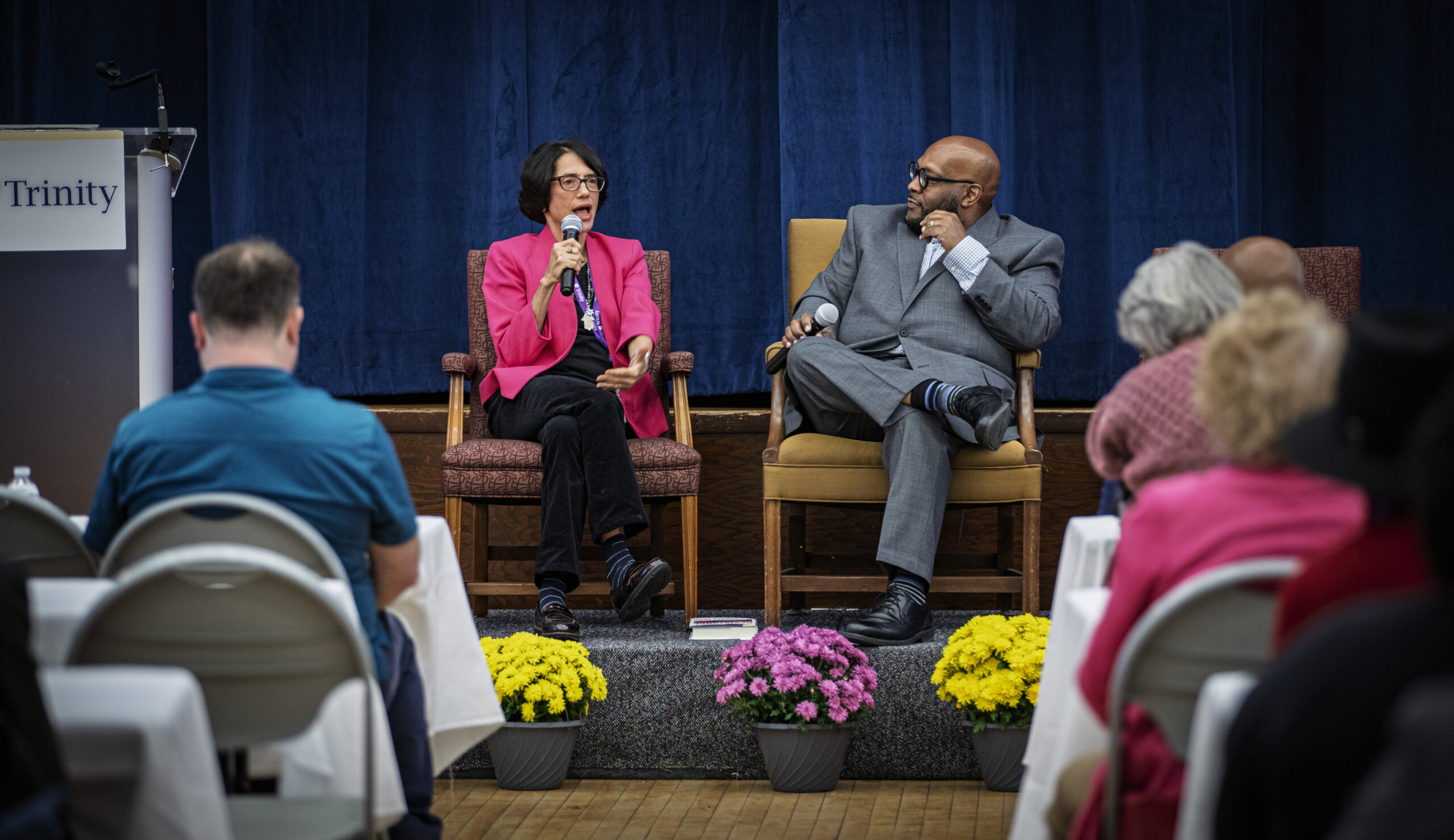
As future nurses, educators, entrepreneurs, and public servants, Trinity students were reminded of their essential role in advocating for a democracy that works for all.
They left with a roadmap for engagement beyond the ballot box, ready to stay involved, speak out, and help shape a just and representative future.
As the Nov. 5 election approaches, the Trinity community was reminded that it’s vital to remember that every vote counts in safeguarding democracy’s future.
The message throughout the symposium emphasized that this election, like everyone before it, puts democracy itself on the ballot, setting the direction for the nation.

Thank you for this great article about a fabulous Symposium– Democracy on the Ballot– at Trinity! I agree that the speakers brought clarity and depth to my understanding of the importance of voting this time, and at every election. I love this photo of students in a line, listening together. Thanks to Trinity Times for bringing so many aspects of the day to mind.