By Saron Gebereegziabhier
Trinity Times Correspondent
The creation of the Africana Studies Reading Room at Trinity Washington University represents a significant step in fostering a deeper understanding of African culture, history, and intellectual thought within the campus community.
Its founders at the university also see this space as a symbol of resistance against the anti-DEI (Diversity, Equity and Inclusion) movement happening in the U.S.
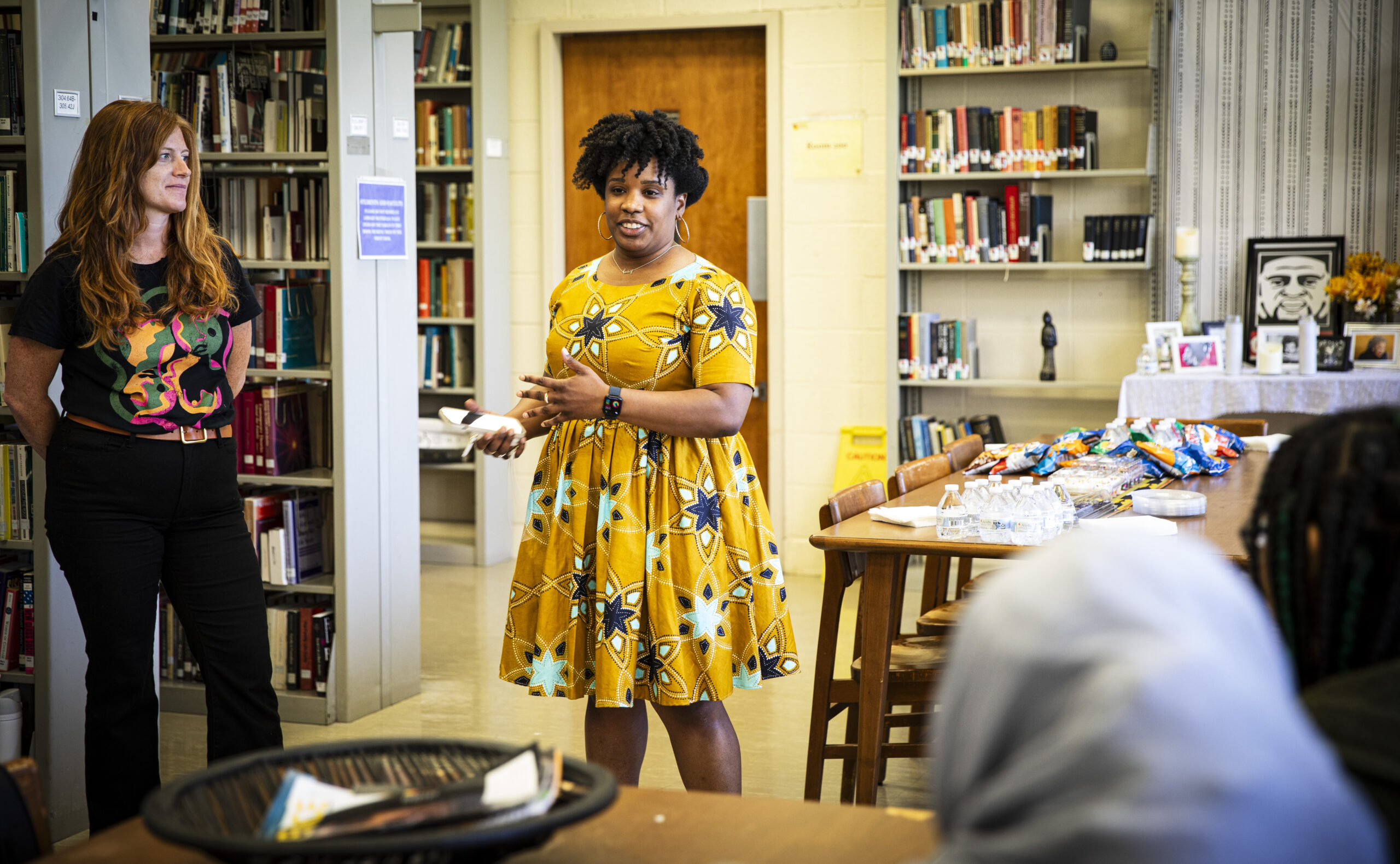
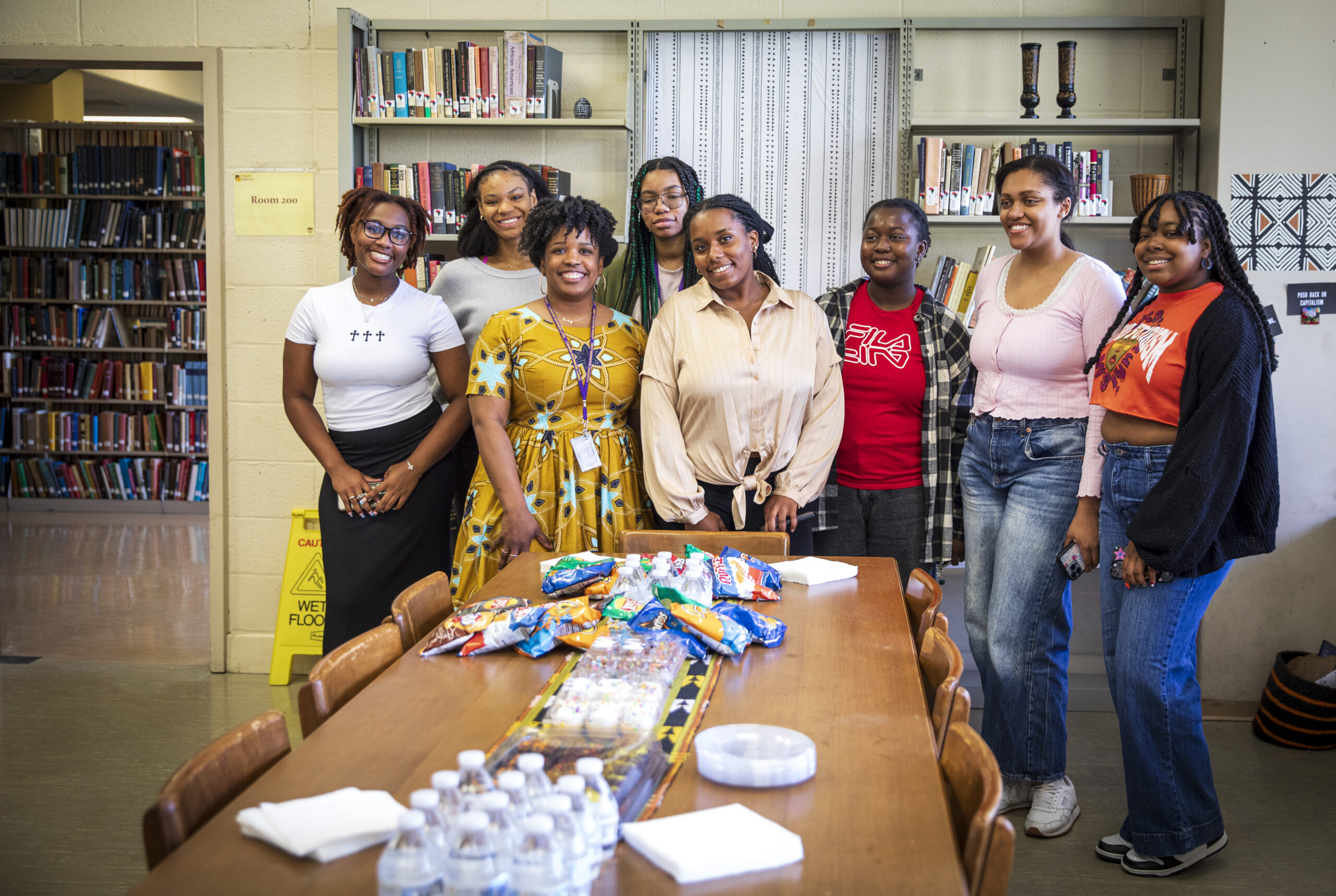
Officially opened in the campus Sister Helen Sheehan Library in September, the reading room initiative – led by Kimberly F. Monroe, assistant professor of Africana Studies and History at Trinity, and Trinity’s library staff – reflects a commitment to creating a space that honors the African diaspora while encouraging students, faculty, and staff to engage in meaningful dialogue and scholarship.
The vision Monroe and Trinity librarian Trisha Smith had was to create an intellectual and cultural hub at the university that featured Africana Studies.
The Africana Studies Reading Room arrives at a critical time in American society when Black Studies, Critical Race Theory, and discussions around diversity, equity and inclusion are under attack from conservative politicians and right-wing coalitions, Monroe said.
The concept for the Africana Studies Reading Room was born out of Monroe’s personal experience during her time as an undergraduate student at Grambling State University, an HBCU (historically Black colleges and universities) in Louisiana.
She fondly recalls the Afro-American Center at her university’s library, where she found non-circulating books related to African people’s experiences, culture, and history.
It was in this space that Monroe discovered sources to challenge a professor who doubted the existence of material on Black women’s roles in the American Civil War.
Inspired by that experience, she envisioned creating a similar space at Trinity, where students with African lineage could explore their heritage and foster intellectual discussions.
Both Smith and Monroe sought to establish a dedicated room for students to gather, study, and research.
“We wanted to create an Africana Studies reading and research room, for students to gather, study, and be in community with each other,” Smith told Trinity Times.
With the enthusiastic support of Trinity President Patricia McGuire, the project moved forward.
Monroe and Smith worked tirelessly to curate the space, with each focusing on different aspects of its design.
Monroe spent countless hours during the summer of 2024 collecting artifacts, posters, and artwork from her travels throughout the African diaspora (the communities of people descended from Africans in the Americas and other parts of the world) to contribute to the room’s décor.
These items, from countries like Ghana, Senegal, Haiti, and Tanzania, now serve as inspiration for students.
Meanwhile, Smith and her team concentrated on building a robust Africana Studies collection for the library.
To ensure the collection was both meaningful and intentional, Smith consulted with experts – including Manuel Mendez, a PhD candidate in the University of Maryland Information Studies Program, whose dissertation focuses on Arturo Schomburg, a key figure in Black librarianship and the collection of African diaspora materials.
The combined efforts resulted in a space that is aesthetically welcoming and intellectually rich. “We wanted the space to have a welcoming vibe,” Smith said, “while making sure the collection was intentional.”
The Africana Studies Reading Room is more than just a study or research space; it is a symbol of empowerment, belonging, and the continuity of the Black radical tradition, Monroe told Trinity Times.
She describes the room as “a maroon community space” where students are encouraged to feel a sense of freedom and empowerment.
The room is dedicated to ancestors who fought for the rights of marginalized groups, including American Black women and activists from the 1960s who fought for the inclusion of Black students and faculty in university spaces.
It’s Monroe’s hope that the room will serve as a place where students can engage with their history and culture while fostering dialogue across campus, especially those from Haiti, Cameroon, Kenya, Colombia, and other parts of the Black world.
The room is also meant to remind the Trinity community of the university’s commitment to undergraduate research and creating spaces for intellectual and cultural exploration, Smith said. “We hope it affirms students of African descent, their history, identity, and belonging.”
The Black Student Alliance plans to use the room for meetings and seminars, while Monroe intends to bring her Africana Studies classes there for research.
Professors teaching Africana-related courses, such as African-centered Psychology and African American Spirituality, are encouraged to utilize the space, she said.
In addition to these academic uses, Smith expressed hope that clubs – such as Trinity Reads – will host events in the room, adding that the space is open for collaboration among different student organizations.
“Black or Africana Studies goes beyond the four walls of the university,” Monroe said. “It is grounded in how we connect to our communities and how we struggle collectively toward liberation.”
While the long-term impact of the room on diversity, equity, and inclusion initiatives at Trinity is still unfolding, both Monroe and Smith hope it will create an environment where students and faculty can have meaningful conversations about these crucial topics.