By Brittany McAlister
Trinity Times Correspondent
When Trinity Washington University senior Cecilia Rivas thinks about global hunger, it’s more of an abstract concept as she lives in an environment without visible food insecurity.
“I understand that world hunger is a problem that mostly affects developing countries,” Rivas told Trinity Times. “I have mostly seen children in advertisements that are trying to stop world hunger.”
Though it’s not personally visible for most people in the United States, global hunger impacts millions of humans throughout the world.
According to the United Nations, more than 820 million people do not have enough food to eat, many of them children.
To put that number into context, the reported 2024 U.S. population is 341.5 million.
This staggering number highlights the severity of the situation and the urgent need for action to address it.
When Trinity students discuss famine and food insecurity, they most often focus on the hunger crisis in Gaza, an area ravaged by war and the topic of protest and activism among many U.S. college students.
Yet, the World Food Program (WFP) reports that the top five countries in the world facing severe hunger are 26 million in the Democratic Republic of Congo (DRC), 19.9 million in Afghanistan, 17 million in Yemen, 12 million in Syria and 13 million in The Sahel.
The WFP has asserted the current global food crisis is the largest one in modern history, with nearly 350 million humans experiencing the most extreme forms of hunger, with nearly 49 million of them on the brink of famine.
Malnourished mothers give birth to malnourished babies, children’s physical and cognitive growth is stunted with short-term and long-term effects and often a slow and agonizing death.
University campuses like Trinity’s are often briming with socially aware and engaged students who can be counted on to become activists for social justice causes, but addressing world hunger has never been one of the top subjects for U.S. college involvement.
Though some U.S. citizens do face food insecurity, it’s not an issue that is frequently physically visible for American college students, which is why their activism passions tend to focus on topics that are more observable, like the war in Gaza, said Joshua Wright, a professor of history at Trinity.
“Because of that, they may not be that concerned about people starving in some part of China, people starving in some African country or some Latin American country which is understandable,” Wright told Trinity Times. “But again, we do need to as a people be concerned about all of these issues because what’s happening somewhere else, does have some impact on us.”
The impact of global hunger might be indirect, but it definitely does affect everyone, because food insecurity is now often caused by climate change and it creates mass migration for people seeking food and security, he said.
“So, I don’t think we should turn a blind eye to it,” Wright said.
Trinity Dining Services Director and Metz Culinary Management General Manager Gilles Syglowski believes Americans need to be more focused on all food insecurity matters and asserted that global hunger is probably one of the more serious societal issues that is least talked about and often ignored or overlooked.
“Too many countries don’t have access to food and lack nutrition because society is more concerned with less meaningful things in the world such as getting a hold of the latest technology,” Syglowski said.
“We have all this sophisticated and advanced technology given to us,” he said, “but still can’t provide meals to people who are starving from hunger due to being unable to afford food or not having access to food resources in the communities they live in.”
Though Syglowski sees food insecurity as a global issue with different levels of severity, including throughout the U.S. among the homeless and low-income families, it’s his sense that Americans don’t necessarily connect with the impact the issue has on society.
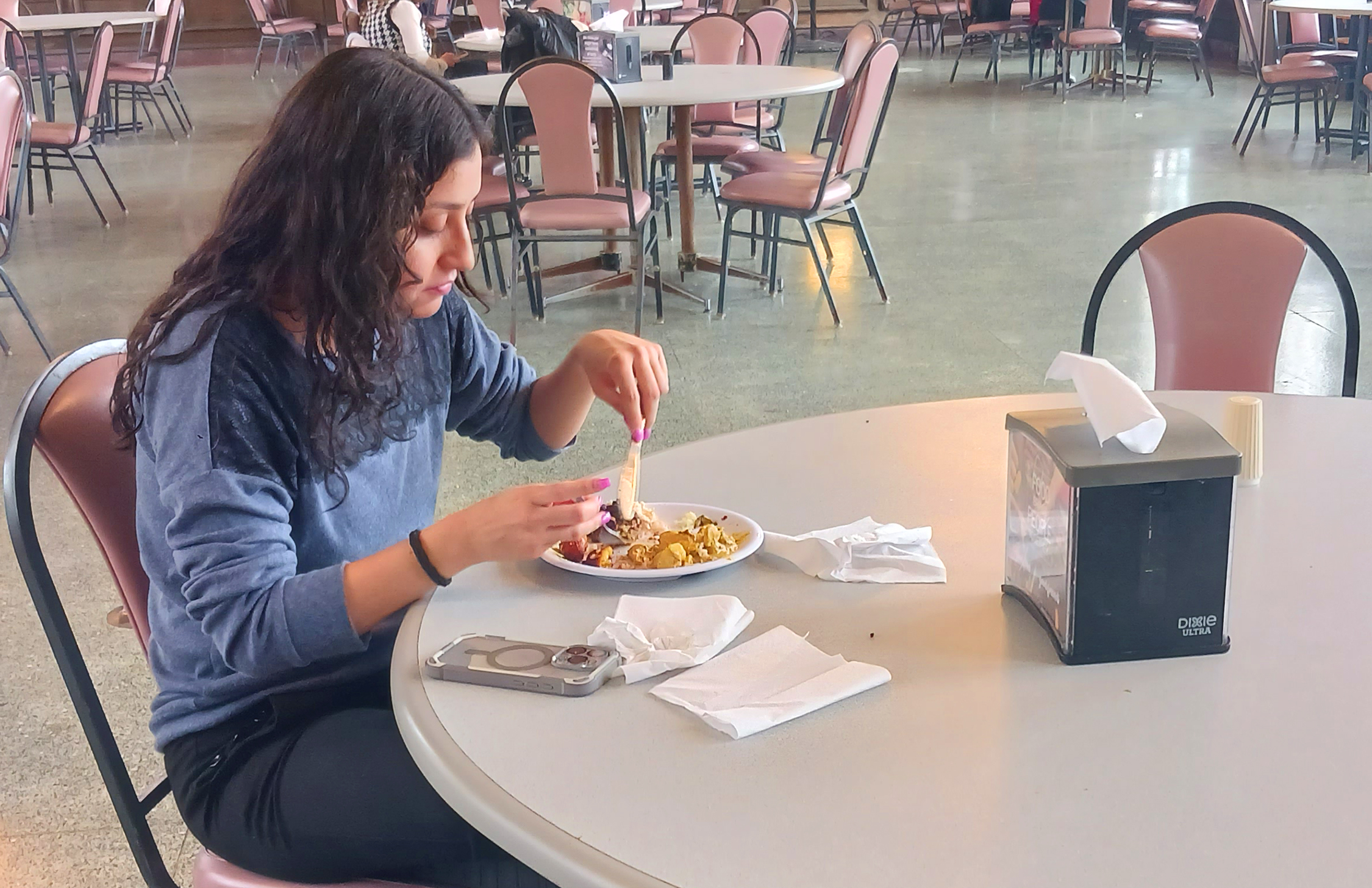
“Every day in the dining hall, I see Trinity students pile their plates up with a bunch of food and end up throwing away most of the food on their plate,” he said, adding this is an illustration of the indifference to food insecurity. “In other parts of the world, many people don’t have the privilege to get food on their plates or have the advantage to put food on the table.”

World hunger is a complex and multifaceted issue that requires a coordinated effort from governments, international organizations, civil society, philanthropic groups and the private sector to address, Wright said.
“Do Americans have a grasp on the world hunger issue? I would say no,” he said. “I think most people in this country are aware that we are very fortunate in comparison to people living in some other parts of the world.”
Addressing world hunger requires a multi-faceted approach that addresses the root causes of the issue.
This includes investing in sustainable agriculture, promoting equitable land rights, improving access to healthcare and education, and supporting small scale farmers in rural communities.
It also requires political will and international cooperation to address the systemic issues that perpetuate hunger and poverty.
Often, though, the forgotten aspect of food insecurity is that it’s not just a global crisis, it’s a local issue, said Notre Dame Sister Ann Howard, Trinity’s director of campus ministry.
Like many universities, Trinity has a food pantry with basic food staples available to anyone one in the college community in need.
Trinity’s food pantry is maintained through food and monetary donations and has helped countless people who are food insecure, Howard told Trinity Times.
Understanding the impacts of food insecurity extends beyond Trinity’s campus into the greater Washington region, Sister Ann stressed that campus ministry coordinates a student volunteer effort on Saturdays during the fall and spring semesters to work with the nearby Franciscan Monastery Garden Guild, which grows fresh vegetables to be donated to local organizations to help feed those in need at no cost.
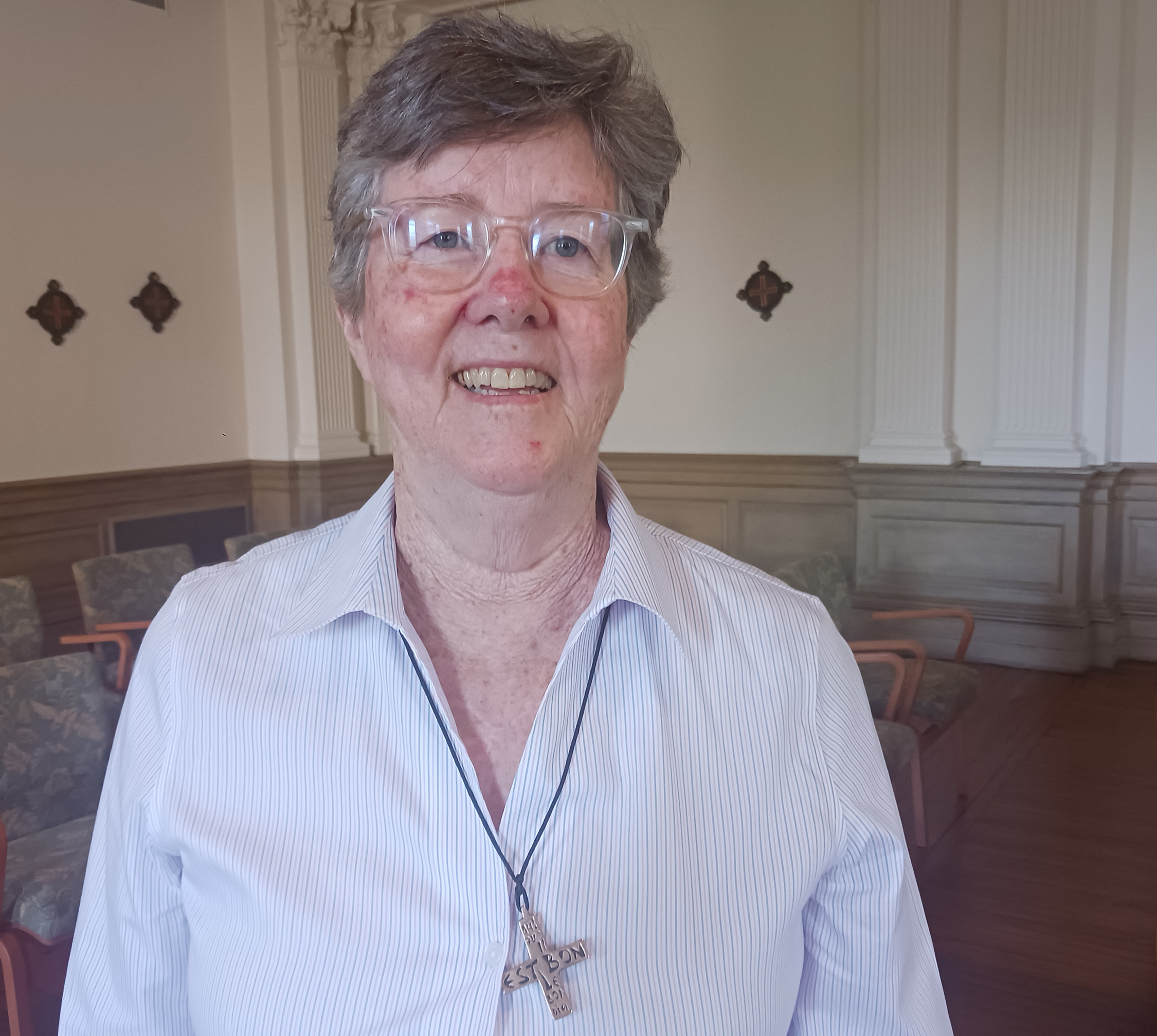
“We can all help address the global food crisis, even if it seems to us it’s not a significant effort,” she said. “I often hear people say they don’t have enough spare cash to help address hunger. My answer is, ‘you can give some of your time.'”
There are many nonprofit organizations like Hands On Harvests in Falls Church, Virginia, that seek volunteers to not only help support community gardens growing vegetables, herbs and fruit, but to be a garden mentor; host a drop-off location for donations; be a courier to pick up and deliver donations, plants or seeds; or help with fundraising, publicity, videos and website management.
Hands On Harvests provides seeds, seedlings, mentorship and plots in its community gardens so people can grow food for themselves or to donate to people in need.
The notion of volunteering to help address food insecurity really speaks to Camille Rasamoely, a Trinity junior majoring in Community Education.
“Even if someone doesn’t have much to donate,” Rasamoely said, “a lot of the time volunteering makes a difference and goes a long way.”