By Michelle Nataren
Trinity Times Correspondent
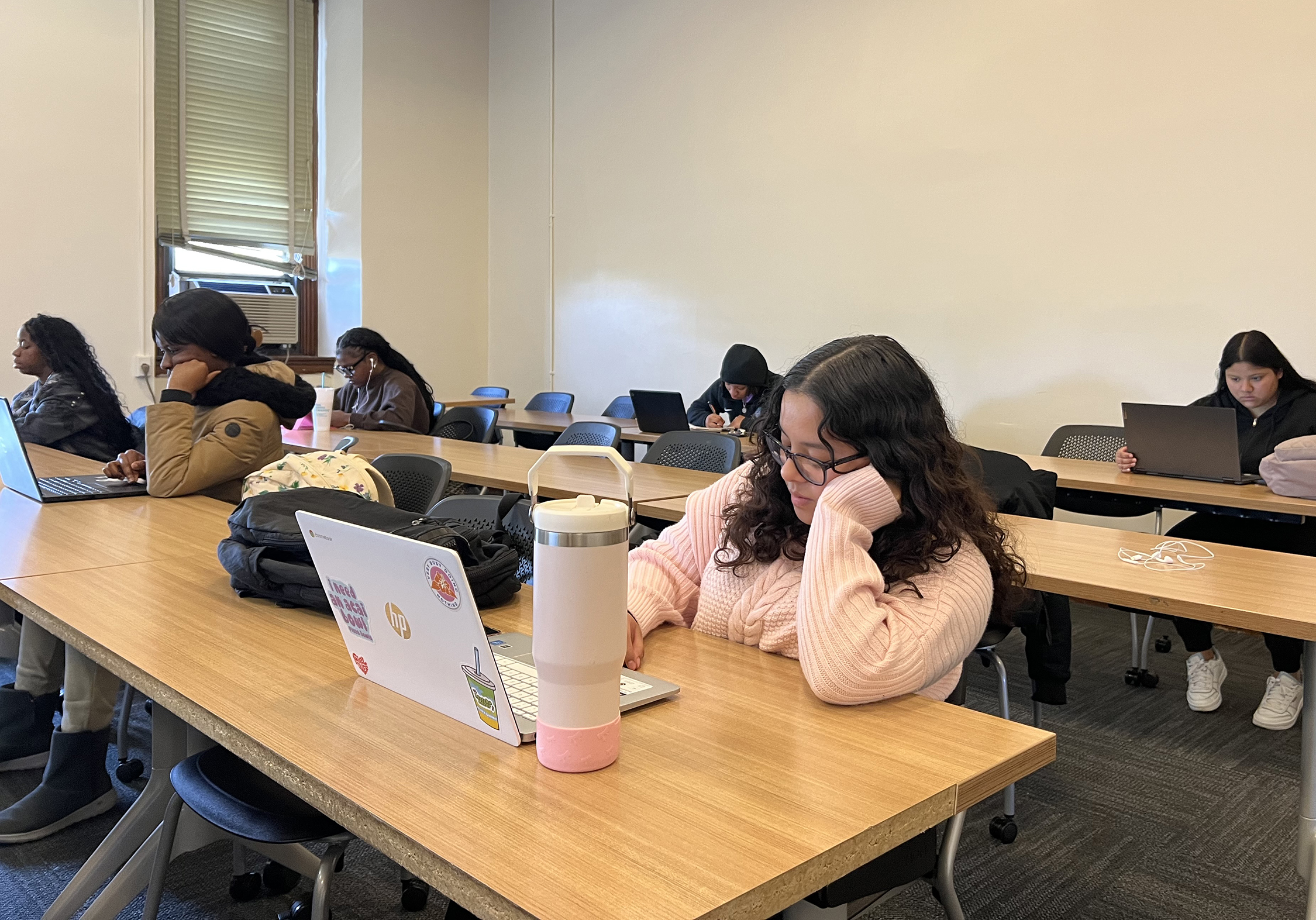
For Brianna Reyes, staying focused in class can mean fighting to remain in the room — even when her mind has already wandered somewhere else.
The Trinity Washington University freshman and childhood education major says she daydreams for as many as 10 hours a day, often while sitting in class and trying to concentrate.
“In class, when I feel overwhelmed with work, I just mentally exist out of that and daydreaming,” Reyes told Trinity Times.
The National Library of Medicine describes daydreaming as “the occurrence of spontaneous thoughts unrelated to one’s current situation.”
Reyes is not alone.
For many Trinity students, daydreaming is more than a fleeting distraction. For some, like Reyes, it becomes a way to cope with stress or emotional overwhelm. For others, it can also negatively affect focus, academic performance, and even relationships.
Jkaylah Beasly, a senior majoring in biology, told Trinity Times she has lost her attention in class.
While she remembers taking a particular test, Beasly said her mind was thinking ahead to the weekend. As a consequence of her daydreaming, she got a 70% grade on the test.
Angie Valdez, a sophomore majoring in communications, said daydreaming in classes “filled with lectures” has caused her negative outcomes on her academics.
“Daydreaming has caused me to not pay attention to the class, which has resulted in me not being able to participate in class or not being able to actually do the work in class,” Valdez said.
For other students, daydreaming might affect their social life more than their academics.
Reyes said she daydreams when she’s spending time with her new friends and her social “battery” runs out. She acknowledges that it can make it harder to build connections.
Some daydreams focus on negative thoughts, Valdez said. Thinking about past actions has led to negative outcomes and even a loss of friends. She said she often daydreams about what she “could have said during that situation” to change the outcome.
This type of experience can become harmful when it turns into rumination, said Carlota Ocampo, Trinity Washington University’s provost who is also a neuropsychologist.
“People are having daydreaming, where they’re ruminating over something bad or something that makes them feel bad, that can consolidate depression,” Ocampo told Trinity Times.
This kind of negative daydreaming often involves dwelling on unpleasant situations or feelings of guilt, which can intensify emotional distress over time, she said. There are two main types of daydreaming: maladaptive, which involves prolonged rumination on negative thoughts, and immersive, which involves planning for the future and setting goals.
However, Ocampo emphasized that not all daydreaming is harmful, noting that the brain needs moments of rest and reflection, comparing it to how the body needs sleep.
“Daydreaming is an aspect of brain functioning that is the product of a healthy functioning,” she said. “It’s a universal experience.”
Jkaylah Beasly said it can be beneficial when it focuses on the future, such as imagining “the car I’m driving and the money I’m spending.” She said these thoughts help her stay focused in the present because she knows she needs to “work hard now” to achieve that future.
Valdez has recently used daydreaming in a similar way. She told the Trinity Times that imagining herself speaking in public has led her “to look into internships” that align with those goals.
Ocampo described this as a more positive form of daydreaming.
“There’s positive daydreaming that might involve consolidating memories or just taking up what you call a reset,” she said. “Someone is thinking about meeting a goal or just organizing information.”
For students trying to control daydreaming, Beasly said her helpful strategy – to stay grounded in the present. She focuses on “what’s going on right now, what’s in front of me,” rather than thinking about something else.
Reyes has taken a similar approach, turning to activities like coloring to stay focused.
“When I daydream, I just sit there and think about a situation where I hope it happens or something like it,” she said. “But coloring makes me focus on what I’m doing at the moment.”
Ocampo reinforces these strategies, noting that “everybody needs to just space for a minute” and that small moments of self care can help students reset their focus without completely losing attention.
For Reyes, daydreaming remains a way to cope with stress, even as she recognizes that it can interfere with her daily life.
“To some extent, it’s a comfort thing,” she said. “But it does distract me from things I need to focus on, so I’d like to work on that.”