By Saron Gebereegziabhier
Trinity Times Correspondent
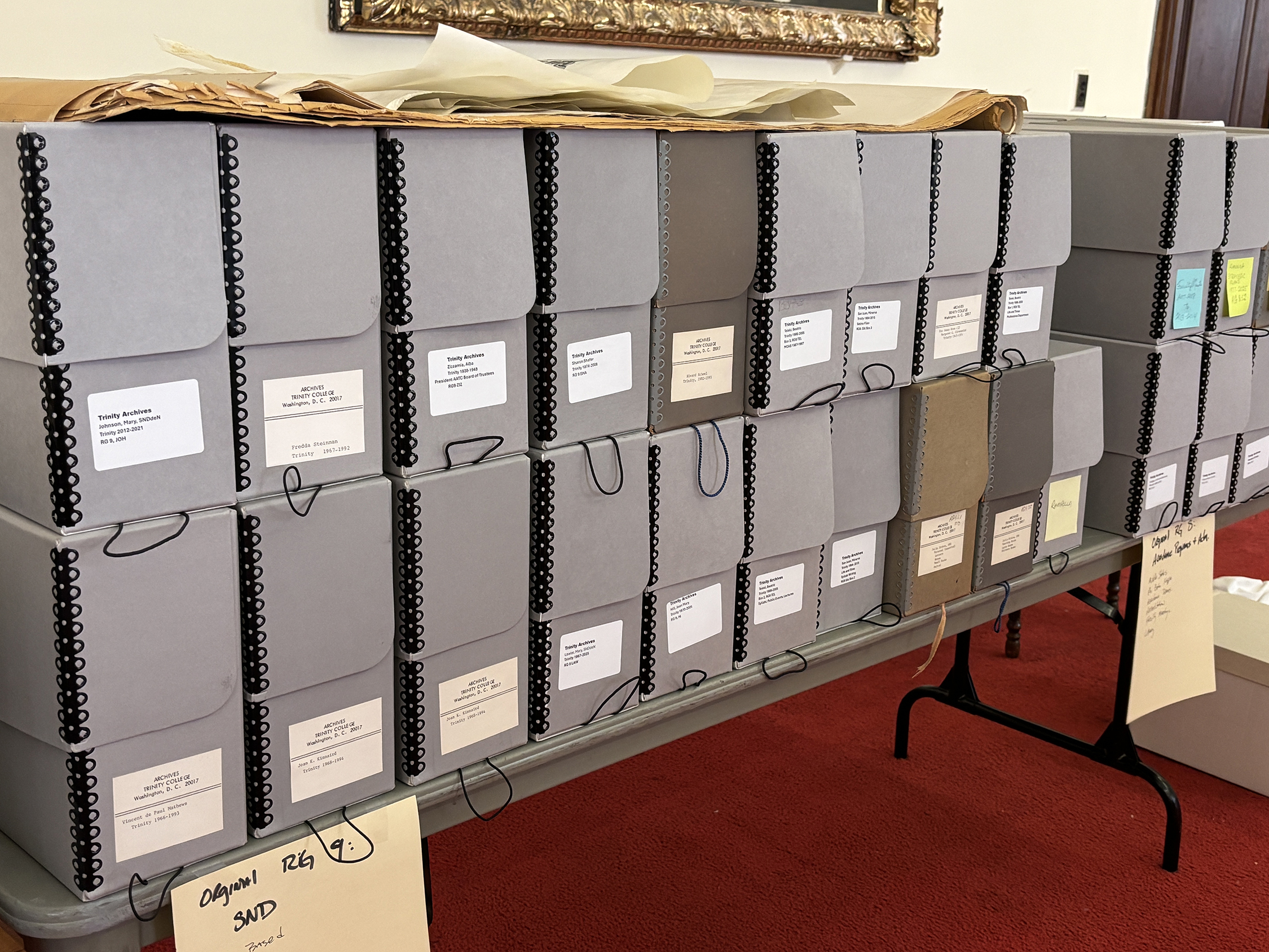
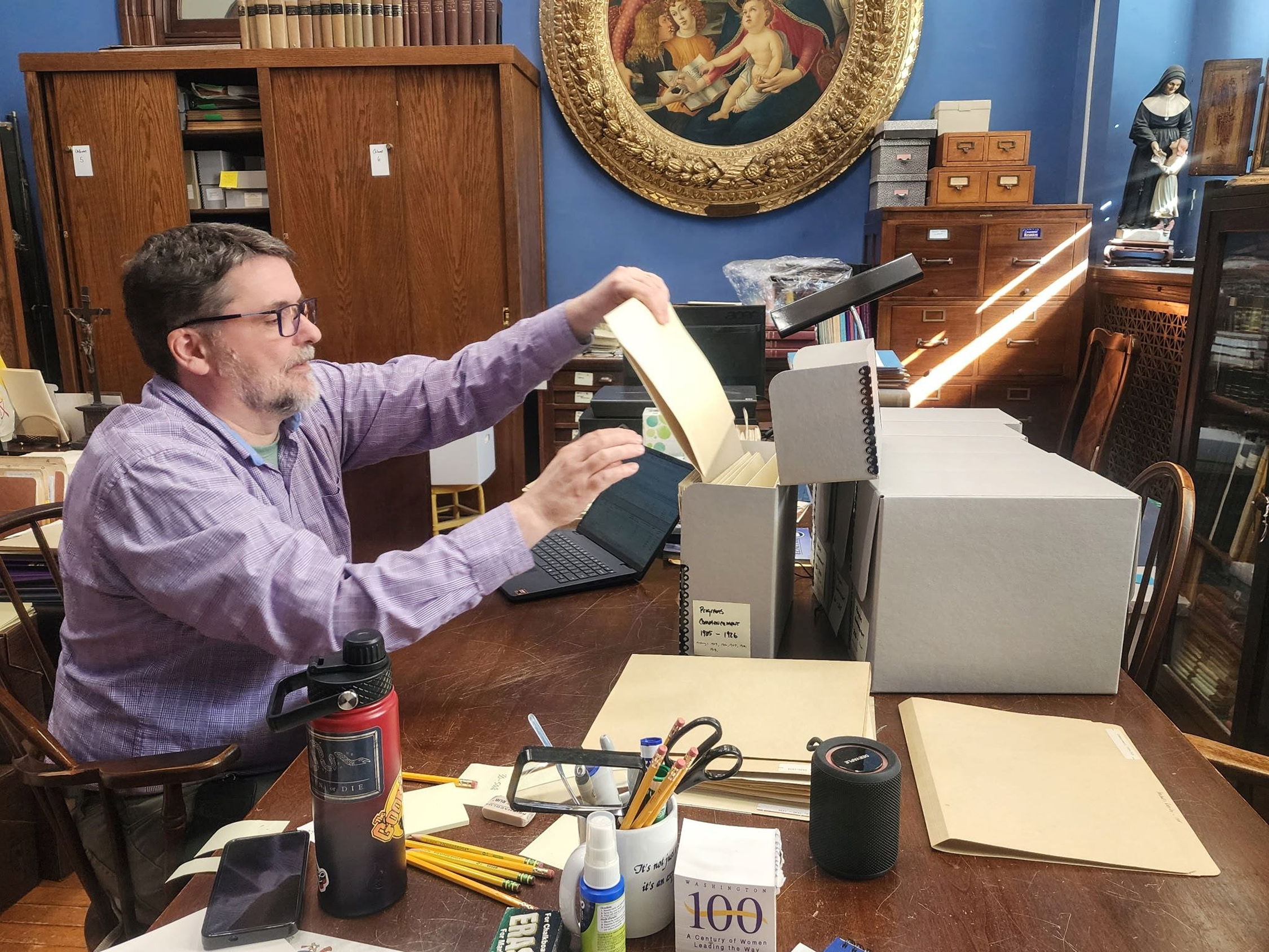
The newly established archive room at Trinity Washington University isn’t usually loud. Most days, it’s a steady rhythm of quiet work: folders opened, photographs examined, flyers sorted and campus history placed into categories that make it possible for someone else to find it years from now.
Archives play a vital role in preserving the institutional memory and identity of Trinity Washington University, documenting its history, mission and the experiences of its community over time. As the university transitions its archives from a longtime space in Main Hall – where they were maintained for decades by the Sisters of Notre Dame de Namur – the shift follows the 2025 retirement of longtime archivist Sister Mary Hayes, who oversaw the collection’s care and development.
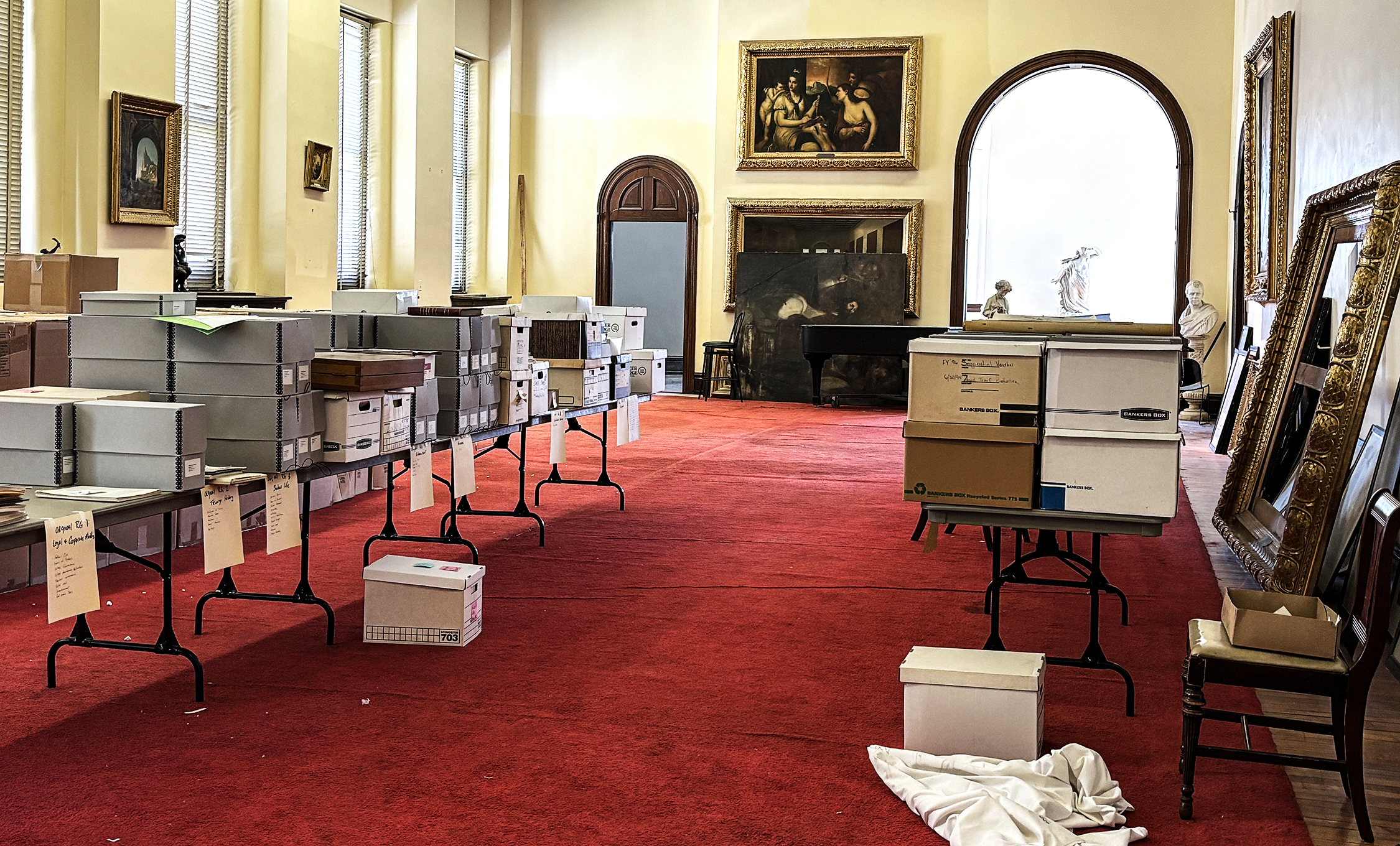
Stewardship of the archives is now being handed to the university’s new archivist, Mark Greek, who is working to bring the collection into the 21st century while also assessing how best to implement digitization efforts in the future. The move to a new space in the Sister Helen Sheehan Library is expected to improve access for students, faculty and researchers while ensuring the continued preservation of materials that chronicle Trinity’s history.
“I’m processing materials, either organizing flyers, sorting photographs or updating categories,” said Nermin Redi, a Trinity sophomore student worker, describing the day-to-day work that often happens in the background of campus life but shapes what Trinity will remember later.
That work is taking on new urgency as Trinity’s archives settle into a new chapter under the university library.
“I am delighted and honored that President [Patricia] McGuire trusts the library to be the new home of the archives,” said library Director Trisha Smith. Moving archives under the library is a “common, or standard, structure in higher ed,” she added. The shift is administrative, but it’s also cultural: it marks an effort to make Trinity’s institutional memory easier to access, easier to research and more reflective of the people who lived it.
The question, for Greek, is not whether Trinity has history worth saving – but whose history gets preserved and how students can use it.
“The more we capture the student voice, the better,” Greek said. “The university can capture the university’s voice, no problem. We need to capture the student’s voice.”
In a campus environment where semesters move fast and student organizations constantly reinvent themselves, that record can be the easiest thing to lose, he said, unless someone intentionally protects it.
“Archives provide access to primary sources like letters, journals, yearbooks, photographs and memoranda,” said Sanaa Palmer, a library associate at Trinity’s Sister Helen Sheehan Library. “Without archives, we would be limited to what has already been published.”
That makes them valuable for student research and reporting because they show not only what people say happened but also what was recorded, created, debated and documented at the time.
But archives are also shaped by selection. Archivists don’t keep everything; they evaluate what has long-term value, Greek said. In professional archival practice, that process is often described as appraisal – the determination of whether materials have permanent, archival value.
“The Sisters did a great job with some organization,” Greek said. “So the collection has a rudimentary organization, so things are findable. They did a pretty good job with accessing things for not being trained as archivists.” At the same time, he is working to strengthen description and searchability, with a focus on making the collection easier to navigate not only for staff but also for students who may not be familiar with how archives work.
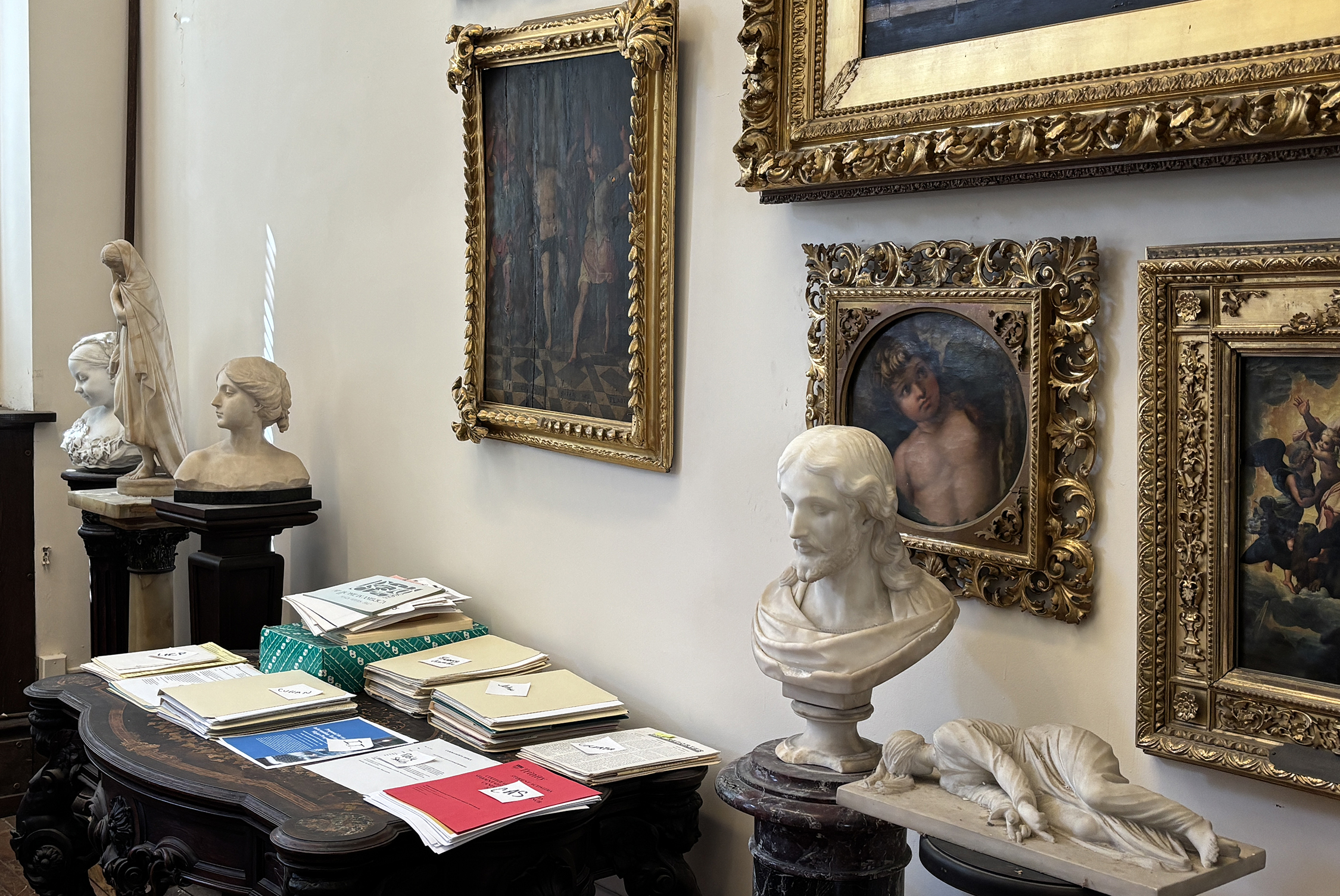
“University archives shape what a campus remembers by determining what should be preserved in the archive,” Palmer said. “University archives run the risk of prioritizing official records (like administrative papers), which can reinforce institutional narratives while overlooking student movements, the experiences of marginalized groups or everyday campus life. What is not preserved or made visible risks being forgotten, so archives do not just preserve the memory of an institution; they play a large part in constructing it.”
“I think archives have a role in everything,” Greek said. “So as long as there have been people, there have been people trying to tell a story. And then as you start to tell a story, people start to try and save those stories in various forms.”
He pointed to the way many disciplines rely on past records – even in the sciences – explaining that research can require data from decades earlier and that archives can be one of the places students turn when they need that historical record.
Still, one of the biggest pressures on modern archives is access – and student expectations that materials should be searchable online.
“We have not started digitizing,” Greek said. “We are talking about doing some digitization more in the future, and what that will look like, we don’t quite know yet.” He emphasized that not everything can go online at once and that digitization must be prioritized carefully.
Even so, Greek sees a clear place to begin – especially with materials students and researchers consistently need. He pointed to older student publications, such as historic Trinity student newspapers and university journals, as records that become dramatically more usable when they are searchable, allowing students to avoid manually sifting through decades of pages.
“Right now, I’m working on photographs from the 1940s and organizing them into the proper categories,” Redi said. “Sometimes I help prepare things for digitization or check that items are stored properly.
“I didn’t expect just how much detective work is involved,” she added, explaining that some items arrive with “almost no information on them, so you have to use context clues, dates or even compare them with other materials to understand where they belong.”
“A lot of students think archives are old, dusty storage rooms,” Redi said. “They don’t realize how active the work is. It’s more hands-on than people expect.”
For her, the most powerful materials are photographs – not because they are famous, but because they make campus life feel continuous. The images show “campus life in such a different era,” she said, helping students feel connected to those who walked Trinity’s halls generations earlier.
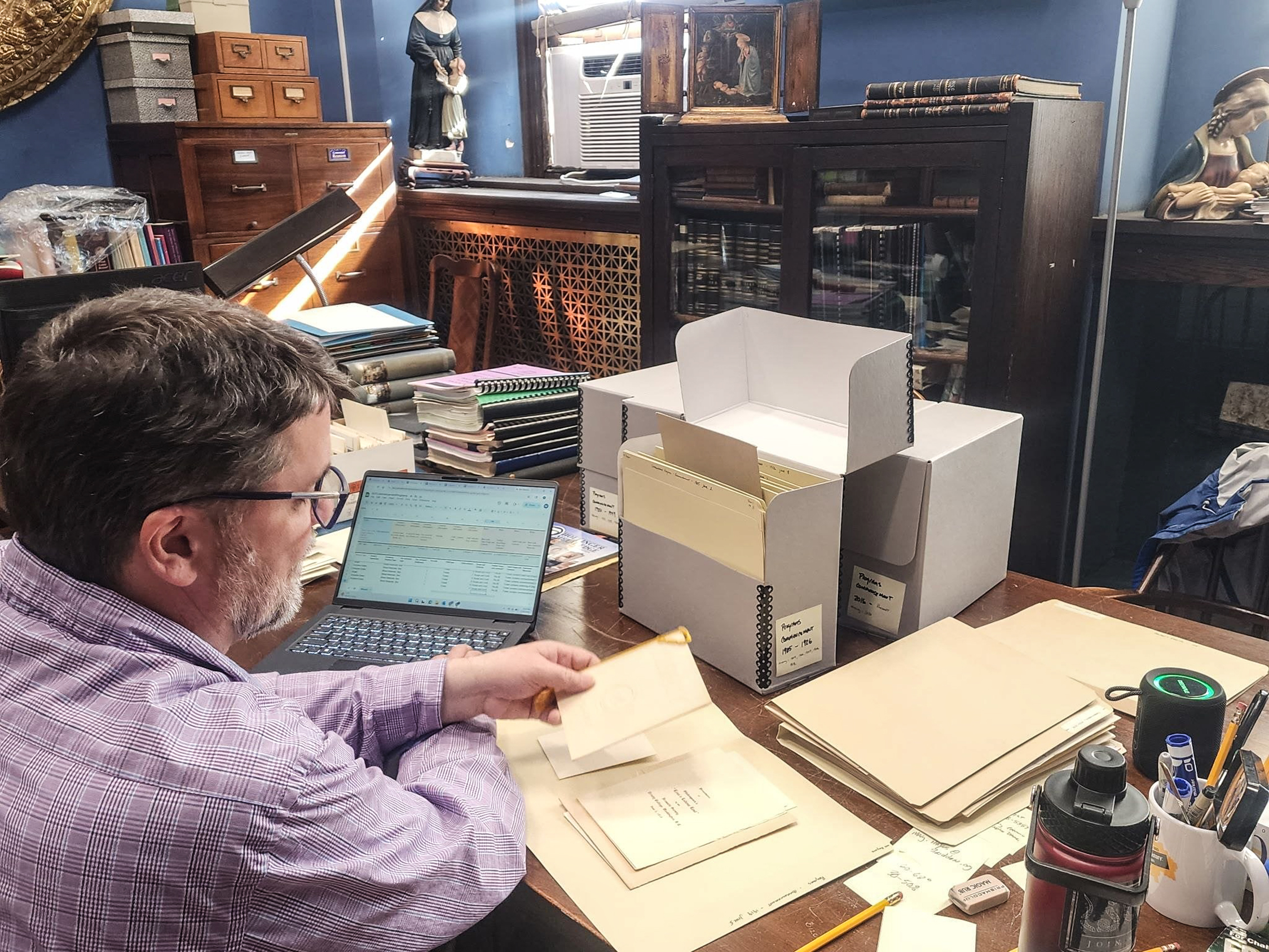
Expanding access and engagement with the archives is what is exciting Smith the most about the archives transition, highlighting goals such as creating a searchable catalog, making parts of the collection digitally available and increasing undergraduate research. She is “most inspired by the idea to [see] more of Trinity’s students conducting undergraduate research in the archives and to work closely with faculty on developing a course that spends time doing research in the archives,” Smith said.
Access starts with something even simpler than digitization: students realizing the archives are for them. “A, what is an archive? B, how? Why is it important to you as a student? And what does it mean for them?” Greek said.
“They can email me, and I can look things over,” he added. “There is a generic archives@trinitydc.edu that you can email, or you can email me directly. And I’m happy to help with anything that they’re looking for.” He said the archives can help students who need another source, are struggling to shape a topic or simply do not know where to start.
“Archives are so sister-oriented or connected to libraries so that the same kind of reference that you would get at the library is the same kind of reference you can get in the archive,” Greek said.
“Talk to an archivist because the archivist can give you 50 stories,” Greek said, adding that the archives can also provide the records and materials students need to follow those ideas through.
In many ways, university staff and students say Trinity’s archives are about something larger than storage and organization. They are about what Trinity chooses to remember. The flyers that feel ordinary today, the photos that seem like random snapshots, the publications students skim and move on from – all can become the evidence someone needs later to understand what Trinity was, what it valued and how it changed.
And in the archive room, that future is being filed into place.