
By Anette Perez
Trinity Times Correspondent
Walking through the campus of Trinity Washington University, it is easy to spot a brightly lit vending machine offering a quick fix for a slow morning or the end of a long day. They can be found in almost every building, and they all contain the product students reach for to boost their energy: heavily caffeinated energy drinks.
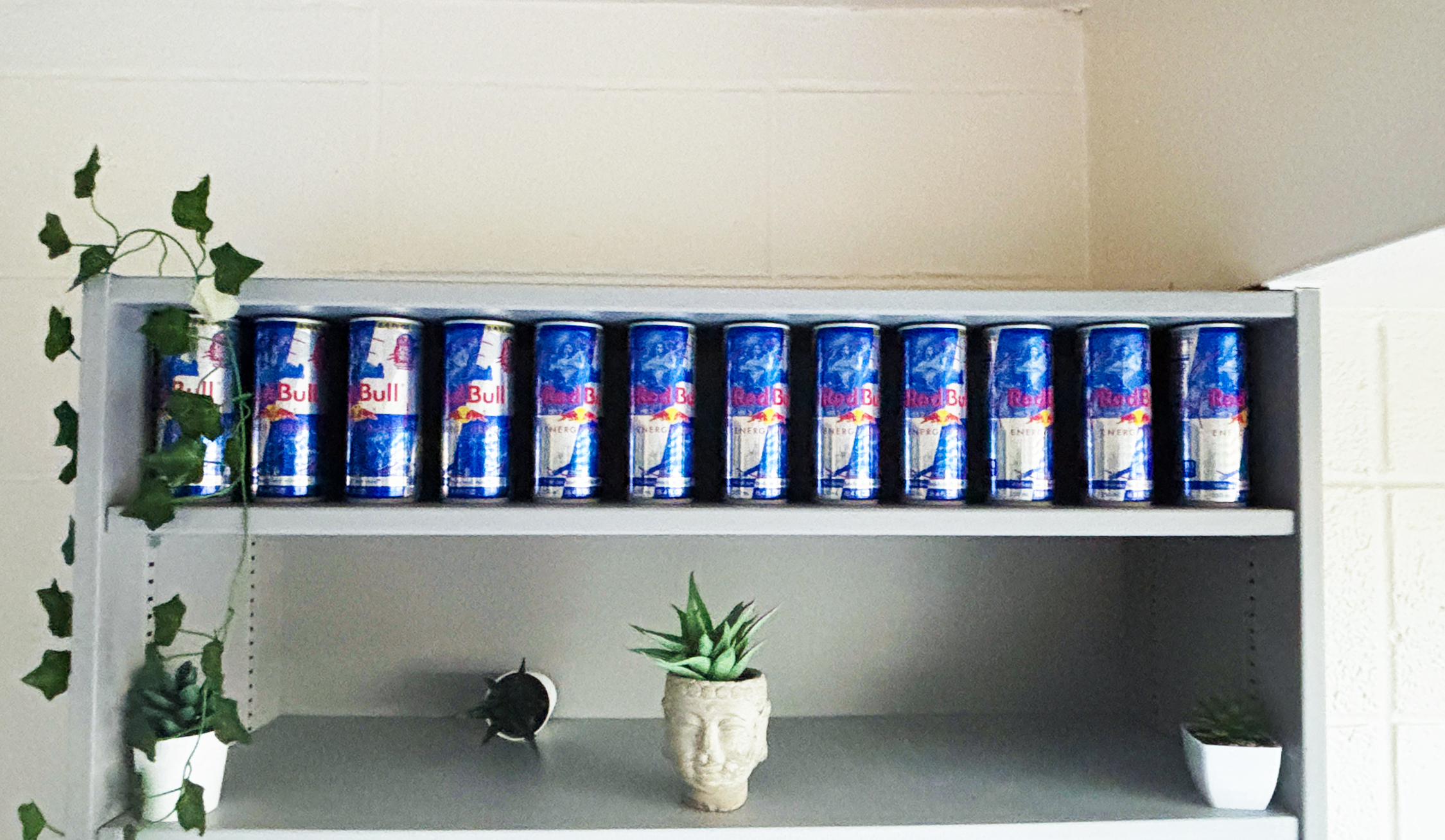
According to a 2023 report from the National Library of Medicine, energy drink consumption has been on the rise since the 1997 debut of Red Bull, today’s leader in the energy drink market. Since then, energy drink sales have continued to grow nationwide, and some Trinity Washington University students appear to be mirroring that trend.
Sophomore Cheryn Chavarria, a Trinity business administration major, told Trinity Times that energy drinks “help keep [her] up,” and she consumes up to three energy drinks a day.
Chavarria is one of many students who turn to these beverages when they need an extra push. Pursuing higher education is no easy feat, and student life often includes early mornings, late nights and a lack of regular sleep. These factors often result in low energy, making it difficult for students to stay awake, alert and focused. This is where students say energy drinks can help.
Energy drinks, according to the U.S. Centers for Disease Control and Prevention, are characterized by high caffeine content and various other stimulants such as guarana, taurine and L-carnitine. They have been around for decades, and their regulation in the United States falls under the Food and Drug Administration. However, FDA regulations do not impose strict limits on caffeine levels in energy drinks as they do for foods and standard beverages.
While energy drinks may offer short-term benefits, excessive caffeine consumption can pose health risks, including dependence, sleep disturbances and cardiovascular complications, according to the National Library of Medicine.
Vivanna Simon, a Trinity freshman majoring in biochemistry, said energy drinks help her when she is running low on energy, but within the second hour she sometimes experiences trembling and a fast heartbeat. Chavarria also said that when she first started drinking energy drinks, she would become extremely anxious. Over time, she has developed a dependence on them, and those initial effects have since faded.
“An energy drink is like coffee 5.0,” said Angela Anderson, director of Trinity’s Health and Wellness Center and lead clinician as a primary care nurse practitioner. Anderson told Trinity Times how easy it is to exceed safe limits, noting that “the average dosage of what a human being should consume is about 300 milligrams (of caffeine) through the course of about 24 hours.”
Just one can of the average energy drink can contain as much as 300 milligrams, “and so, imagine that all in one beverage and over a very short period of time,” she said.
The daily intake of 300 milligrams of caffeine is a respectable guideline clinicians sometimes use, but official guidance from the FDA cites 400 milligrams a day as generally safe for most healthy adults.
Anderson noted that the level of caffeine in these beverages can cause the heart to beat too fast, known as tachycardia, as well as arrhythmia, an irregular disruption of heart rhythm. The potential effects do not stop there, she said, adding that the stimulant load in energy drinks can also contribute to neurological issues, including brain fog, difficulty concentrating and insomnia.
“I don’t think anyone would rest if their heart feels like it’s beating out of their chest,” Anderson said. “It does cause insomnia and sleep disturbances because of that jittery excitability and rapid heart rate that occurs.”
Students who typically visit Anderson at the Health and Wellness Center to discuss energy drink use are often athletes, while the average student tends to bring up increased coffee consumption during stressful times such as finals week. She suggested that cost may be a reason some students choose coffee over energy drinks.
At Trinity, access to heavily caffeinated beverages is widespread. They can almost always, when stocked, be found in every building on campus with the exception of the Notre Dame Chapel. From residence halls to the dining hall to academic buildings, students can purchase most energy drinks for about $4.50.

When deciding between coffee and energy drinks, Simon said she prefers energy drinks because they feel more potent. She said coffee often fails to keep her awake.
“Some energy drinks you choose make you feel pretty bad after you drink them, like Celsius,” Simon said. “I don’t drink it, I go for Monster.”
Red Bull may be the leading brand nationally, but it is not the only product in the hands of Trinity students. While Simon avoids Celsius, it is not uncommon to see it carried by other students, alongside popular brands such as Monster and Alani Nu.
For Chavarria, flavor is the deciding factor. She finds energy drink flavors more appealing than coffee and said the variety keeps the experience exciting. She emphasized that her main goal is to stay awake, regardless of brand.
Anderson offered natural alternatives for students hoping to limit their caffeine intake, saying there are ways to boost energy without relying on highly caffeinated drinks. She named ginger and ginseng as two options, both available in teas, supplements and other forms that can help combat fatigue.
Although student consumption of energy drinks is unlikely to slow anytime soon, Anderson emphasized that a common misconception exists that the amount of caffeine consumed “doesn’t matter.” Even if students believe they are not being harmed by excessive or constant caffeine consumption, she said consuming more than 300 milligrams of caffeine a day almost guarantees a hard crash or other symptoms.
“I think that people just need to remember that there are harmful effects in addition to what you want [energy drinks] to do,” Anderson said. “There are harmful effects of consuming too much caffeine, and you have to be mindful.”