By Dashawnda Marshall
Trinity Times Correspondent
Social media is increasingly shaping how students explore colleges – even before they ever set foot on campus.
Soon-to-be Trinity Washington University student Saron Gebereegziabhier wasn’t scrolling to keep up with friends or the latest trends; this time, she was focused on her future. After deciding to pursue higher education in the United States, she turned to several social media platforms to help make her decision.
“I would use social media to see what the campuses looked like and what the student populations were,” Gebereegziabhier said, noting that in-person tours weren’t an option for her as an international transfer student from Ethiopia.
Instead of campus visits, she relied on student perspectives to gain insight into campus life. How did Trinity stack up? Gebereegziabhier follows the university on several platforms. “I believe Trinity’s social media could be leveraged more,” she said.
A survey by the National Center for Education Statistics shows that traditional factors – academic quality, university reputation, available programs, job placement and cost of attendance – still matter most to prospective students. Gebereegziabhier agrees. “Financial aid, visa process, accommodations of housing, and on-campus jobs” were the points that mattered most when making her decision.
Like Gebereegziabhier, Trinity sophomore Nermin Redi, from Saudi Arabia, prioritized affordability. Unlike her, “Social media didn’t play a big role in my decision on where to attend college,” Redi said. “My main concern was making sure I could get enough money to afford college.”
Social media has infiltrated almost every facet of modern life, including college choice. But many Trinity students and staff say it isn’t the deciding factor. Rather, it serves as a complementary tool supporting the work of Trinity’s admissions team.
“Social media reinforces their messaging and the work they are doing,” said Phil Reese, Trinity’s director of multimedia services. On Instagram, the university aims to give prospective students a window into campus life by highlighting events and unique experiences. The feed showcases athletics, academic programs and community events.
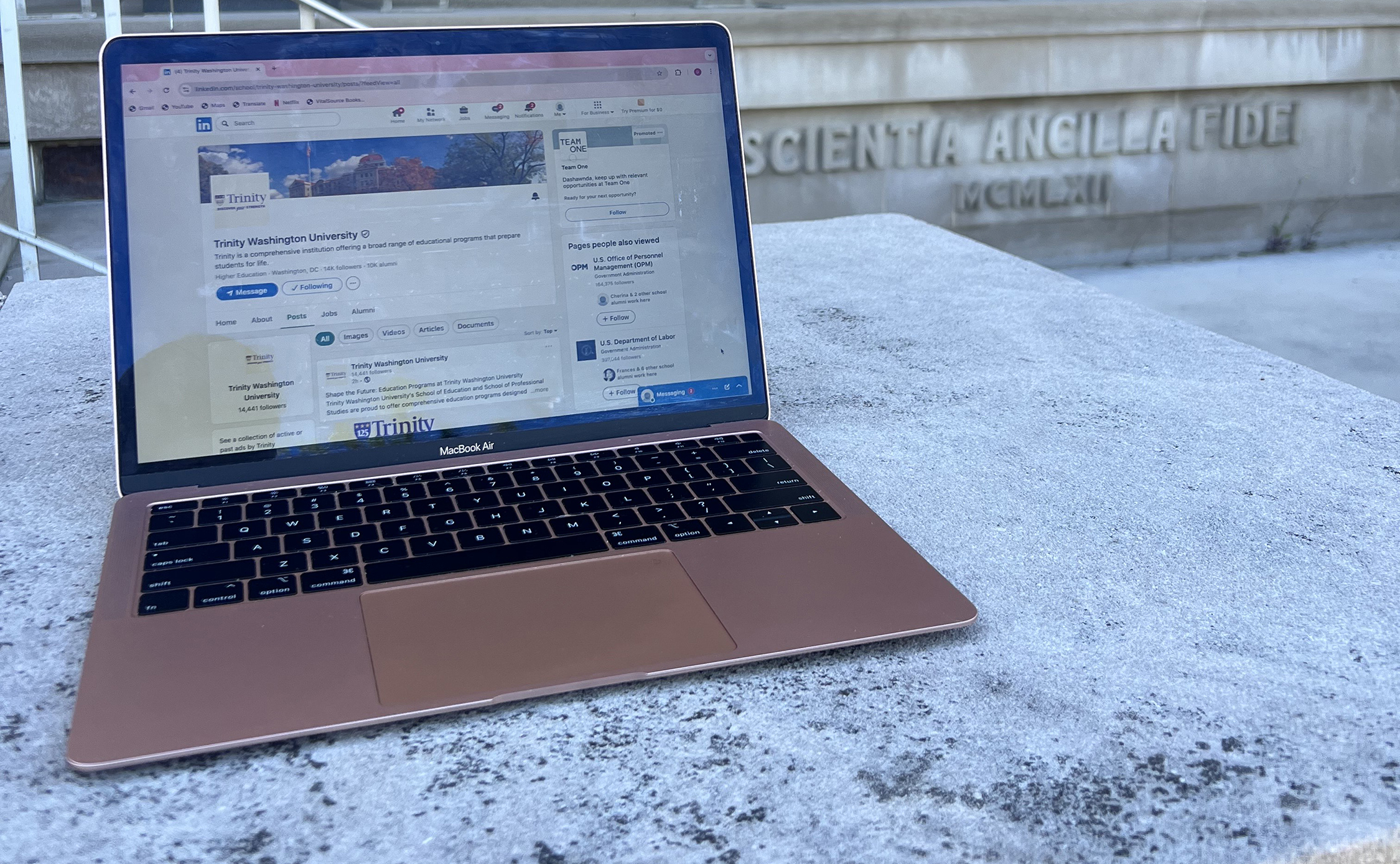
Trinity is active on most major social media platforms, including Instagram, LinkedIn, YouTube, X, BlueSky and Threads, with plans to expand to TikTok soon, Reese said, and emphasized the importance of building a quality content library and partnering with staff and students.
“One of the most effective tools is the student-run social media accounts,” he said, “which do much more for Trinity than any department could.”
Authentic student voices that showcase Trinity are a cornerstone of the university’s online presence, Reese told Trinity Times.

With plans to expand its social media presence even further, Trinity is not alone in adapting to the digital world. Like many other schools, the University of Miami has seen success on platforms such as Instagram and TikTok to highlight campus life, sporting events, student interviews and tours.
According to a 2024 survey by Pew Research, 57% of teens and young adults use TikTok daily. For Instagram, the number is 50%. YouTube leads with 73% engagement. The numbers show how essential these platforms are for gathering information – especially for aspiring college students.
Reese’s goal is to create content that is engaging and authentic for both prospective and current students.
Would more social media content have influenced Redi during her college search? Perhaps. But now that she’s at Trinity, it may help strengthen her connection to the community. “A stronger online presence could help attract more students,” Redi said, “and keep current ones engaged.”
Even if social media is not the primary factor influencing where students choose to enroll, it plays a major role in shaping how Trinity connects with its student body.
As Trinity prepares to expand to TikTok, Reese wants the university’s voice to feel authentic, informative and representative of students and faculty. Redi suggests it could be entertaining as well.
“Our ultimate goal,” Reese said, “is to make sure our prospective and current students can see themselves here.”
As Trinity enhances its online presence, social media has become a key tool in bridging the gap between current students, prospective students and the broader college community – helping guide future students like Redi and Gebereegziabhier to a place where they truly belong.