By Erica Caraway
Trinity Times Correspondent
As most of the Trinity Washington University campus quiets down in the evening, some professors rush to classrooms. They juggle lesson plans, long commutes and personal responsibilities to teach students who may never realize the sacrifices made behind the scenes.
At Trinity, in any given semester, more than 50% of courses are taught by full-time professors, with adjuncts – or part-time faculty who teach on a contractual basis – largely teaching the professional courses and clinicals in the area of their expertise.
Trinity students notice the dedication of adjunct faculty. India Holt, a junior communications major, described her experience with two adjunct professors as “amazing,” noting their persistence and warmth even when classroom settings feel apathetic.
“They don’t let that deter them,” Holt said. “Even if nobody is talking, they keep smiling, they keep teaching. That naturally opens us up.”
Holt said seeing accomplished Black women teaching in the classroom has been especially meaningful.
“They were sitting in the same seats I’m in, and now they’re doing what they’re doing,” she said. “It showed me that I can be that. I can do that. It’s an inspiration.”
Rosalyn Johnson, a criminal justice major on course to graduate next year, emphasized the hands-on approach and accessibility of adjunct professors. For instance, she said, Professor Candice Helton “is very hands-on. … She has the energy to want to teach and is happy for us to be here with her.”
Adjunct professor Angelique Brown, who teaches a senior seminar at Trinity virtually, shared how she prepares and engages students in online classrooms. Teaching remotely presents unique challenges, from hoping her dog stays quiet to encouraging participation when cameras are off.
“I try to balance lecturing with discussion and questions,” she said. “You want students to feel comfortable speaking up.”
Despite national conversations about adjunct faculty feeling undervalued, Brown said she feels very supported at Trinity. Regular orientations, updates on learning systems like Moodle, and strong leadership within the School of Professional and Graduate Studies help her feel connected rather than isolated. This experience contrasts with other institutions with which she has worked.
Her biggest challenge is balancing work, teaching and personal life, which is compounded by not having office space, amenities and the stability that full-time professors have.
Brown has taught classes from airport lounges and vehicles while traveling for her primary job. She has managed migraines that make screen time difficult and handled the pressure of grading for graduating seniors.
“It’s intense,” she admitted. “You want to give the students meaningful feedback, especially when they’re about to graduate.”
For Brown, the rewards outweigh the pressure. She has seen students who initially doubted their writing abilities mature and develop over a single course.
“That growth is what makes it worth it,” she said.
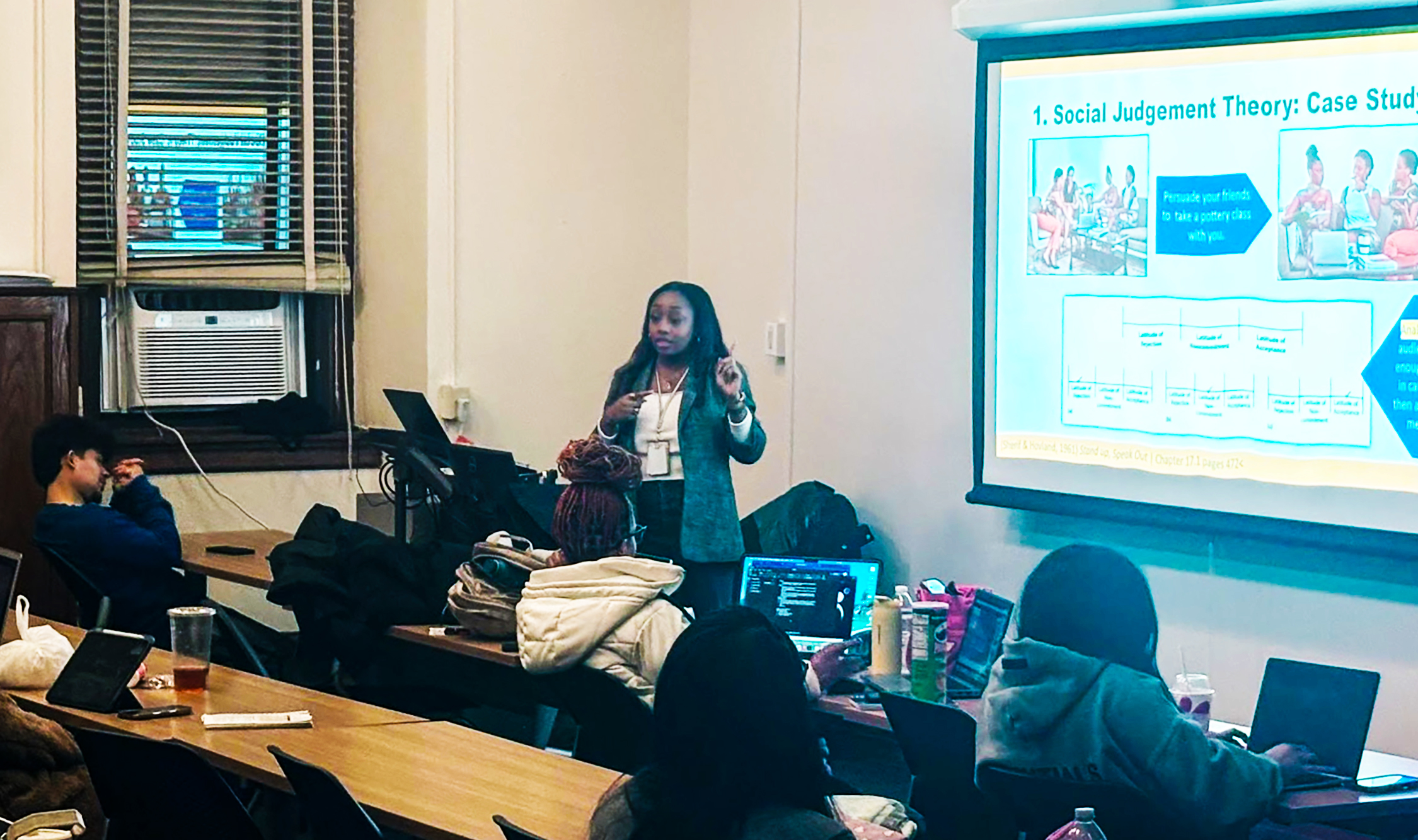
Helton, an adjunct teaching communications courses and a Trinity alumna, has been teaching at the university for five years, while maintaining a full time job as a communications professional.
She described a typical evening at Trinity.
“I usually start class with music around 6:30 to set the vibe,” Helton said. “Then I cover announcements to make sure students are up to speed. Most of my students are commuters or first-time students, so I try to meet them where they are and create a warm environment.”
Helton said that as an adjunct professor and a former Trinity student, she feels able to quickly establish a connection with her class. “After a long day, students need to feel comfortable and welcomed. That environment makes them more receptive to learning.”
Helton added that Trinity’s support system has been vitally important. Supervisors and full-time faculty members have acted as mentors, helping her navigate the transition into teaching. University networking events have provided opportunities to connect with colleagues, and Helton said she believes Trinity has made a concerted effort to foster a sense of community, despite the challenges of adjunct work.
Like Brown, Helton said her biggest challenge is balancing full-time work with part-time teaching and a personal life.
“I don’t sleep very much,” she said. “I prioritize grading, emails and encouraging students to communicate. It takes patience, but I try to show up fully for my students. They’re investing in their education, so I do the same.”
Helton said she believes adjunct professors often are undervalued in higher education, but added Trinity does recognize their contributions.
“Trinity cultivates a culture that appreciates the richness adjuncts bring from their real-world experience,” she said. “Other institutions can learn from this model.”
Helton’s personal motivation is centered on student impact. “If I can make a difference in one student’s time at Trinity, that makes it worth it. I use a real-world approach, so what they learn is directly applicable to the workforce.”
Research supports this sentiment. Studies on adjunct faculty have found that many view themselves as committed educators and active contributors to teaching and student learning, even when institutional recognition is limited.
Whenever possible, Trinity officials emphasize the professional accomplishments adjunct faculty bring to campus.
For example, they announced when Trinity’s long-time adjunct in environmental science and mathematics, Agnes Conaty, received two NASA Robert H. Goddard Honor Awards. Education professor Toni Scott was named one of the “Top 50 Women Leaders of Baltimore” in 2025. Former English professor Angela Flournoy authored the 2025 novel “The Wilderness,” a Kirkus Prize finalist.