By Sonovia Pryor
Trinity Times Correspondent
When Chastity Jacobs began her college journey at Trinity Washington University, she was confronted with the staggering costs of tuition, the worry about how to pay for it and what seemed like a mountain of bewildering red tape in seeking financial aid.
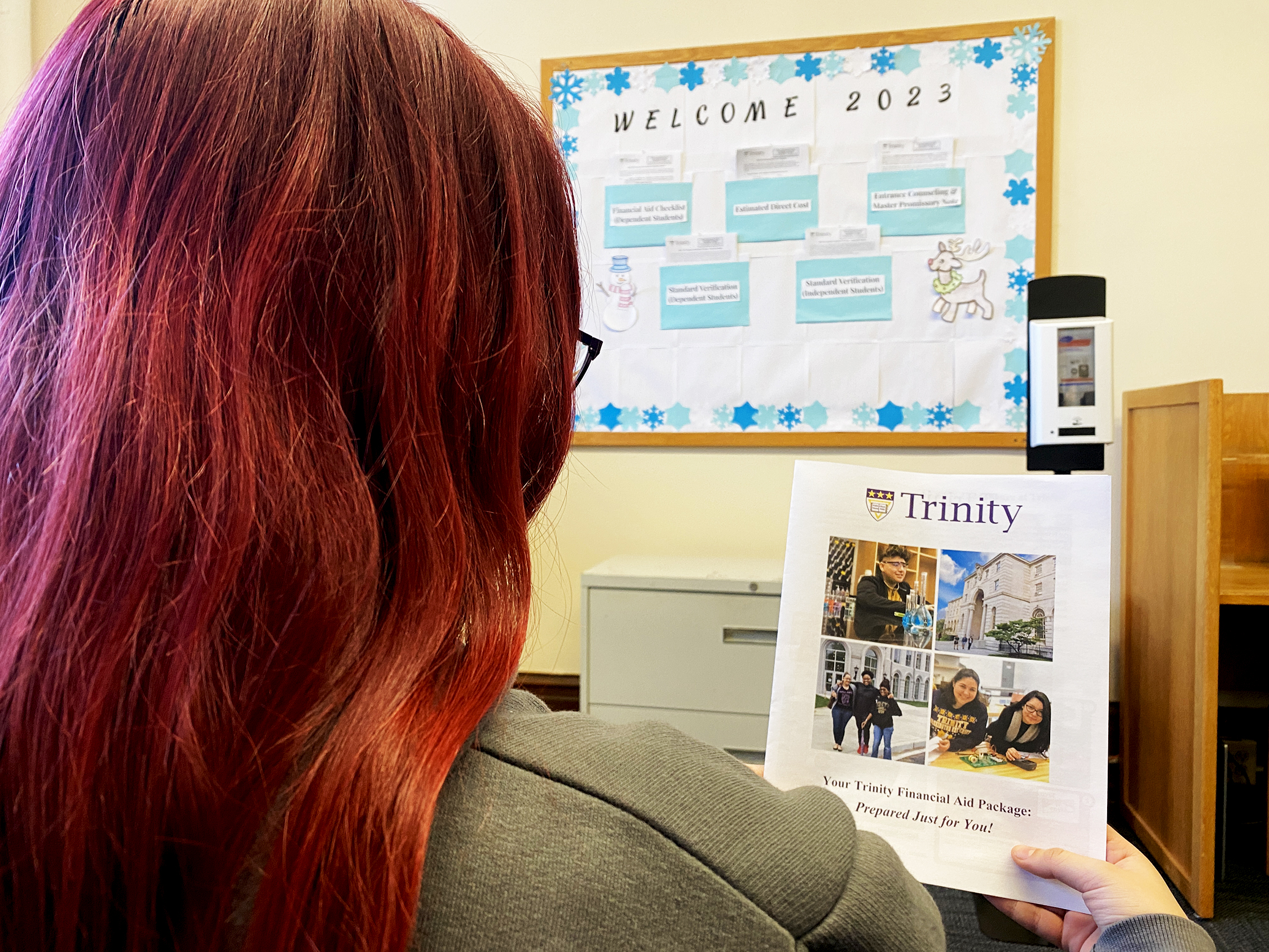
Jacobs – now a 2023 graduate of the university – credits the staff at Trinity’s enrollment services office with guiding her through the process to receive the funding she was going to need to pursue her college degree.
“They were helpful when I needed it,” she said, but added she wished the student advisors at the university had been more helpful in pointing her in the right direction.
But, once Jacob’s walked into the enrollment services office, she was provided with one-on-one support with all the financial assistance forms, such as the Free Application for Federal Student Assistance (FAFSA).
With an annual growth rate of 7.1%, the average cost of a college education in the United States has more than doubled since the beginning of the 21st century, according to the Education Data Initiative.
An undergraduate degree program at a four-year postsecondary school costs an average first-time, full-time student $35,551 a year, including tuition, fees, books, supplies, and living expenses.
Federal loans make up 92.4% of the approximately $1.757 trillion in outstanding student loan debt in the United States, which comes from 43.5 million borrowers.
Though the current average cost of an education at Trinity is slightly below the national average, it’s still an enormous financial investment for students to consider when contemplating the pursuit of a college degree.
Trinity’s College of Arts and Sciences (CAS) charges first-year, full-time students $25,860 per year, plus a $250 healthcare fee. It costs those who reside on campus an additional $12,160 for room, board, and meal plans.
These were big numbers for Kimberlyn Booker contemplate when she was applying for college, especially when she calculated what the total cost of a university education would be.
“It was a little frustrating and worrisome,” said Booker, who is now a junior at Trinity. “I wanted to make sure I could afford it and still go to classes being a mom and all.”
Trinity students, however, do have access to a range of financial assistance.
Roughly 99% of Trinity students receive some type of financial aid to help them pay for higher education in the form of scholarships, loans, grants, work-study, or an award from doing community service or military duty, according to Nicole Rouse, Trinity’s assistant director of the Center for Student Success.
Some support is provided solely due to financial need.
Approximately 90% of Trinity’s CAS students are eligible for $8,000 to $15,000 in Trinity scholarships as part of their financial assistance package.
Trinity gave more than $12 million in tuition support to CAS students in 2022.
More than two-thirds of CAS students receive enough aid from different external sources – including grants, scholarships, and loans – to cover their tuition in full.
With 85% of Trinity’s School Professional & Graduate Studies students receiving some type of financial help, most of them are responsible for paying a remaining 15% out of pocket.
The most common difficulty students say they experience when paying for their Trinity education is completing financial assistance forms, understanding what information they will need and where to go about getting it.
Sometimes students also experience a lack of understanding about accessible financial options, are unsure of which channels to use to gather information or which tactics to employ when looking for financial resources and are hesitant to seek help if they do not completely understand the breakdown of their financial aid awards.
Students who do not seek help can accumulate a large balance over time that may have been avoided.
“We want students to remember that they are not alone in this process, and we are available to assist them in any way we can,” Rouse said.
She encourages students to thoroughly plan their finances when preparing for and maintaining a good financial status at Trinity.
“Start by creating a monthly budget that takes into account all of your expenses, including tuition, housing, food, textbooks, transportation, and any other costs,” she said. “Track your spending and adjust your budget as necessary to ensure you live within your means.”
Financial stability allows students to better focus on their college experience, but they often must utilize available resources to achieve that, Rouse said. “There are many support systems on Trinity’s campus,” she said. “We are here to assist you in being successful.”
Great article.
This was great information, but I hope that this is provided to all who want to pursue their education at Trinity!!!!