By Michal Tucker
Trinity Times Correspondent
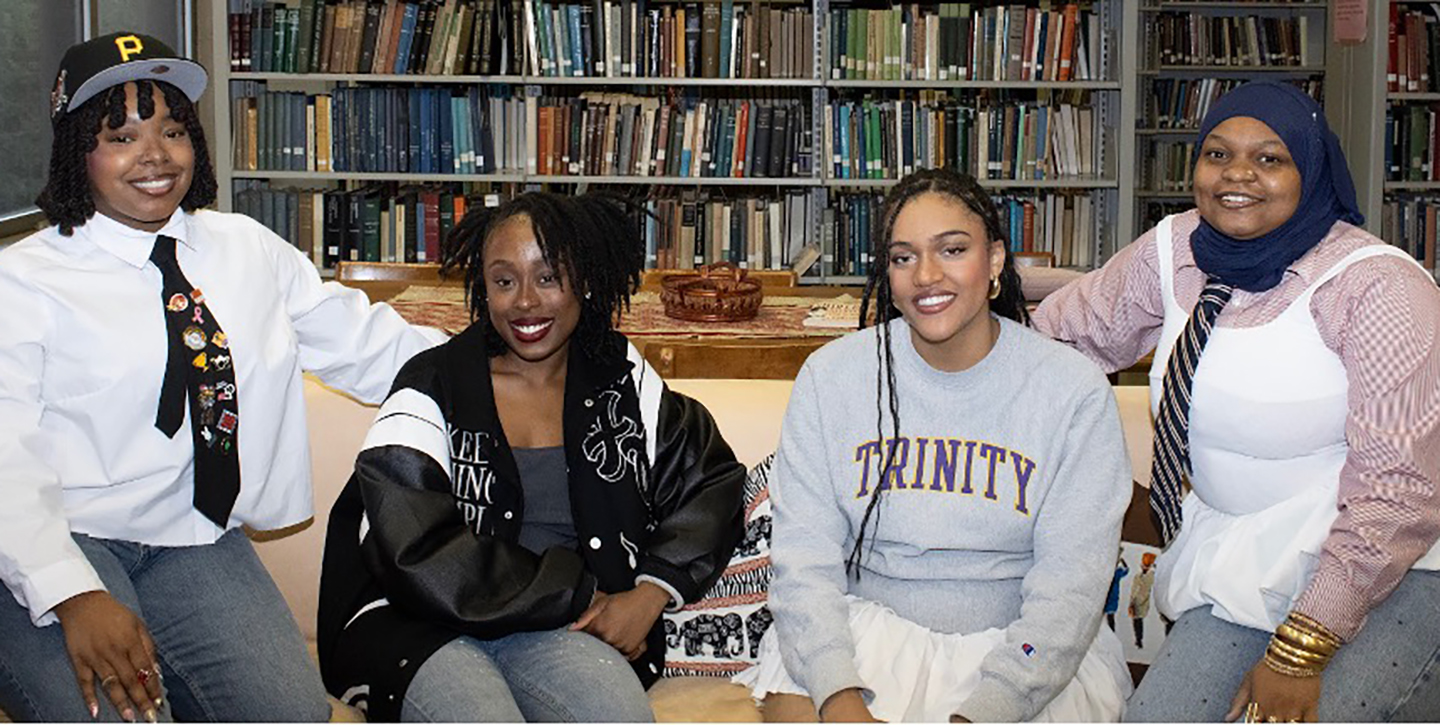
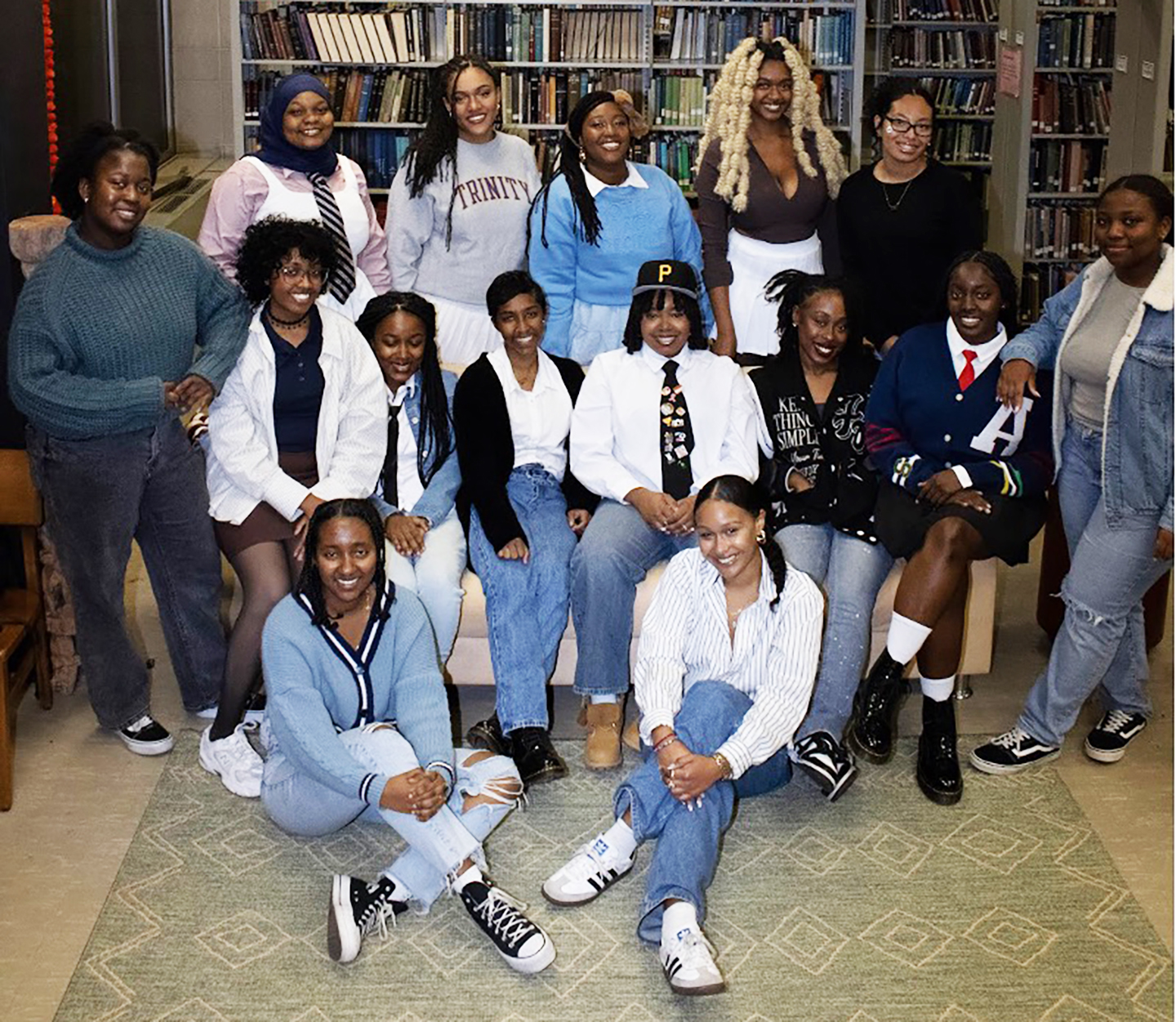
When Kayla Strong became president of Trinity Washington University’s Black Student Alliance (BSA) last year, she transformed the organization from a three-member team hosting occasional Zoom sessions into a vibrant group with 20 executive members and a full calendar of events.
With the help of dedicated BSA members, Strong re-energized the organization, maintaining its mission of highlighting the Black experience while fostering a community free of racial discrimination.
This transformation continues a journey that began when Trinity, now predominantly enrolling Black women, first admitted Black students in 1948. Cardinal Patrick O’Boyle, the Archbishop of Washington at the time, ordered the desegregation of all Catholic schools, agencies, and parishes within the archdiocese.
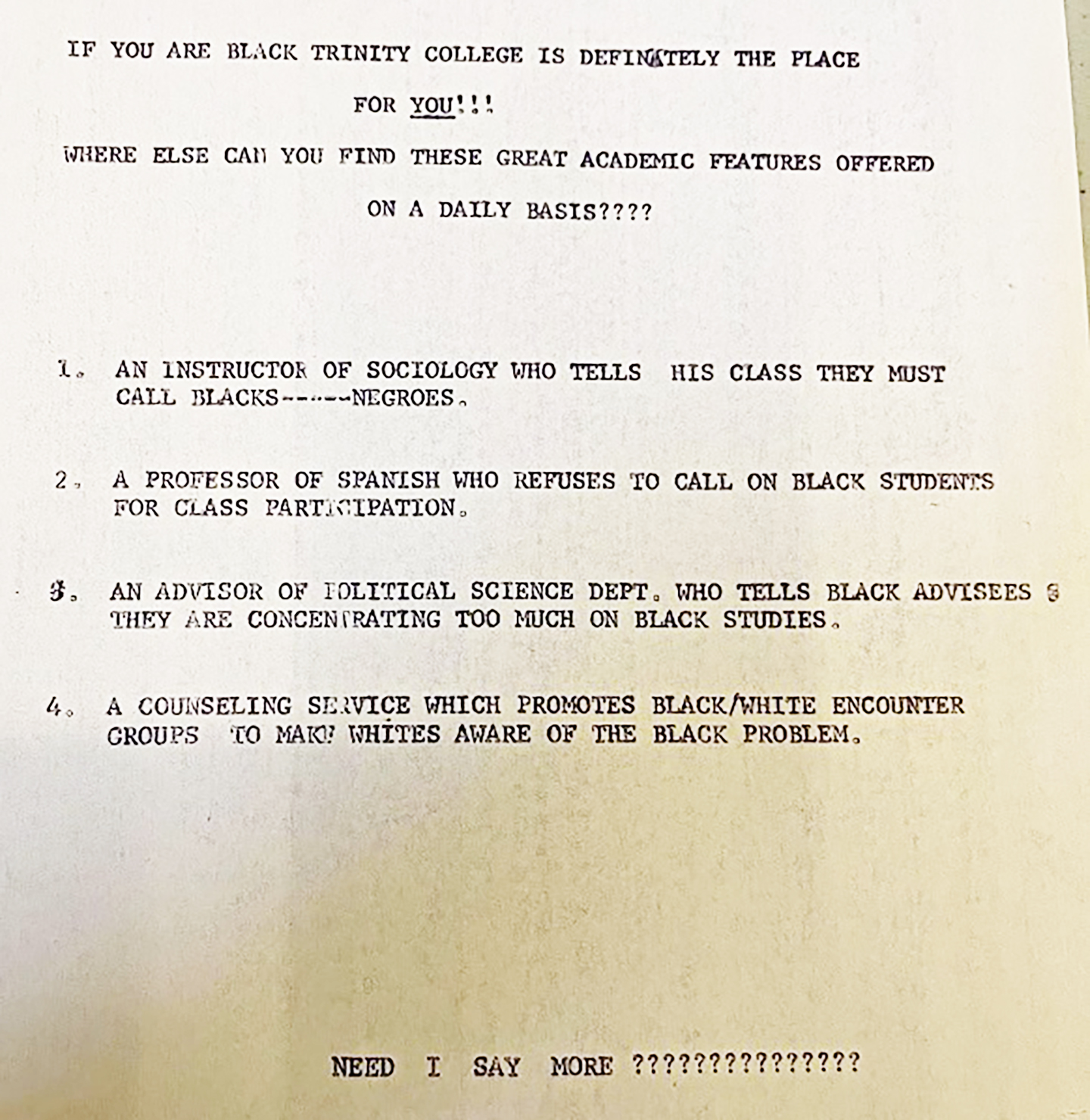
In the 1990s, the BSA highlighted persistent racial challenges through a sarcastic admissions event flyer proclaiming, “If you are Black, Trinity College Is Definitely the Place for You!!!” The flyer cited recent racist incidents on campus and reflected decades of discrimination faced by Black students between 1960 and 1995.
The need for a safe, supportive environment for Black students led Lorraine Patricia Brock, a freshman in 1965, to co-found the Afro-American Society, which later became the BSA.
Kimberly Monroe, assistant professor of history and global affairs at Trinity, said the group was essential for uniting and amplifying the voices of Black students.
“In the 1960s, many students felt ‘in jeopardy as Black women on a white campus,’ isolated, unsupported, and lost,” Monroe said.
In a 1969 Trinity Times column, “Black Mood,” Brock outlined the Afro-American Society’s demands to Trinity’s administration, including recruiting more Black students, hiring Black faculty, and establishing a Black Studies program.
The Afro-American Society became the BSA in the mid-1970s, but the struggle for inclusion persisted.
By the late 1980s, racial tensions on campus mirrored nationwide unrest. Black students reported ongoing racism, prompting change when Patricia McGuire became Trinity’s president in 1989.
“I remember asking the admissions director how many students came from D.C. public schools,” McGuire said. “The response was, ‘none.’ When I asked why, the director said, ‘They can’t do the work here.'”
McGuire rejected this institutional bias and actively recruited from D.C. public schools, significantly increasing Trinity’s Black enrollment.
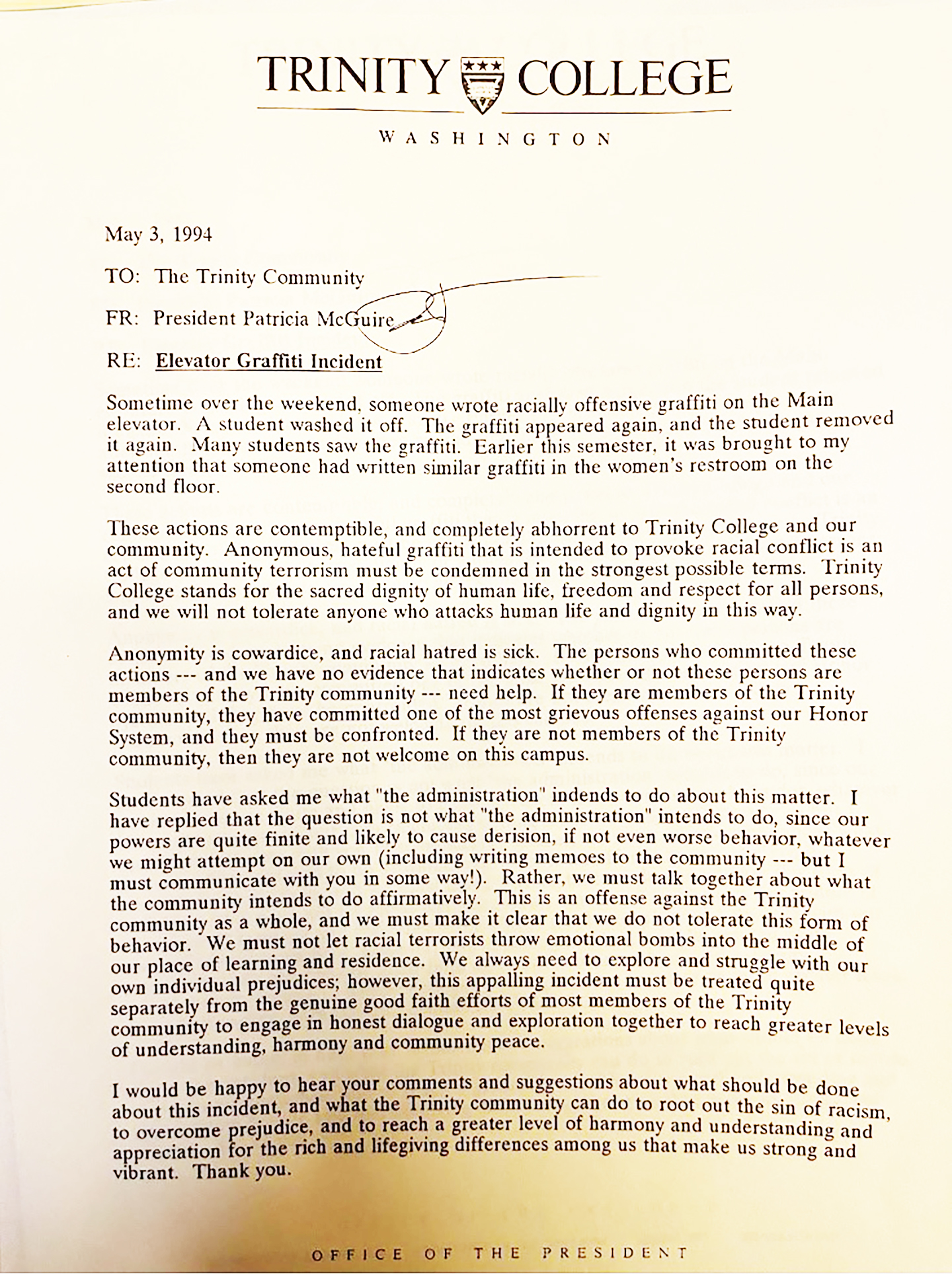
In 1994, as the Black population grew, the campus experienced racist incidents, including graffiti featuring the n-word and defaced images of Martin Luther King Jr. McGuire condemned these acts in a letter to the Trinity community, calling them “community terrorism” and urging action to “root out the sin of racism.”
With McGuire’s support, the BSA thrived between 1995 and 1998, hosting Black History Week, cultural lectures, and events featuring luminaries like poet Nikki Giovanni.
Trinity’s BSA, however, enduring several years of inactivity in the 21st century and members struggled to make the case of why they wanted to revive it in 2020, Monroe told Trinity Times.
Her biggest challenge was getting students to see the value in having a Black Student Alliance at a predominantly Black institution like Trinity.
“They’re like, ‘well, why do we even need this?'” Monroe said the students asked, for which she responded, “The Afro-American Society and similar organizations that rose in the 1960’s were essential to universities across the nation in creating programs inclusive of the Black experience.”
Strong joined the organization in 2023, inspired by political science major Saudia Campbell, who now serves as BSA’s events coordinator.
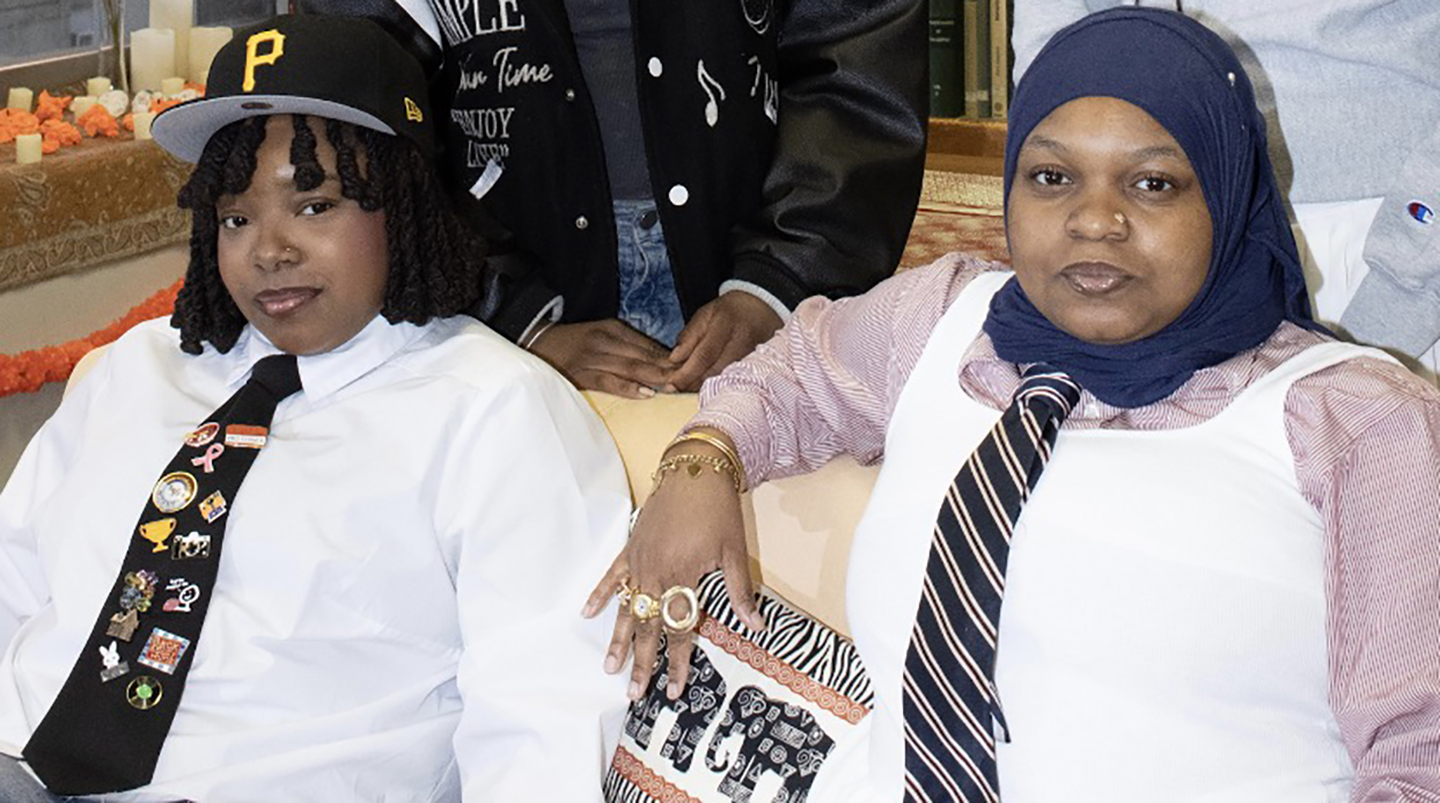
Together, they revamped the group, organizing initiatives like a clothing swap and the Black Diamond Ball to celebrate Black culture. They also launched Sista Sista Magazine, Trinity’s first Black woman-led publication.
“If you want to be a part of BSA, you have to be active, committed, and ready to make change,” Strong said. “One voice isn’t enough to challenge policies, but 20 or more united voices can create lasting impact.”
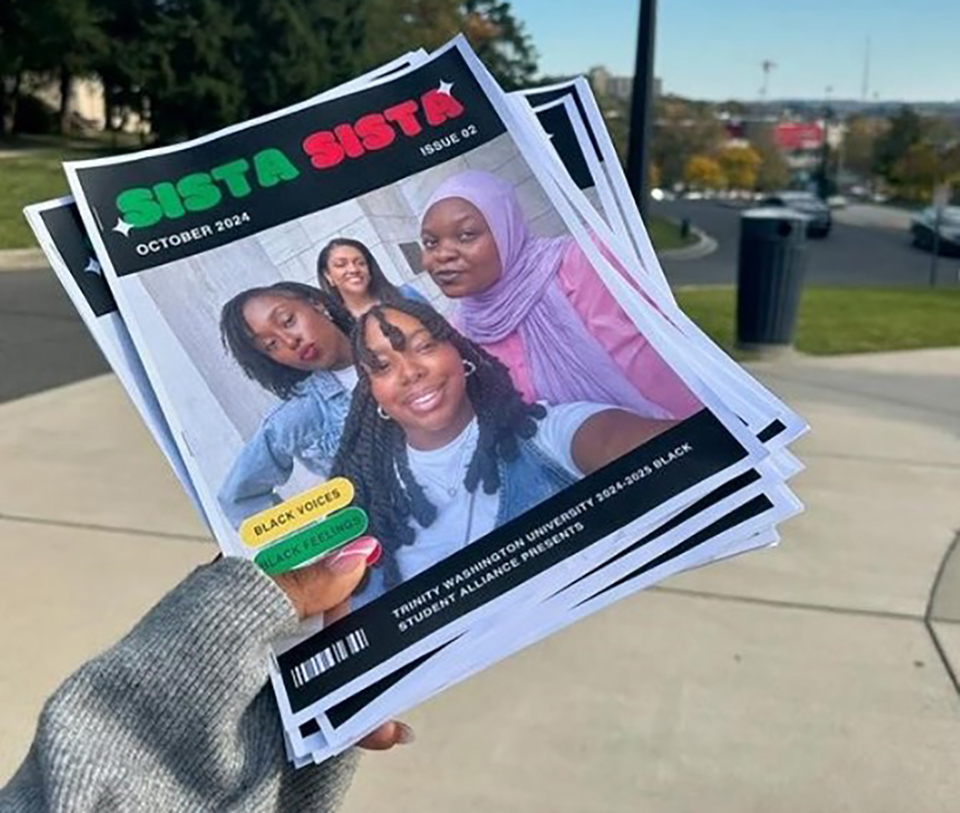
Cuaresma Gillard, a senior at Trinity double-majoring in Global Affairs and Communication, says the current BSA is keeping that essence alive.
“It feels good to finally have sisters on campus that I can go to,” Gillard said.
Monroe said the BSA’s advocacy has been instrumental in advancing representation at Trinity, culminating in the creation of the Africana Studies minor in 2021, a goal first proposed 50 years earlier.
McGuire praised the BSA’s enduring influence.
“Trinity is all about social justice,” she told Trinity Times. “Organizations like the BSA provide the strength and sisterhood students need to navigate a world that doesn’t always understand them.”
What a great article! What a wonderful history/herstory of garnering support within and around the Trinity community, thanks to the evolution of the BSA – Black Student Alliance- on campus.
The letter from President McGuire in 1994 is especially insightful and I thank you for publishing it within this article today.
Thanks to Professor Monroe for consistency of support for the BSA.
I particularly enjoyed reading this article and what the sisterhood stands for as A Whole And the determination to keep history alive An what our ancestors went through and stood for to make these things possible for the new generation