Sydney Ware
Trinity Times Correspondent
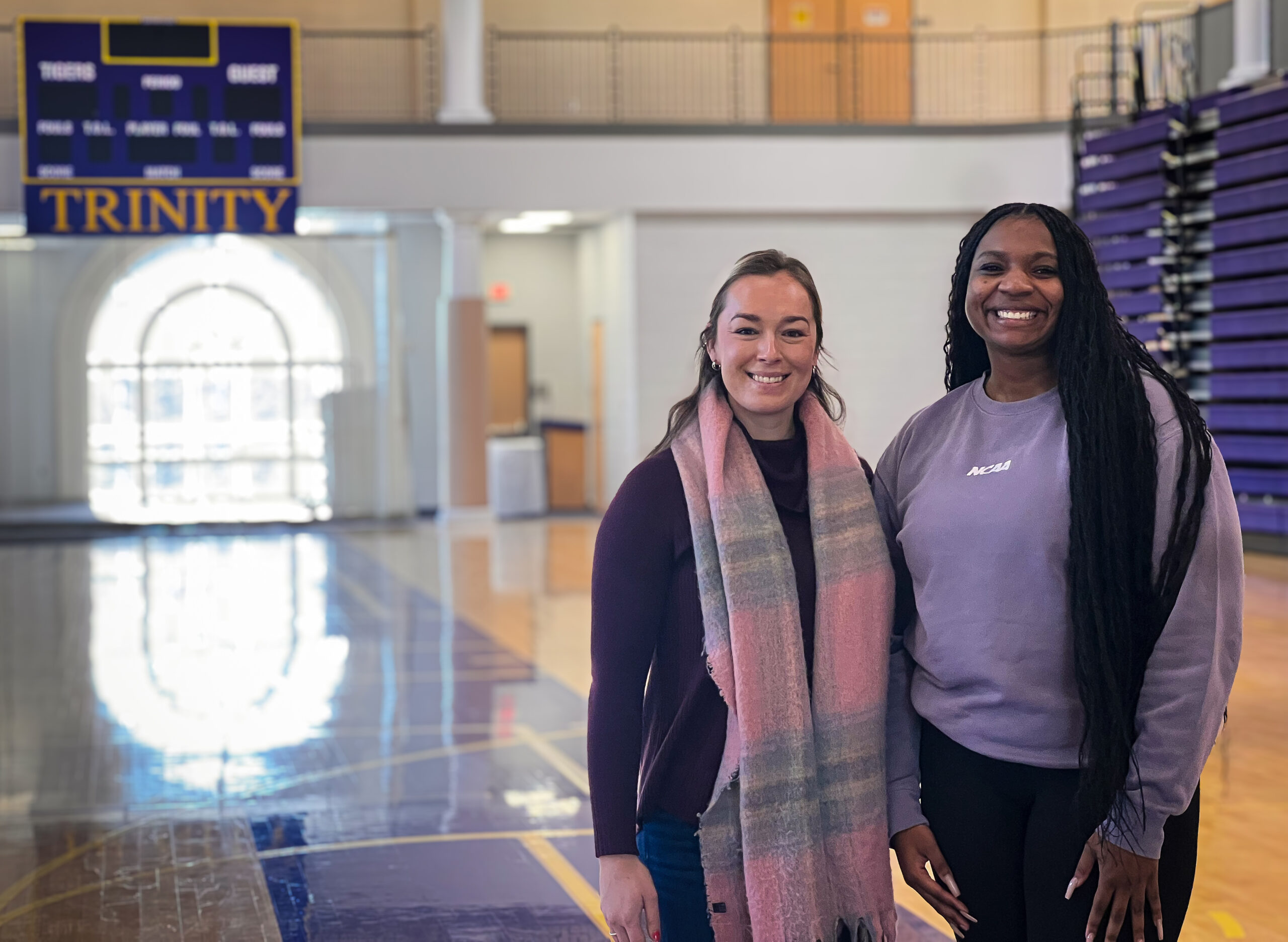
Sports are an important part of campus life at Trinity Washington University, and Emilee Kirk, the university’s new athletic director, is determined to make them even stronger.
Kirk, Trinity’s former assistant athletic director, was promoted after just one year. While she had hoped to become an athletic director, she did not expect it to happen so quickly. She brings a background in college and professional coaching and said she is happy to return to a college campus.
“It was hard, because there were a lot of things that I had to learn, like right then and there,” Kirk said. “But I look back on it now, on how much of a blessing it was because of all the things that I kind of just had to learn on my own.”
Kirk’s promotion created an opening for a new assistant athletic director. Tierra Floyd, a former Division I basketball coach with a master’s degree in sports administration, stepped into the role. Floyd said she is passionate about helping organizations grow.
Together, Kirk and Floyd have introduced new initiatives and revived older ones. Their central goal, they said, is to ensure student-athletes graduate not only with degrees, but as stronger individuals.
“We are here because we want to make sure every student athlete comes through our programs in our athletic department with confidence at the end of the day, getting a great education and also learning things from being on sports teams,” Kirk said, “learning how to fail, learning time management, learning, commitment, passion, all the little things developing into a great human being when they got out of here.”
Among their plans are reinstating study hall and working to place Trinity into a Division III athletic conference. Reintroducing study hall and strengthening connections between athletes and academic advisers, Kirk said, will help students succeed in the classroom.
Joining a Division III conference would also help attract more athletes, Kirk and Floyd said. Conference membership allows teams to compete for postseason opportunities, which can extend seasons and offer higher levels of competition.
“I think that’s something that is going to draw more student athletes to the sport, knowing that they have something more to compete for,” Kirk said.
Because Trinity competes at the NCAA Division III level, student-athletes are not eligible for athletic scholarships. As a result, those who join teams do so primarily for the love of the sport rather than financial incentives.
Floyd has also revived the Student Athlete Advisory Committee, known as SAAC. The student-led organization serves as a liaison between the administration and Trinity’s five teams: basketball, volleyball, tennis, soccer and lacrosse. SAAC aims to increase community service and professional development opportunities within the department.
Its first event was a “Holiday Hangout,” where athletes and athletic department student workers gathered to relax after finals with games, refreshments and music.
“I think that that’s a huge thing that we’re bringing back, and I think that it’ll help with more camaraderie, [and encourage] more community service through events that we’re going to do with our student athletes – more things that will help the general well being of the athletic department,” Floyd said.
The department has also hired two new assistant coaches for volleyball and tennis. Kirk said the teams have adjusted well and expressed hope for similar progress with the lacrosse program.
“Obviously we’re still in the process of hiring more coaches,” Kirk said. “I’m really excited for the coaches that we do have in place and where they’re going to kind of take our programs moving forward.”

Trinity junior Na’kiya Butler said she shares that optimism.
Butler, who plays on both the soccer and lacrosse teams, said her experience as a student-athlete has become more positive under the new leadership.
“I feel much more supported under Emilee than I was under the last athletic director,” Butler said. “It just feels like it’s an overall better environment, more helpful.”
It has become easier for athletes to make requests and raise concerns, she said. One new tool, advocated for by SAAC members, is an anonymous “hotline” designed to address issues in a timelier manner.
With the lacrosse season approaching, Butler said she remains hopeful even if the program does not secure a head coach in time.

“I do feel hopeful regardless if we get a coach or not,” she said. “The athletic director has brought up backup plans so I think it’ll be a good season. We have a bunch of new girls signing up, we’re getting new equipment, and we’re going to have a good schedule this year.”
Kirk and Floyd said Trinity athletes are motivated by a love of the game and a desire to be part of something larger than themselves. They encourage players to look beyond wins and losses to the personal growth that comes from team participation.
“I would say that obviously, no one wants to lose. You know, everybody wants to win,” Floyd said. “But there are true moral victories, and I think that that’s something that people need to look at, whether that means last year, we got beat by a team by [a substantial] amount of points, and now we’re right there, going into overtime with them. So I think that shows something, to be able to grow.”