By Genesis Bu-Chinchilla
Trinity Times Correspondent
The year 2025 has ushered in a new semester and a new political climate and students, faculty and members of the administration at Trinity Washington University are proactively charting a course to deal with a new presidential administration they believe is hostile to its mission.
President Donald Trump’s Jan. 20, 2025, inauguration sparked a flurry of executive orders and other actions targeting various groups and communities within the United States, embarking on mass deportations, eliminating diversity, equity and inclusion (DEI) programs in the federal government and threatening designated federal funding to any organization that doesn’t comply with his “Make America Great Again” agenda.
As uncertainty and fear loomed over the Trinity campus, university officials and student leaders began to mobilize to ensure the safety of members of the community who feared immigration raids by Immigration and Customs Enforcement (ICE) agents and preserving the core values of the school.
“The most effective thing we can do is be proud of who we are and to get students out of that fear factor and into the restoration of pride in heritage,” Trinity President Patricia McGuire told Trinity Times.
Trinity Washington University, guided by the mission of the Sisters of Notre Dame de Namur and the Catholic tradition, is dedicated to providing educational opportunities for a diverse student body while upholding the principles of diversity, equity, and inclusion (DEI). The university’s strategic plan reinforces its commitment to empowering women and advancing justice for all, fostering an inclusive environment that welcomes individuals of all faiths and backgrounds.
In contrast, the Trump administration has implemented policies that directly challenge these values. An executive order mandates the elimination of DEI programs in educational institutions, arguing that such initiatives violate civil rights laws. Additionally, the administration has proposed dismantling the U.S. Department of Education, a move that could have far-reaching consequences for public education and student access to resources.
These actions stand in direct opposition to Trinity’s mission, threatening its efforts to support underrepresented students and uphold its long-standing commitment to inclusivity and social justice, said Allen Pietrobon, a Global Affairs professor at the university.
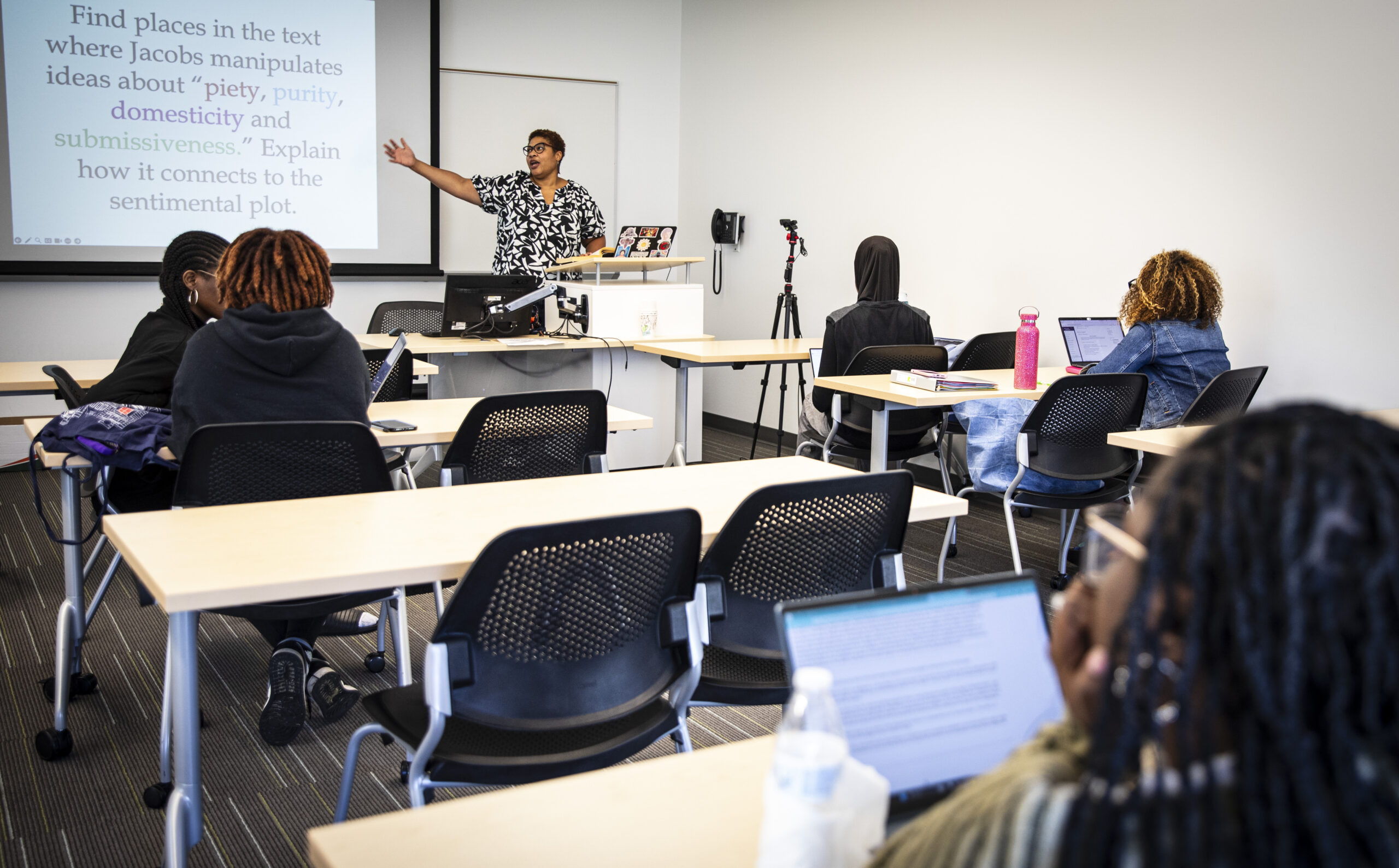
University officials held a virtual Campus Conversations meeting with students, staff and faculty Jan. 30, providing the opportunity for everyone to express their fears and concerns about the current political moment and to assure the community that protocols are in place if ICE agents do arrive on campus.
McGuire began hosting meetings with faculty and students to assess concerns and field ideas in how to combat what she believes are the most egregious actions coming from the Trump administration.
As an Afro-Latina, Trinity student Lakshmi Mosquera-Herrera said she feels particularly targeted by the new political order, but in her role as president of the university’s Debate Society, she also feels obligated to lead her fellow students toward activism.
Mosquera-Herrera urged the Trinity student body to get involved with on-campus or nonprofit organizations.
“It doesn’t have to be that you come in and you know everything,” she told Trinity Times. “You can just come in and listen, and over time, you’ll build community, you’ll make friends, and you’ll be able to actually be involved and be a part of these movements.”
Since returning to office, Trump has implemented a wave of executive orders and policy changes that have reshaped multiple sectors.
Pursuing his MAGA agenda, he has challenged traditional Republican values and federal agency authority.
Among his most controversial actions, Trump has banned transgender athletes from women’s sports, drawing legal challenges and backlash from advocacy groups. He has also moved to restrict temporary protected status for individuals fleeing humanitarian crises and halted funding to non-profits.
Additionally, Trump’s administration has launched major cost-cutting measures, including federal employee buyouts and the dismantling of DEI programs. These sweeping changes have ignited widespread legal battles and national debate.
While acknowledging the weight of uncertainty that has swept through the Trinity campus, Debate Society Public Relations Manager Djeneba Cisse pointed out that her fears are driving her to fight for change, promote solidarity, and build strong support networks.
Pietrobon has been advising students to seek credible information about the issues they feel most passionate about and warning them that social media is rife with “fearmongering and misinformation.”
“The best impact I think you can have is to dig in and become an expert on the topic you really care about, and put your effort into that,” he said. “I think focusing will give you some energy, rather than being overwhelmed by everything that’s going.”
Social media, misinformation, and connecting with the average American is how Trump managed to restore his standing with the electorate following is 2020 defeat to former President Joe Biden, the disgrace after the Jan. 6, 2021, storming of the Capitol, a stream of felony indictments and a criminal conviction in 2024, Pietrobon said.
The Democratic Party failed to offer an alternative strong enough to counter Trump’s “smash everything because it’s not working” approach, he said.
The Democratic Party had once been “the party for the people” but had shifted in the opposite direction, leading to its electoral loss, McGuire said. “They became, if you will, almost overeducated, dare I say. And I hate to say that, but they walked away from blue-collar life and became very elitist.”
Trump appealed to the working class, despite the seemingly paradoxical relationship between billionaires and America’s working-class citizens, she said.
Some young Americans who voted for Trump in 2024, driven by frustration over the Biden Administrations’ handling of the Gaza conflict, are beginning to express regret.
In Dearborn, Michigan — a city with a large Arab American population — initial support for Trump has declined following his proposal for the U.S. to take over Gaza and resettle Palestinians, a plan widely seen as impractical and misguided. Community leaders who once supported Trump have grown more reserved, with some openly reconsidering their stance.
This shift suggests that anger over Gaza may have influenced voting decisions that are now being questioned in light of Trump’s subsequent policies.
Through Trinity students, faculty and administration officials have highlighted concerns about the new Trump Administration, there have also been glimmers of hope for the future.
Pietrobon suggested that a “Black Swan” event — a significant, unpredictable event — could unite the country and mobilize people to work toward positive change.
McGuire said she believes the U.S. is already in the early stages of such an event. She argued that the administration’s actions against the federal government would inevitably unite people.
While it may take years to fully grasp the consequences, McGuire emphasized that the country cannot function without its federal institutions, and those repercussions will eventually lead to change.
But for now, McGuire assured students that Trinity Washington University remains a safe space for all and listed available student resources, including mental health consultations at the Health and Wellness Center and continuing Campus Conversations meetings, where students, staff, and faculty can discuss topics affecting the campus community.
Additionally, a Know Your Rights workshop will take place Feb. 13, 2025, from 4 to 5 p.m. in Main Hall’s O’Connor Auditorium. Legal experts will be at this event to keep the Trinity community informed about rights afforded to them in the face of mass deportations and ICE raids.