
By Skyler Wood
Trinity Times Correspondent
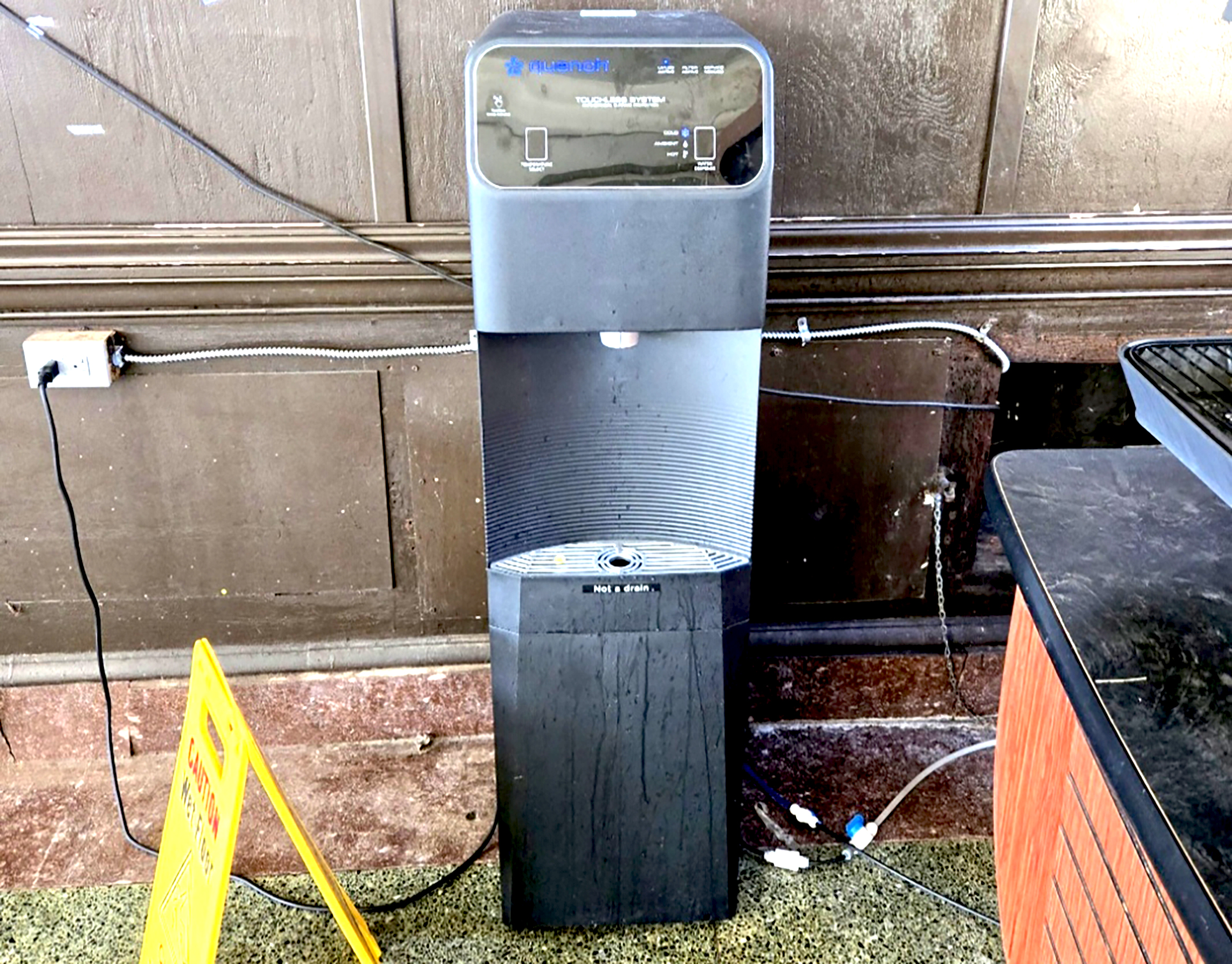
As students returned to school this year and entered the dining hall at Trinity Washington University, many noticed the water dispenser on the far right side of the room – the only dedicated source of water.
Students who placed their reusable bottles under the dispenser found that no water was available. Those looking for an alternative source in the dining hall found few options, aside from the soda machine’s lemonade-tinted water.
“You need water to live,” said Jordyn Eccles, a freshman nursing student at Trinity. “I mean, if you live off sodas, especially walking up a hilly campus, what a short lifespan that will be. You need to hydrate.”
Eccles voiced a concern shared by many students who told Trinity Times that the university does not have enough drinking fountains on campus and lacks serious plans to address the issue.
Trinity Dining Hall Manager Gilles Syglowski, who has worked in the food service industry for 40 years, said he believes the campus needs more accessible water sources for students – not only in academic buildings but also in the dormitories and Main Hall.
“We’ll be doing [renovations] in the dining room soon,” Syglowski said. “Everything’s going to be brand new. It’s going to start next year, in January.”
Commuter students also said they feel the strain from limited water access. Eccles and her classmate, nursing student Ezbai Hernandez, commute to campus daily and say the lack of available water has changed their routines.
“I get my water from home,” Eccles said. “Realistically, I don’t see too many spots to get it from.”
Hernandez added that when the dining hall dispenser was broken, she tried the lemonade dispenser’s water function but “it didn’t taste right.”
The Payden Academic Center, built in 2016, offers several water sources – two fountains and two dispensers per floor – but even those have issues.
“There was a [dispenser] in Payden that I know is in front of my critical reading course … but it was really nasty and lukewarm,” Eccles said. “I was like, ‘Oh, I’m not drinking that.’ So I threw it out.”
Eccles and Hernandez emphasized that, as nursing students, they understand the importance of hydration, especially with demanding schedules. Because they rarely enter the dining hall, they said more water stations across campus would benefit the entire student body.
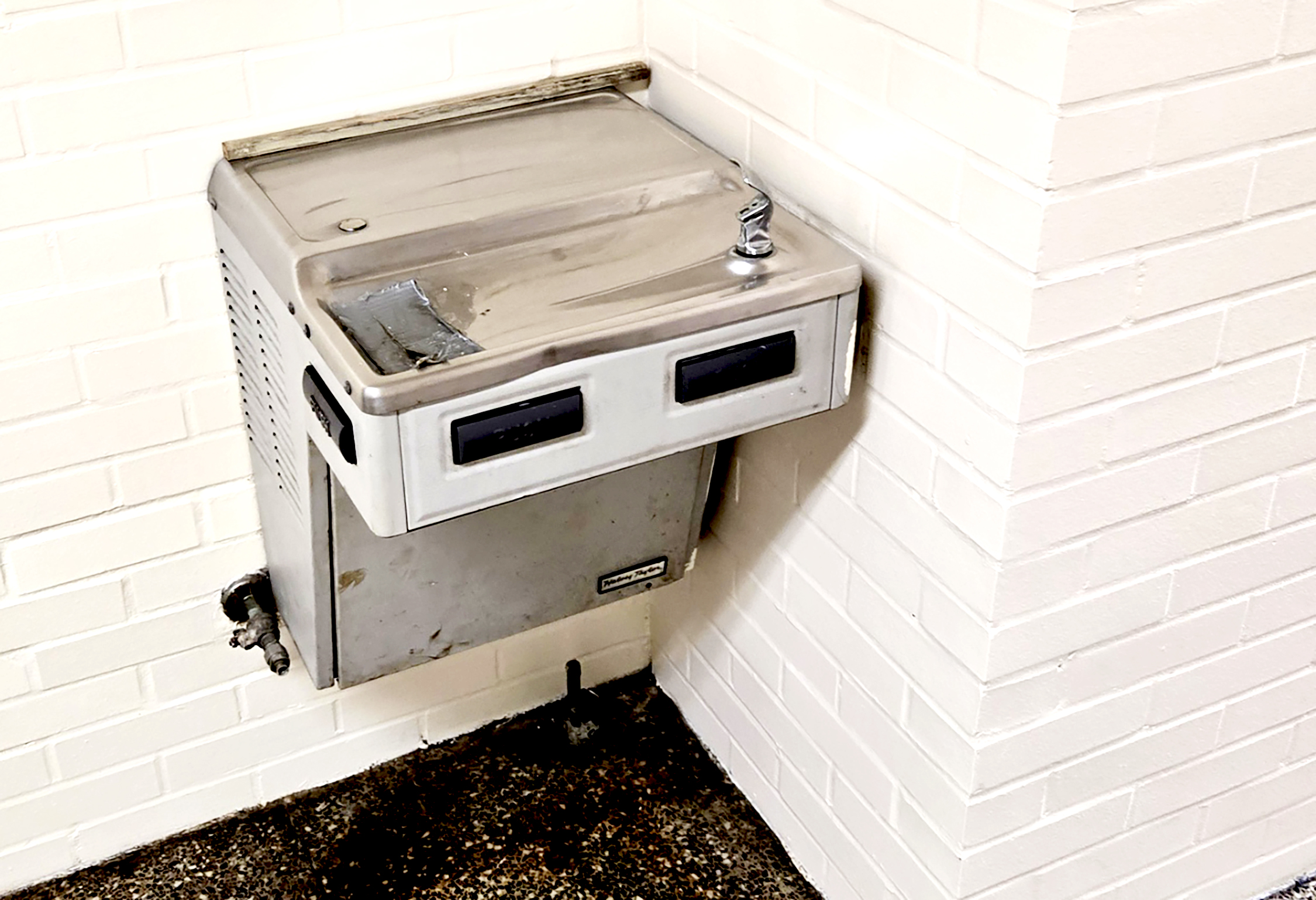
One reason for the shortage of fountains dates back more than a century. Trinity’s Main Hall, built in 1899, houses most of the university’s faculty and administrative offices. Karen Gerlach, Trinity’s vice president of student affairs, said the lack of fountains and dispensers stems from the age of the buildings.
“About a decade ago the old water fountains were removed due to them having lead pipes,” Gerlach told Trinity Times. “As they do construction [in the building], they try to add new water dispensers.”
Kerby and Cuvilly halls, the university’s main dormitories since they were built in the 1960s, currently have no functioning water fountains or dispensers. The only access to drinking water in these buildings is through vending machines on the first floor, which sell bottled water for $2.60 to $3.35.
A campus master plan does exist, addressing “upgrades and renovations to current facilities, with particular attention paid to historic preservation.” However, the Trinity Washington University – 2017-27 Campus Master Plan does not specifically mention new water dispensers in dorms or Main Hall.
Students who live on campus face even greater challenges.
“At my old school there were water fountains everywhere,” said Frida Sanchez, a transfer student and social work major who lives in Cuvilly Hall. “Here, the fountains on our dorm floors don’t even work.”
Sanchez said she and her friends now split the cost of having cases of bottled water delivered. Even when the dining hall dispenser is functioning, she added, she doesn’t trust the taste.
Sanchez also raised environmental concerns, noting that broken water machines push students to buy single-use plastic bottles instead of refilling reusable ones. “If we want to be protecting the environment, then we should definitely have more filtered water stations around campus, even in Main Hall.”
She added that when water is unavailable, her peers often turn to juice or soft drinks.
A 2023 study from the Office of Minority Health of the U.S. Department of Health and Human Services found that African American adults are 1.4 times more likely than white adults to be diagnosed with diabetes. At a university with a predominantly Black and brown student body, Sanchez said, health-conscious hydration options are critical.
“The rates of obesity and diabetes are going up,” Sanchez said, “especially among people of color and women. So, if you want to have a healthier community, it would be good [to provide more water options].”
When Trinity Times visited the dining hall to speak directly with students, many echoed the same concerns.
“Yes, it’s an inconvenience to go off campus,” said Esther Joseph, a sophomore biology major and Kerby Hall resident. “No one has time to go get water.”
“I feel like I only get water when I come to the cafeteria because there’s no water sources in the other buildings,” said Aniyah Martin, a freshman health services major.
Kerby Hall does have a vending option: a newer machine on the first floor that sells Dasani and Smartwater. When the hall lights dim, it casts a glow down the narrow hallway. Still, residential students say they aren’t impressed.
“The water in the machine is, like, four bucks,” said Jayla Pitts, a residential student. When water dispensers aren’t working, “I feel like the school should just have water bottles to grab.”
It’s unfortunate that the students do not have access to Fresh and Clean water to drink. The article made think that the campus was in a Third World Country. Not the Nations Capital. I pray the administration does something sooner than later.
Good Article.
This points raised in this article deserve a meaningful response from Trinity administration. Certainly there may be challenges in providing an adequate water supply. But at the very least a clear plan with some immediate steps being taken, is a reasonable expectation!
Very good article. I am totally shocked that the students do not have proper facilities for drinking water at Trinity.