By Summer Williams
Trinity Times Correspondent
When freshman Destiny Clark enrolled at Trinity Washington University this fall to major in psychology, she expected the full college experience. While academics have met her expectations, she quickly discovered that student activities fall short of what she envisioned.
“I’ve been interested in Greek life since I learned what it was from my mother and grandmother,” Clark told Trinity Times. “They are both Deltas.”
Deltas refers to Delta Sigma Theta sorority. “Greek college life” describes the social and community aspects of fraternities and sororities on college campuses – organizations that typically use Greek letters in their names, such as Alpha Kappa Alpha, Delta Sigma Theta, Sigma Chi or Phi Beta Kappa.
While sharing her family’s connection to Greek life, Clark said she was disappointed when she did not see anything on campus related to sororities.
Trinity Washington University has a variety of clubs and organizations for students. However, students like Clark believe the absence of sororities on campus deprives them of what they view as a traditional college experience.
After searching the campus for any sign of Greek life, Clark said she finally discovered a small piece of the Divine Nine tucked away in the basement of Main Hall.
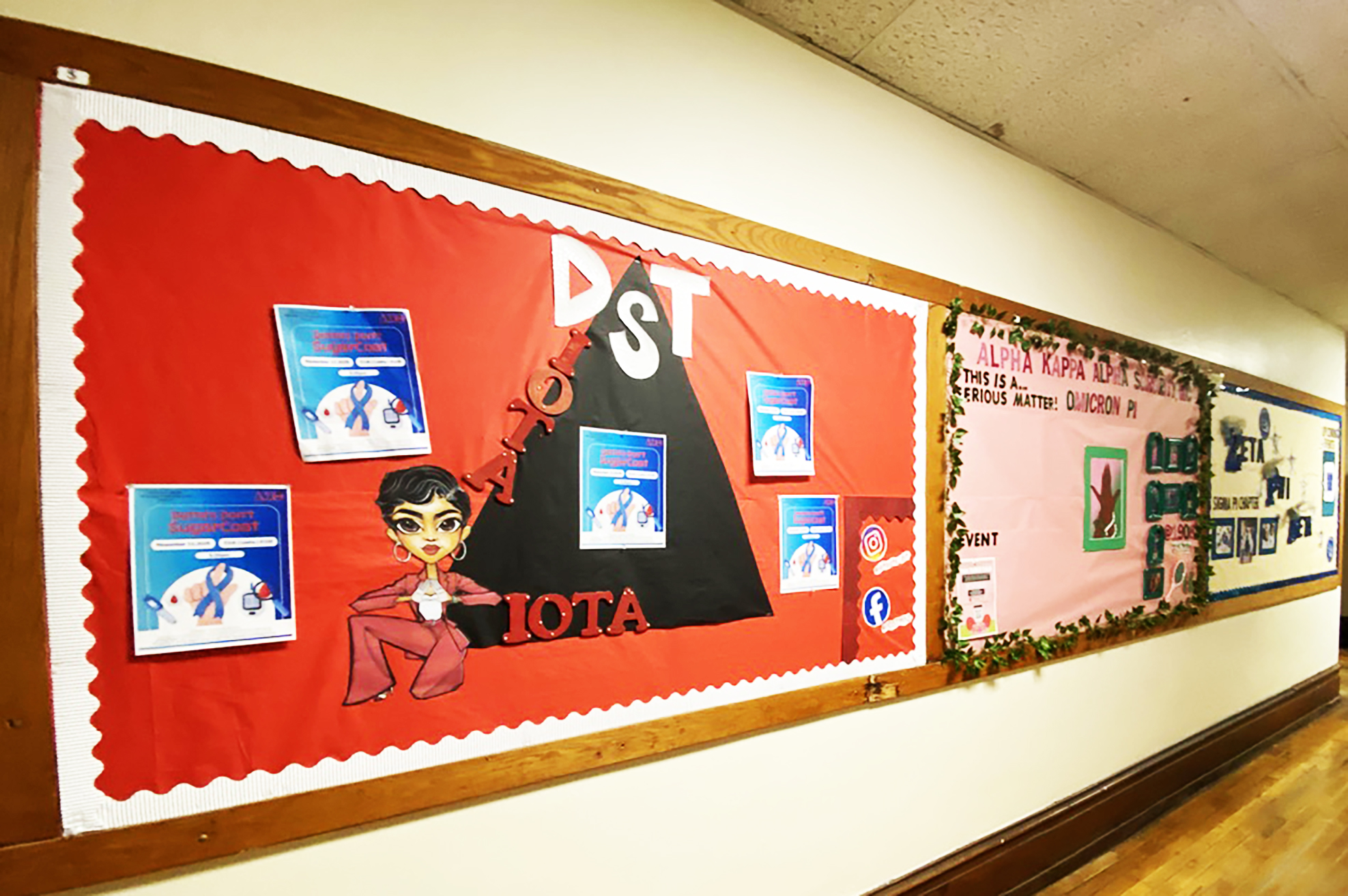
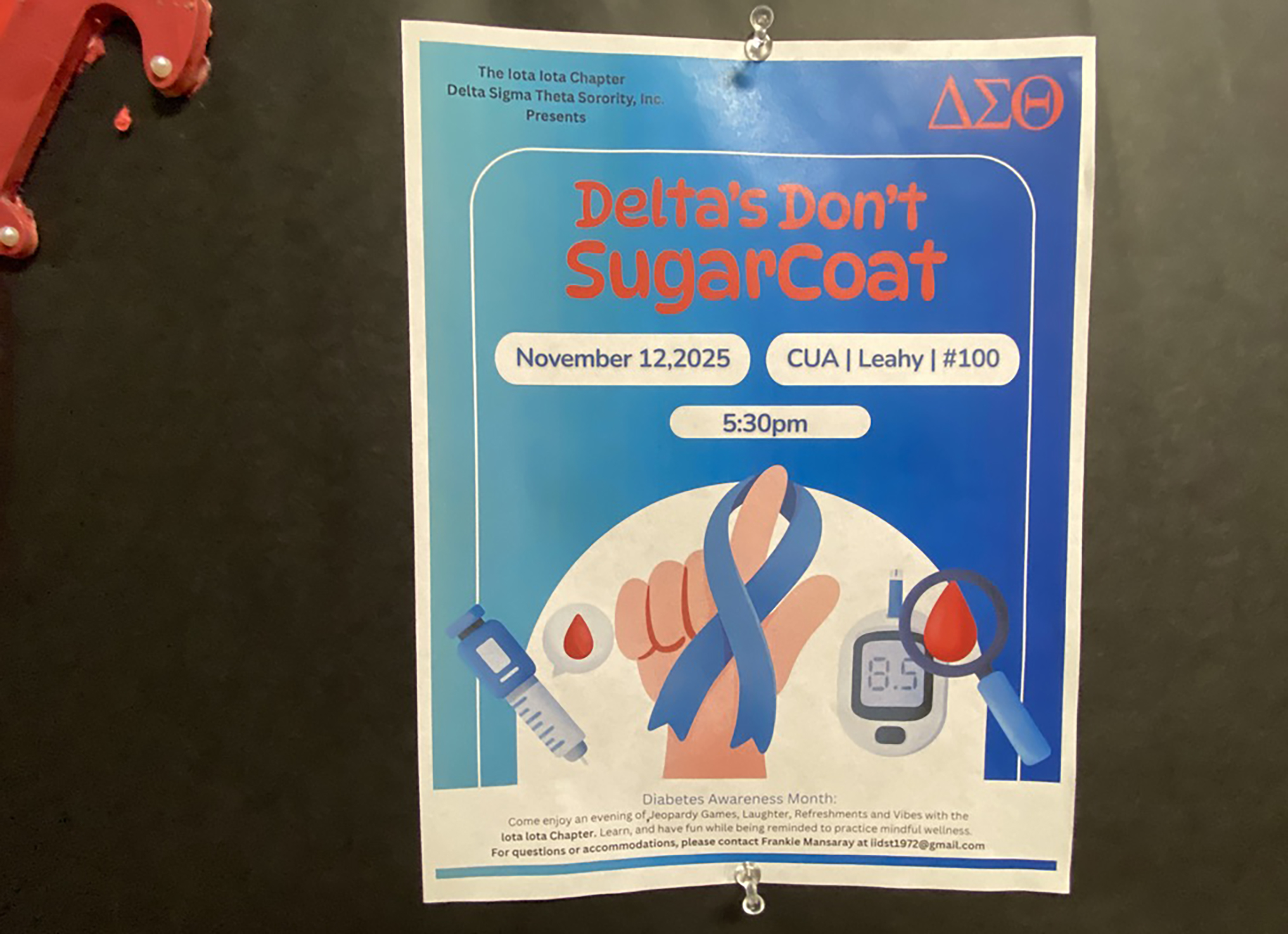
The Divine Nine, formally known as the National Pan-Hellenic Council (NPHC), is a coalition of nine historically Black fraternities and sororities that promote community service, academic excellence and cultural pride. In a Trinity Main Hall basement hallway near the journalism and media classrooms, a solitary, mostly empty bulletin board is dedicated to Greek organizations that serve the Trinity campus. The most recent flier promoted a Zeta Phi Beta Sorority informational meeting held at American University on April 22, 2024.
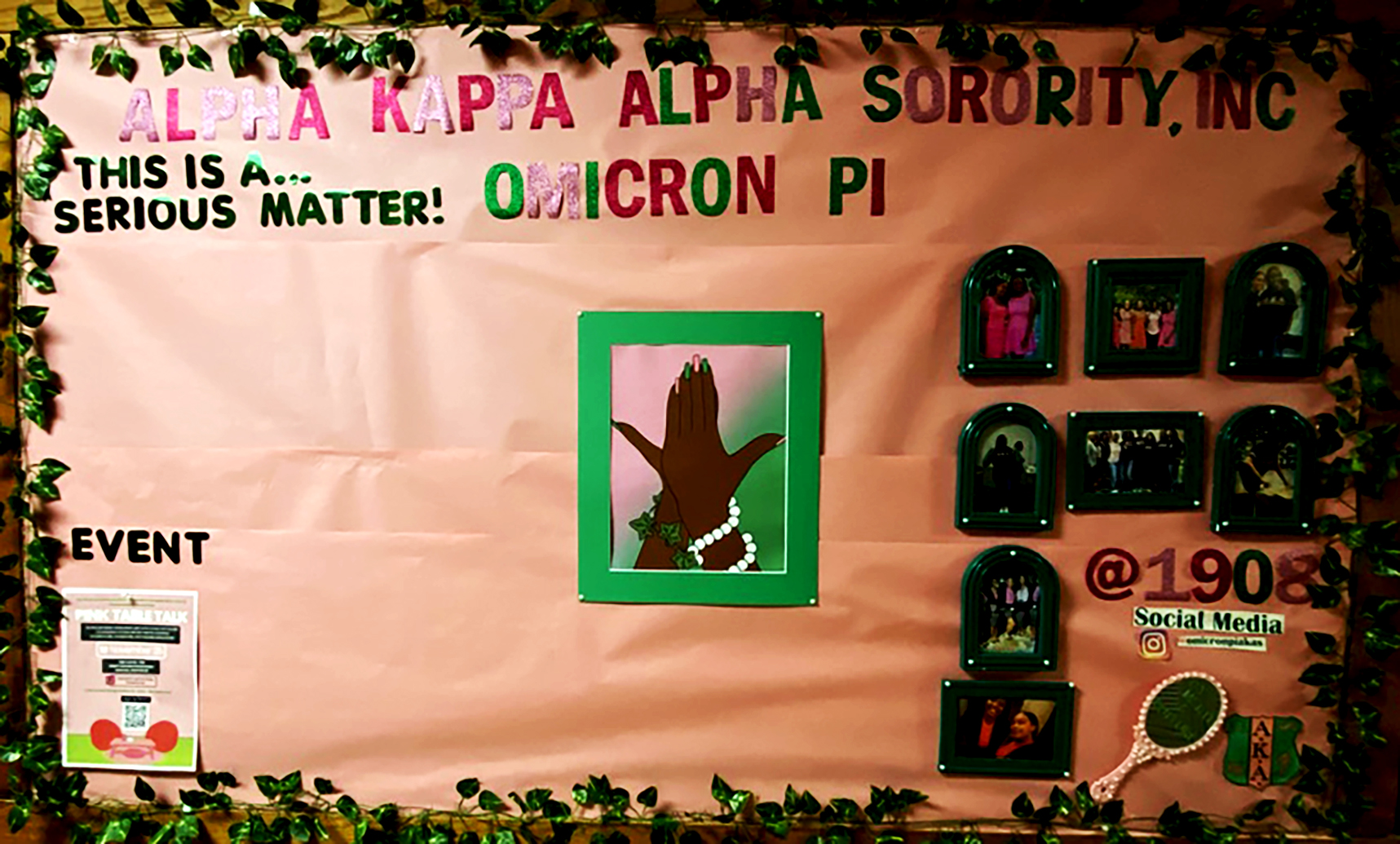
Trinity does not have a formal Greek life office or a fraternity and sorority council structure with recognition protocols for national Greek-letter organizations. However, the university permitted Alpha Kappa Alpha Sorority Inc. to hold a “Party and Plant” event in Alumnae Hall on Sept. 20, 2024.
Some students said they are encouraged to go to other campuses, such as The Catholic University of America and American University, to join sororities.
Trinity Dean of Student Services Michelle “Meechie” Bowie told Trinity Times that the values of the university and the values of Greek life do not align.
Fraternities and sororities are often associated with heavy drinking and a party culture that critics say can normalize substance abuse and heighten the risk of sexual assault, vandalism, and academic decline. Critics also argue that Greek organizations can foster social exclusivity and reinforce cliques, status hierarchies, and even racial or class divisions, particularly at predominantly white institutions.
Advocates of Greek life say fraternities and sororities provide students with lasting friendships, leadership experience, and a strong sense of community. They emphasize that many Greek organizations are rooted in values of scholarship, service, and personal development, offering mentorship and networking opportunities that extend well beyond college. Supporters also point to the significant charitable work and volunteer hours contributed by Greek chapters each year, arguing that these groups can foster accountability, empowerment, and lifelong connections among members.
“It would be nice to see sororities represented here again,” Clark said. “Even if we can’t host events, just seeing the presence would make a difference.”
For Trinity alumna Shytia Russell, who graduated in 2023, Greek life became a meaningful part of her college journey. She became a member of Delta Sigma Theta while a Trinity student.
She remembers regularly checking announcements in Main Hall and following her sorority on social media to stay connected to events.
“I used to check the Delta board every week just to see what was happening at Catholic or American,” Russell said. “Even though Trinity didn’t have active chapters on campus, I still found my way into the sisterhood.”
Russell said she chose Delta Sigma Theta because its values – scholarship, public service and sisterhood – aligned closely with her own. Those values shaped her college experience, even though she had to seek out the sorority beyond Trinity’s campus.
Bowie – herself a proud Delta – explained that while Trinity supports students’ community service and academic goals, it does not formally affiliate with national Greek organizations.
“We absolutely encourage our students to engage in leadership, service and scholarship,” Bowie said. “But Trinity as an institution does not sponsor or host Greek chapters. We want students to express those same values through campus organizations that are open to everyone.”
She clarified that while students are welcome to join nearby chapters, announcements and promotional materials must remain limited to the designated bulletin board in the Main Hall basement.
“Our campus policies are designed to stay consistent with Trinity’s mission and principles,” she added. “We respect the Divine Nine organizations and their work, but our institutional framework is different.”
Clark said she remains enthusiastic about following in the footsteps of her mother and other Delta family members.
“Greek life feels like more than just a club,” she said. “It’s a legacy. I wish Trinity gave us more information or opportunities to connect with these groups.”
Similarly, freshman nursing major Sania Moody said she hoped to join a sorority but was discouraged when she couldn’t find information about Greek life on Trinity’s website or around campus.
“I thought college would be where I finally got to be part of that sisterhood,” Moody said. “But it’s been hard to even find where to start.”
A 2014 Gallup poll found that participation in Greek life varies widely across campuses nationally – some reporting fewer than 5% of undergraduates in Greek organizations, while others exceed 50%.
At Trinity, the Divine Nine’s presence continues primarily through alumni connections and partnerships with neighboring universities. While the traditions of sisterhood and service remain important to many students, some hope for a stronger, more visible bridge between Trinity and these historic organizations.
“Even if we can’t host sororities here, I’d love to see more awareness,” Moody said. “Maybe a panel, a meet-and-greet – something to show that sisterhood is still part of our story.”
Very interesting article. I, myself have been discussing with other students about there being a Sorority at Trinity on which I had no success as it’s been a Big Dream to me. Joining a Sorority has been of great interest to me for some years now and happy to see it being brought up.
As a proud member of Alpha Kappa Alpha incorporated and a proud graduate student and alum of Trinity Washington University I would love to be in touch regarding approving sorority life on our awesome campus.