By Saron Gebereegziabhier and Anette Perez
Trinity Times Correspondents
Trinity Washington University’s Family Library – a space created for student-parents to study alongside their children – has taken on a new role this fall as a hands-on training site for future elementary educators.
Education professor Toni Jeffries began holding sessions of her “Reading Materials” course inside the designated family space of Trinity’s Sister Helen Sheehan Library this fall semester, immersing her students in an environment designed for the same young learners they hope to teach. The shift offers real-time practice in reading aloud, selecting children’s literature and engaging with children who regularly visit the space.
There’s a noticeable warmth in the Family Library that sets it apart from most academic settings. Sunlight spills across colorful rugs patterned with letters and tiny footprints. Picture books sit within reach of small hands – and now, the hands of college students learning to hold them with confidence. Plush animals wait in miniature chairs as though anticipating their next story time companion. It’s a room built for imagination, but this semester, it has doubled as a classroom.
Jeffries, whose background in early literacy and communication sciences shapes her teaching, said the space gives her students something they cannot get from a traditional lecture.
“You can’t really understand how to select or deliver a children’s book until you’ve had to do it in a space that feels like it belongs to children,” she said. “The Family Library gives them that authenticity. It changes their posture, their tone, even their confidence. They’re not just pretending to be teachers – they’re becoming them.”
Part of that shift, she said, comes from hearing their own voices in a real literacy environment instead of reading to silent classmates.
“Reading aloud is not just about fluency; it’s about presence,” she said. “When students perform their readings in this room, they begin to understand that their voice is a tool. They learn how to lift words off the page and make them an experience.”
Jeffries also sees the partnership as a way for students to connect their academic work to the broader Trinity community.
“This is not an isolated academic exercise,” she said. “Families use this space. Children use this space. Some of my students bring their own children with them. It’s not just coursework anymore – it’s contribution.”
The Family Library is run by family services librarian Elizabeth Augustine, and the collaboration began almost by accident. Augustine said the idea grew after two of Jeffries’s students wandered into the library during a class break and immediately felt at home. When they returned and told Jeffries, she brought the entire class to see it that same day.
“Her enthusiasm was inspiring,” Augustine said. “It is clear she really cares about her students and wants to give them every opportunity, and I absolutely love that the Family Library can serve as a hands-on learning space for future educators.”
As both a librarian and a parent, Augustine said she knows how important it is to offer spaces that support collaboration, creativity and community. She said Trinity faculty and staff have helped the library thrive – donating craft materials, holding office hours in the space and making it easier for student-parents to balance academics with childcare.
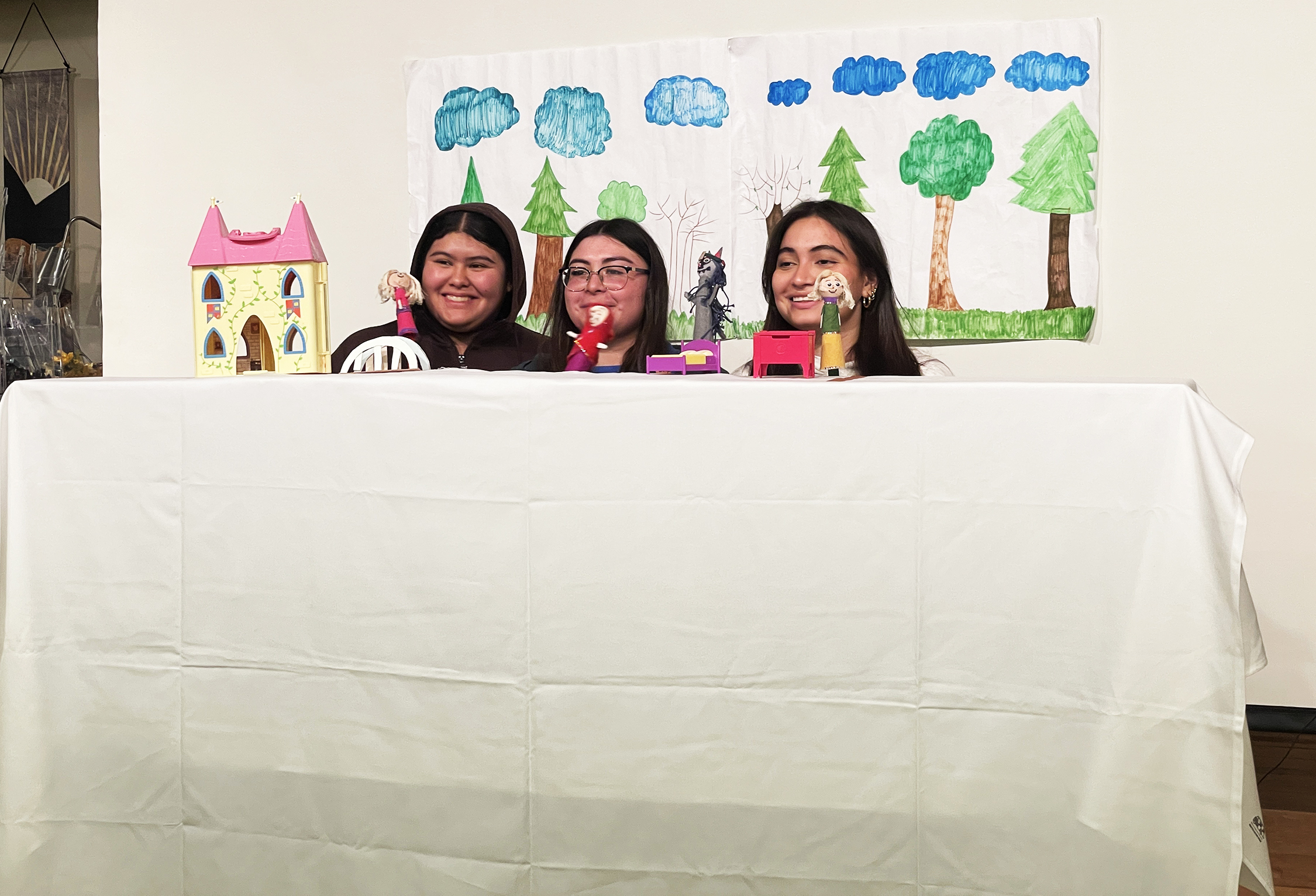
The partnership quickly proved successful. Students in the Reading Materials course read aloud to children, designed activities and even created puppet shows, watching their ideas come to life before real families.
For Augustine, access is the heart of the library’s mission. That vision led to recording the read-alouds and puppet shows so families can watch them online.
“It means the impact of our work doesn’t stop when someone walks out the door,” she said.
For junior early childhood education major Sandy Guzman, the experience reshaped how she thinks about lesson planning.
“It really isn’t just about ‘the students will enjoy this,'” Guzman told Trinity Times. “It’s actually ‘how will the lessons in a story impact the future of the children who are going to end up learning the material?'”
Though she felt nervous when presenting stories at first, the responsibility she felt toward the children helped her overcome it. Like her classmates, Guzman sees her time in the Family Library as a meaningful step in her growth as a future teacher.
“[Students are] seeing the impact they can have, even in small moments,” Augustine said. “My hope is that they leave here not only more prepared, but more inspired by the importance of the gift they can offer families.”