
By Sayuri Cervantes Perez
Trinity Times Correspondent
Growing up in a small, predominantly white community, Trinity Washington University student Lorena Mendoza didn’t see much Hispanic representation.
The only place she could really connect with her cultural identity was at home – through the meals her mother cooked or the Spanish spoken with her family.
But at Trinity, where the student body includes a large number of Latina students, Mendoza found something new: a space where she could celebrate her heritage and meet others who share it.
“I feel very safe being around other people who have the same shared culture as me,” Mendoza told Trinity Times. “Coming from a very white hometown, it can be a bit jarring sometimes to be the only Hispanic.”
For Mendoza and many others, Trinity has become more than a university – it’s a community that embraces cultural identity and belonging. Students come from across the United States and around the world, and many find, for the first time, a place where their cultures are understood and celebrated.
Mendoza, along with her classmates Abi Huh and Lesly Hernandez, described Trinity as a breath of fresh air.
Hernandez, a second-year global affairs major from Georgia, said she felt anxious about entering a new environment while trying to stay true to her cultural roots.
“That’s something I was nervous about, especially in Washington, D.C.,” she said. “But I felt very welcomed and definitely not out of place here. I felt really comfortable expressing where I’m from.”
Mendoza, a senior double majoring in biology and chemistry from North Carolina, agreed. “Trinity creates such a safe space, and our identities are so celebrated that I have found myself oftentimes forgetting I am the minority,” she said. “Until, that is, I go back home.”
She added that being at a university that celebrates diversity feels especially important at a time when she views the federal government is doing the opposite.
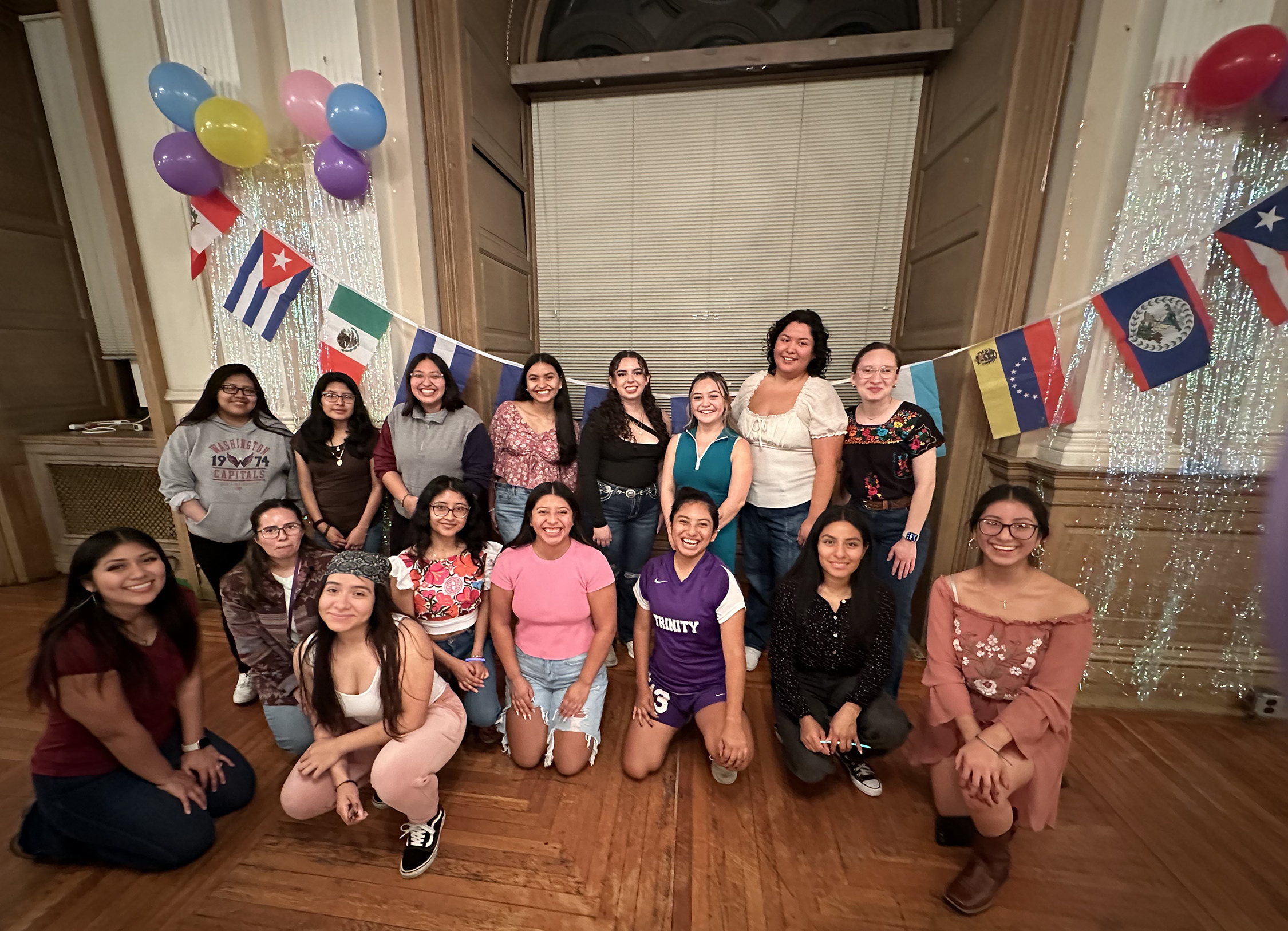
Several students said President Donald Trump’s second term has been marked by policies and rhetoric that have dehumanized minorities, fostering fear and division. In Chicago, for instance, where Trump authorized the deployment of hundreds of National Guard members, multiple events for Hispanic Heritage Month were abruptly canceled.
Though the United States has long been called a melting pot, some students say that, in the current political climate, many communities are being pushed to celebrate their cultures quietly – if at all.
At Trinity, however, cultural expression is encouraged. The student body has created several clubs that reflect the university’s diversity.
Huh, a history and global affairs student from South Carolina, serves as vice president of the Butterfly Network, a student-led organization for undocumented and Deferred Action for Childhood Arrivals (DACA) students. The club provides a welcoming space for students to share experiences and celebrate their cultures.
“Through the music we play, or the resources we share, we try to bring everyone together,” Huh said. “It gives us space for each identity to celebrate.”
Other student organizations include the Black Student Alliance and Ladies FIRST, a club that supports STEM students of color through mentorship and networking. Mendoza, who serves as president of Ladies FIRST, said her goal is to “organize events that are not just community building, but career building.”
Research supports the impact of such spaces. A 2023 Inside Higher Ed study found that affinity groups and cultural spaces where students can connect with peers “contribute to a positive campus climate for racially minorityized students.” The same study noted that “cultural identity is considered the most important and universal level of social identity.”
Similarly, writer Pranjal Malewar noted in Tech Explorist that “people with strong cultural identity are better at forming emotional connections with peers from similar backgrounds, making it easier for them to seek and receive emotional and practical support.”
Hernandez said being part of a community with undocumented students has helped her grow.
“It has made me more powerful,” she said. “I think I’ve become a bit more outgoing.”
She described Trinity as a “judgment-free” campus.
“I feel like I have been more encouraged here, where many of my peers are also undocumented,” she said. “I feel seen. I’m more comfortable sharing who I am.”
Rosa Reyes, Trinity’s advisor to “Dream students” – those who are undocumented or DACA recipients – also advises the Butterfly Network. An alumna herself, Reyes knows the importance of representation on campus, having once navigated college life as an undocumented student.
“I intentionally do these events because it’s nice to be reminded how you grew up,” Reyes said.
Each semester, Reyes hosts events that celebrate diverse cultures through food and music. One of the most popular is the annual Welcome Back Dinner, held this year on Sept. 3. She brought in food from Pollo Campero, a Guatemalan-founded international fast-food chain known for its fried chicken and Latin flavors. Last year, students enjoyed a Dominican meal.
While Trinity makes a point of honoring its students’ identities, Inside Higher Ed reports that many colleges nationwide still have work to do. The publication notes that creating multicultural centers “can serve as a critical step toward building campus-wide support systems and engagement opportunities.”
Reyes agrees.
“One of the things they could do is just make a cultural center,” she said. “Literally having an actual physical space would be welcoming.”
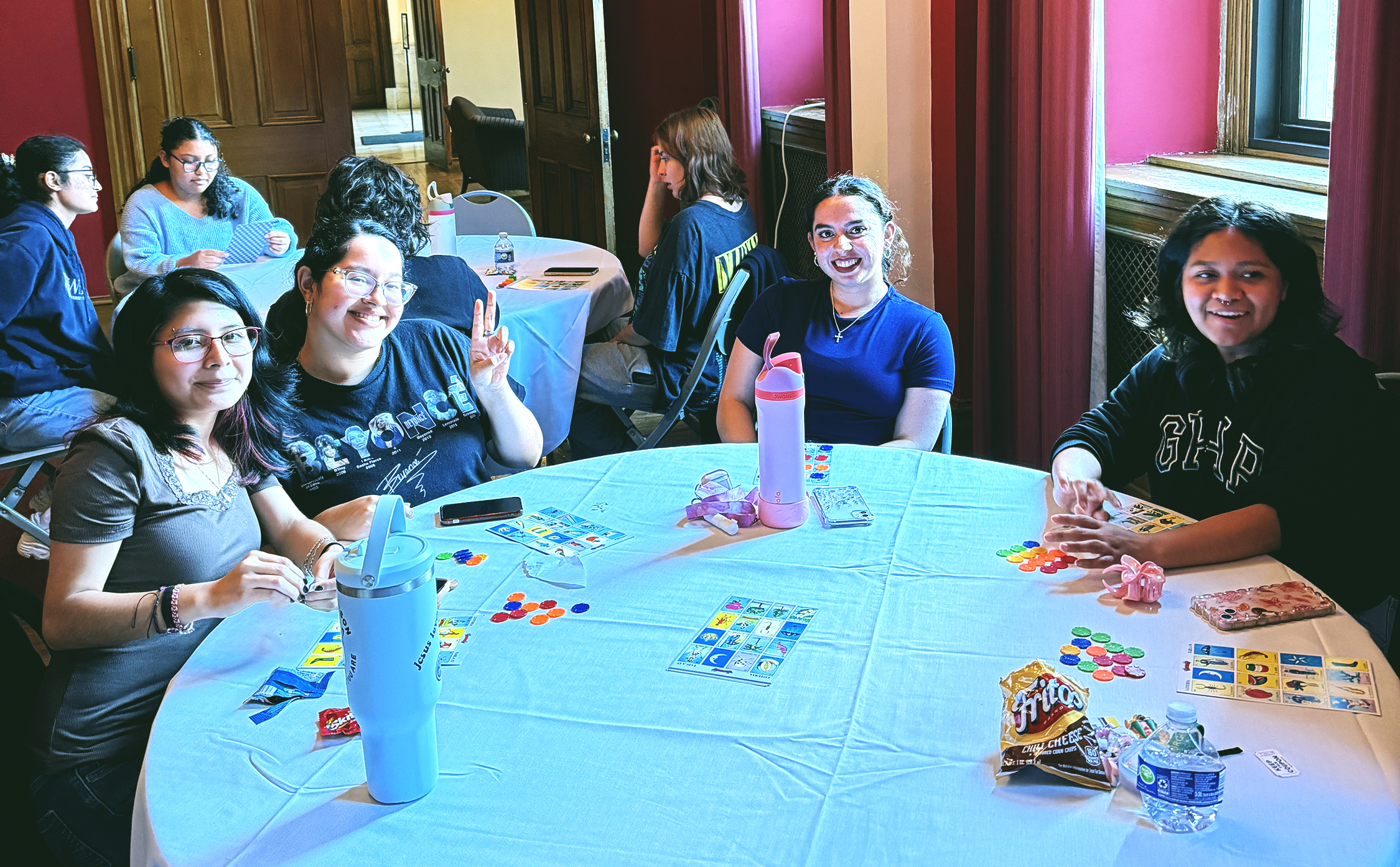
Even as students across the country face increased hostility toward immigrants and people of color, many at Trinity say the university feels like a safe haven.
Trinity President Patricia McGuire has been outspoken in her support for the university’s diverse student body, Reyes said. “One thing that she doesn’t do is shy away from speaking up for what she believes in or the values she believes Trinity is founded on.”
Huh added, “I think within our own community, we can keep celebrating as we were before.”
For students like Mendoza, coming from predominantly white or conservative towns, Trinity offers a chance to rediscover themselves. “I feel able to safely and loudly express my identity,” she said.
When students are given the space to honor who they are, confidence and connection replace fear and anxiety, Reyes said.
“We are accepted and allowed and embraced here,” Huh said. “People want us to be part of the community.”