
By Evelyn Alobwede
Trinity Times Correspondent
When Reyna Medina Gomez began her freshman year at Trinity Washington University this fall, she quickly missed the aroma and flavor of her grandmother’s Mexican cooking.
Gomez, who grew up in Georgia, didn’t expect her first semester away from home to include the kinds of meals she was used to at her family’s dinner table. But she also didn’t expect Trinity’s dining hall to spark such a longing for those familiar foods.
Grumbling about dining hall meals is practically a rite of passage on U.S. campuses.
It’s a concern Trinity officials say they understand and are working to address – not only to meet students’ nutritional needs but also to provide a variety of flavors.
The university is preparing Alumnae Hall, which houses the main dining hall, for a two-year renovation. Beginning in January, dining services will move temporarily to neighboring Cuvilly Hall and rebranded “Cuvilly Cafe.”
Trinity President Patricia McGuire told students and staff that during the renovation, officials will “reimagine” the dining experience, with the possibility of expanded menu options and longer food service hours.
Some U.S. colleges now offer multiple dining formats – buffet halls, grab-and-go counters, food courts, vending machines and coffee shops. McGuire said Trinity will explore what options fit best for its campus.

That’s welcome news for Kyliah White, 20, who transferred to Trinity from the University of Baltimore in fall 2023. In her time at the university, she said she found the food nutritionally sound but would like to see fresher ingredients on the menu.
Right now, she said, the salad bar offers the closest thing to fresh food.
Sound nutrition remains the top priority, said Gilles Syglowski, general manager of Trinity’s dining services, which are run by Metz Culinary Management.
The university currently serves breakfast from 8 to 9 a.m., lunch from 11:30 a.m. to 2 p.m. and dinner from 5 to 7 p.m. (until 6:30 p.m. on Fridays).
Meeting students’ nutritional needs, dietary restrictions and desire for enjoyable meals is a constant challenge when serving hundreds each day, Syglowski said.
For students like Gomez, who lives on campus, the dining hall is her primary source of meals. But for commuter students such as Anastasia Tomlinson, president of the Black Student Alliance, campus food is about convenience.
As a pescatarian – a vegetarian who also eats fish and seafood – Tomlinson said she finds Trinity’s protein offerings to be limited for her.
A 2023 Inside Higher Ed survey on student health and wellness found room for improvement nationwide in campus dining. Only half of respondents said they had access to dining halls when they needed or wanted food, and just one in four rated the quality of food highly.
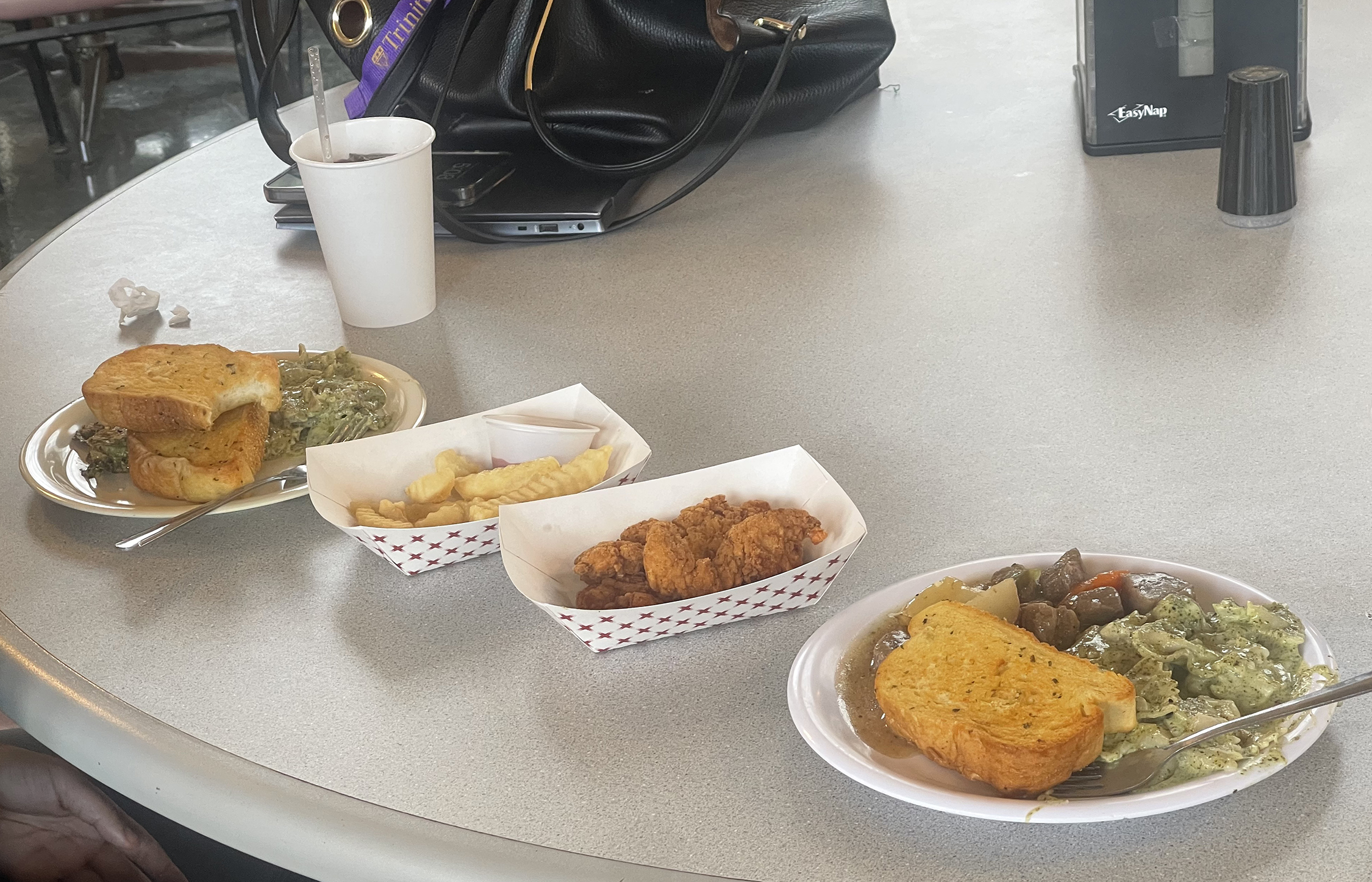
Trinity has made an effort to include vegetarian and vegan options at every meal.
Dining hall staff also understand that food is about more than just nutrition, said Nita Brooks, a longtime member of the kitchen team.
“Food is a universal language,” Brooks said.
Technology has also expanded options, Syglowski said. His staff uses a tool called Nutritics, which allows them to select from more than 4,000 recipes.
Syglowski said campus life comes with many challenges, and he hopes dining will not be one of them as Trinity’s food services evolve.