By Saron Gebereegziabhier
Trinity Times Correspondent
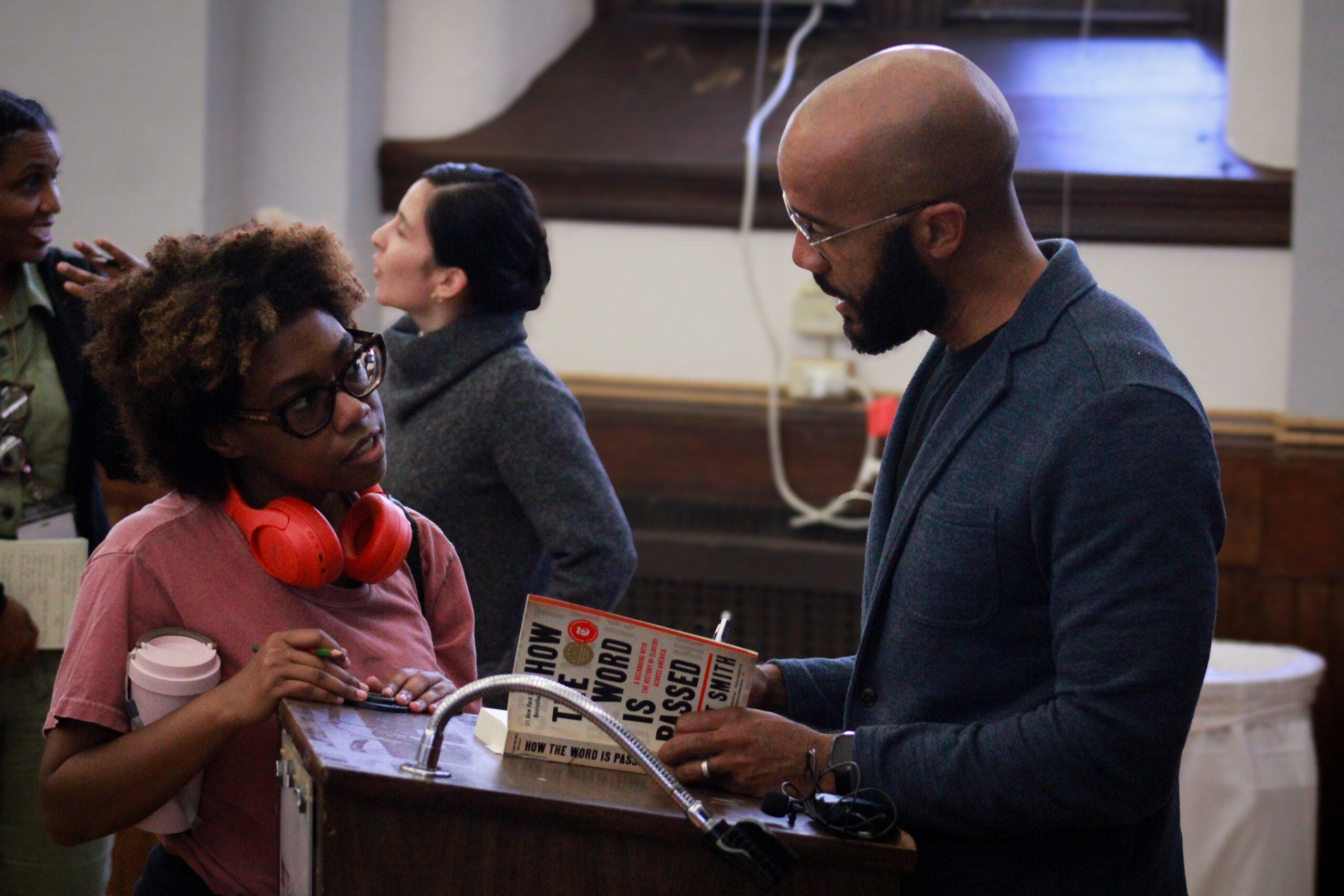
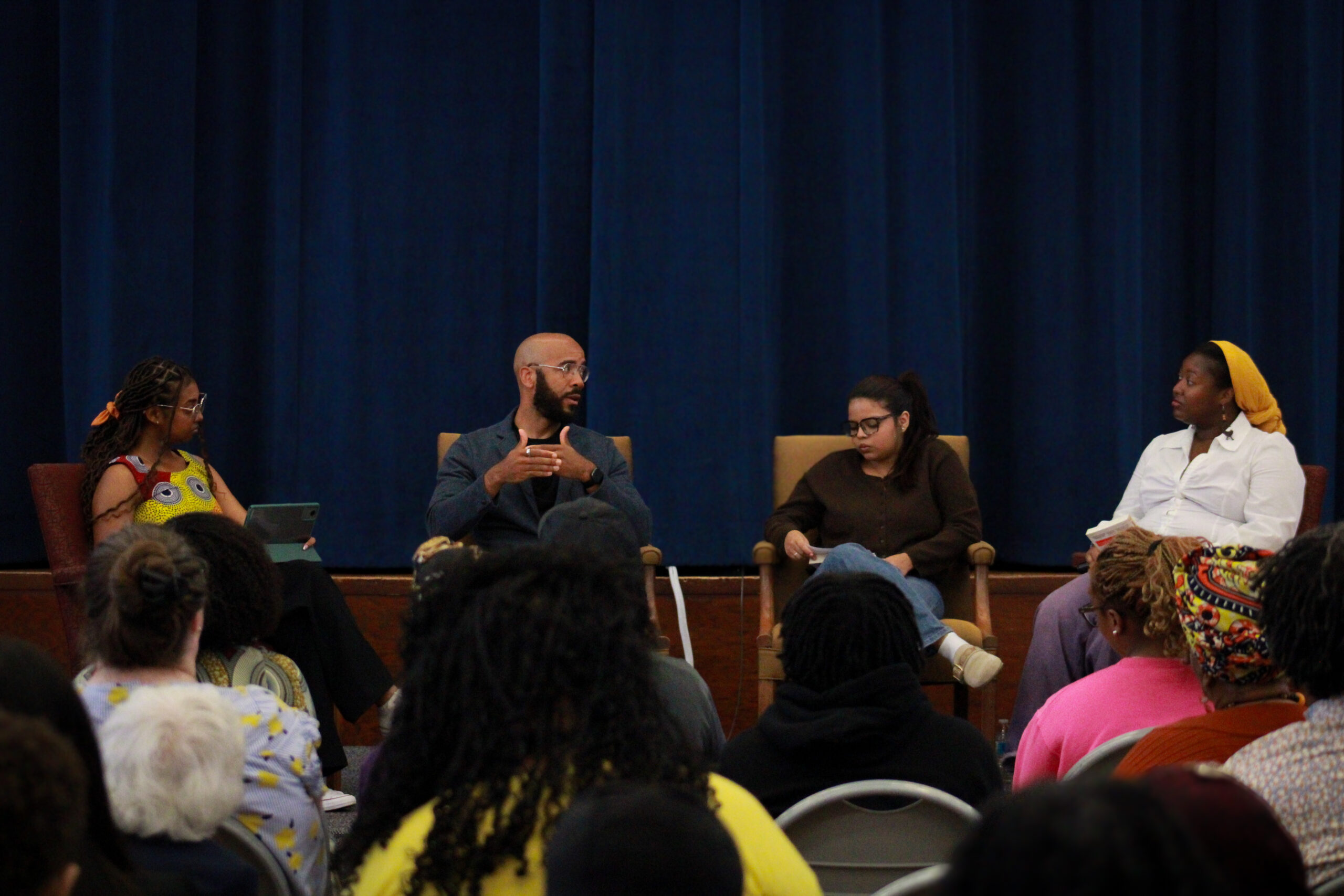
The room fell silent as poet and author Clint Smith stepped to the podium for this year’s Trinity Reads event.
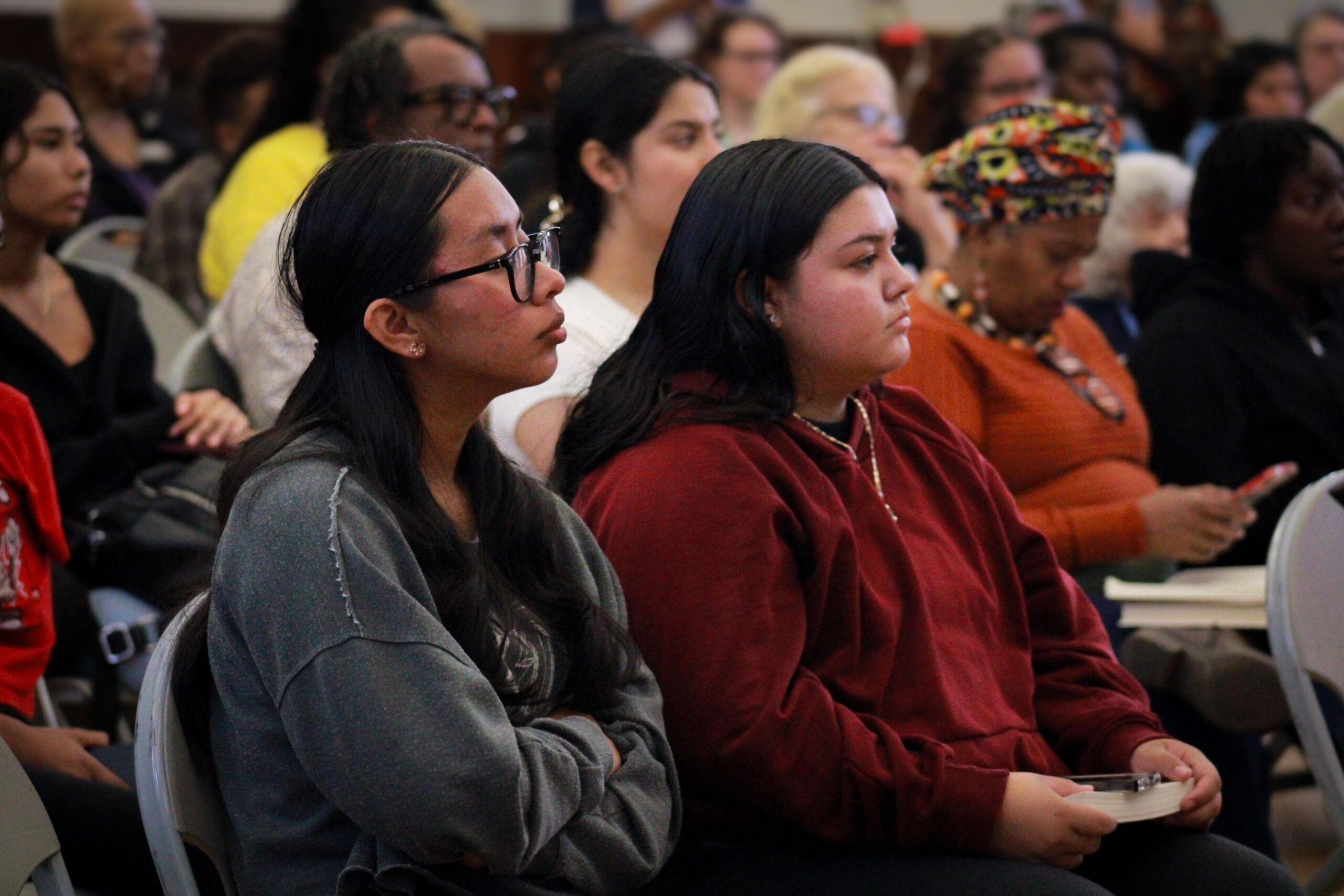
Trinity Washington University students leaned forward in their seats, copies of How the Word Is Passed balanced on their laps, ready to hear from the author whose book examines how the legacy of slavery is remembered and misremembered across the country. Smith, whose book won the 2021 National Book Critics Circle Award for Nonfiction, grounded his discussion in the stark recency of American slavery.
“I hope that people realize how recent slavery was,” Smith told Trinity Times in an interview shortly before the Sept. 23 event, held in the university’s O’Connor Auditorium. “Slavery existed in this country for almost 250 years and has only not existed for about 160 … of course that institution … would continue to shape the social, political, and economic infrastructure of this country.”
Smith’s book focuses on the tension between public memory, historical narratives and the lived impact of slavery – including how some U.S. historical sites obscure and sanitize history, while others confront it directly. His visit was part of the Trinity Reads program, designed to bring nationally recognized voices to campus and foster dialogue around social justice-oriented literature.
The Trinity Reads event came as debate over how slavery and its legacy should be taught in schools remains intense heading into fall 2025. In Florida, the state’s revised social studies standards – which require instruction on how enslaved people “developed skills which, in some instances, could be applied for their personal benefit” – continue to draw national criticism. Opponents argue the language downplays the violence and systemic oppression of slavery, while supporters say it highlights African Americans’ resilience. Florida officials have defended the guidelines, but the controversy has fueled broader calls to reassess educational standards nationwide.
At the same time, backlash against “anti-woke” education policies and book bans persists. Educators and civil rights groups warn that restrictions on teaching structural racism, segregation and the civil rights movement undermine civic education and distort history. Some states, however, are pressing for greater parental oversight and tighter controls on curriculum content. Public opinion polls show most Americans oppose book bans, but the issue continues to be a divisive flashpoint in state politics and school board elections.
The choice of How the Word Is Passed for Trinity Reads was guided by the Teagle Foundation Grant, which supports innovative humanities education.
“The Teagle Grant is really about helping students engage deeply with texts that matter, books that provoke thought, build social consciousness and connect to justice work,” said Rewa Burnham, associate professor of English at Trinity. “We wanted to choose a book that students could encounter across multiple classes and still find fresh insights each time.”
The Teagle Foundation created its Cornerstone: Learning for Living grants in response to nationwide declines in students choosing humanities majors. The grants aim to expose students to the power of the humanities, strengthen general education and expand teaching opportunities for faculty who are committed to fostering a sense of belonging and community.
Burnham said her own selection process is shaped by what has influenced her as a reader and teacher. “The books that are most foundational to my own personal development are the books that I invite into the classroom,” she said. “If I can’t teach a book for years and learn something every time I teach it, I don’t want to teach it.”
Bailey Squire, a senior English and philosophy major, admitted she has not read the book yet but plans to engage with it through the Humanities for Justice Writing Contest.
“I am very excited about that because I love to see the works of such diverse experiences,” Squire said. “I am a big advocate for words, so I believe that in times where the world is scary, we have the power of our words and experiences and that will help us through. I hope to gain more community from this. I think right now, Trinity and the world really need that.”
This year, Trinity launched the Humanities for Justice Writing Contest, tying it directly to Smith’s book. The contest invites students to write creative nonfiction pieces that use personal experience as evidence.
“I think there’s something about creative nonfiction that helps students analyze their own experiences and reckon with issues that are bothering them,” Burnham said. “All I want is for everybody to be comfortable in their own body … and to understand the forces that made them who they are, because it’s only with that understanding that you can really direct your life.”
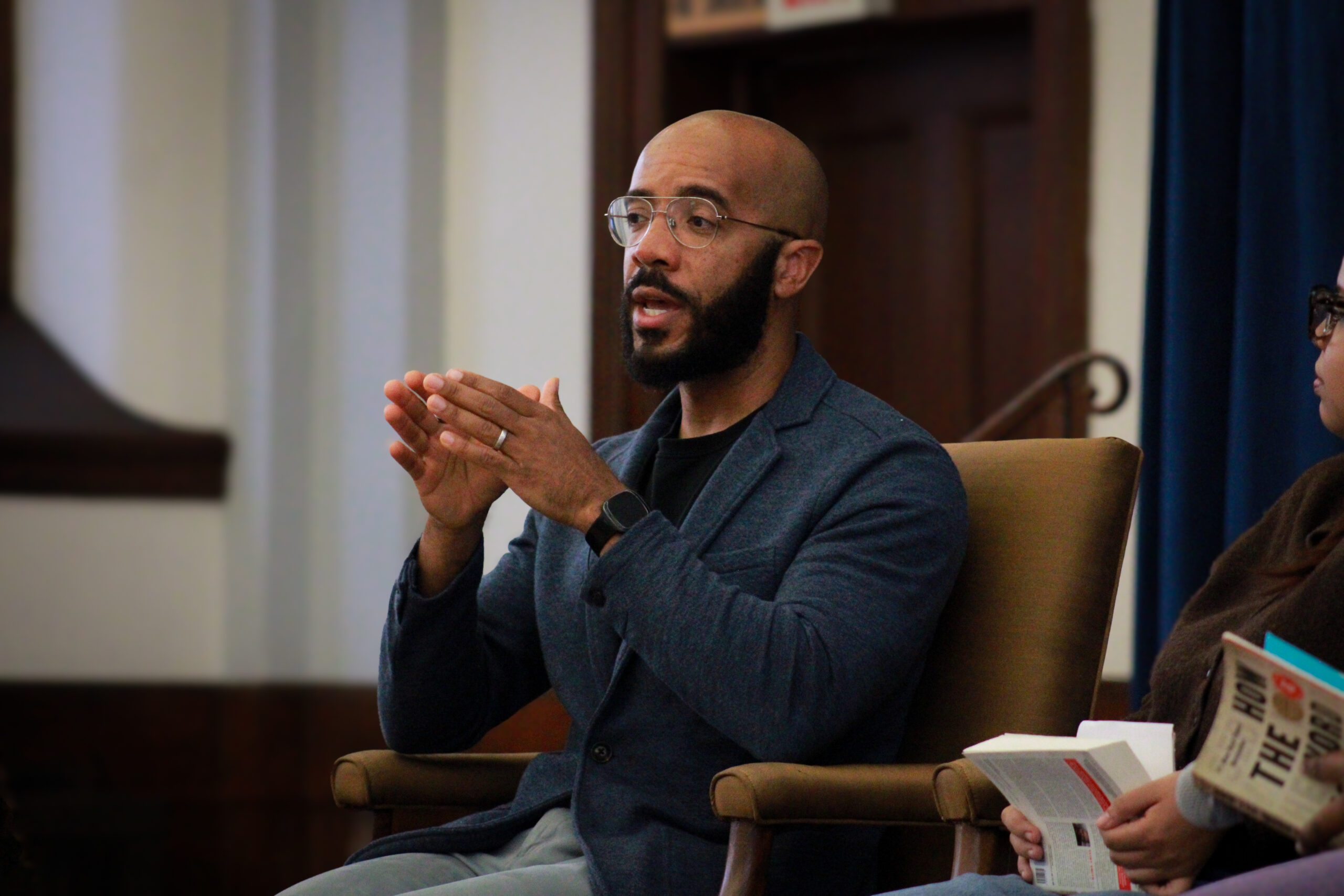
Smith echoed that sentiment during his talk, reminding students of the power of their own voices. “Writing is a particularly unique way to tell stories,” he said. “I hope we remember that writing has a unique power to tell stories in a particularly powerful way.”
As Squire prepares for graduation, she reflected on the role of justice-oriented texts in students’ lives beyond college.
“I think in general this text can help people interact with the world around them,” she said. “It will make them take a second glance at how they are interacting with history, and how we want to explore these complicated histories in a much truer fashion. If I had this text in my freshman year, I might’ve been quicker to know what I wanted to fight for, and how I wanted to leave my mark on history.”
By pairing a campuswide reading with an author visit and a writing contest, Trinity is doing more than assigning a book. It is cultivating a community of dialogue and activism.
“We are only here because of generations of people who fought for something they knew they might never see,” Smith told the Trinity audience. “We all have a responsibility to try to build the sort of world that we might not see ourselves, but to build it anyway.”
As Trinity students draft their essays, they see their work as transforming historical reflection into forward-looking activism – a testament to the power of one book and one campus committed to dialogue and justice.