By Genesis Bu-Chinchilla
Trinity Times Correspondent
When Salena Geahwie and Darlene Carmichael enrolled in Professor Joshua Wright’s oral history class, they didn’t expect to personally impact the legacy of Trinity Washington University.
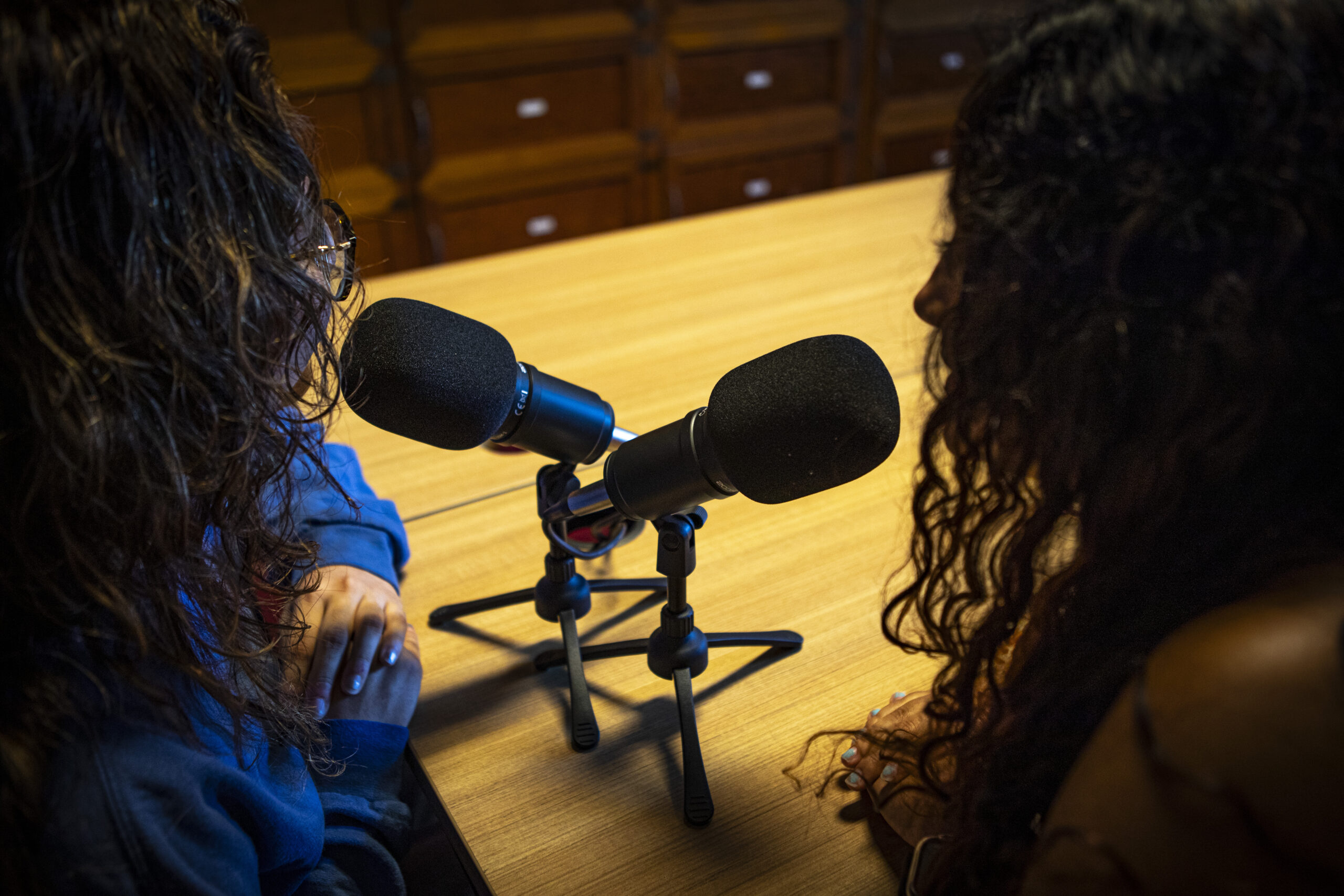
History 239 – HerStory: Trinity Oral History – taught by Wright, an associate professor of history in the university’s global affairs program, explores the importance of oral history, ethical scenarios, and ultimately turns students into oral historians as they conduct interviews with Trinity alumnae.
Now known as the Trinity Oral History Project, the initiative has grown into a collection of more than 50 interviews with Trinity alumnae, documenting their educational journeys and the continued impact of their time at the university, said Wright, who launched the project in 2020.
He was inspired during the COVID-19 pandemic, reflecting on a similar effort from 2017 that created a digital archive for the Virginia Interscholastic Association.
“I was thinking of, you know, things I wanted to do here at Trinity,” Wright told Trinity Times. “I got the idea looking back at the VIA project that, you know, it’d be good if we had some type of oral history collection here at Trinity, right, where we started training students to go out and collect these interviews with the women who graduated from Trinity.”
What began as a student project evolved into a full course. As of spring 2025, students have recorded dozens of oral histories, telling the university’s story through the voices of the women who lived it. In doing so, the students are not just learning history — they’re practicing it.
Geahwie, a 2022 graduate, recalled her interview with Sylvia Washington Ba, a member of the Class of 1958 and the third Black woman to attend what was then Trinity College. Ba said she was unaware of the racism surrounding her at the time, only realizing later that others had been whispering about her out of earshot.
“And it was the opposite,” Geahwie said. “She didn’t talk much about the things that she had to overcome until that specific situation came up, and she talked a lot about things happening behind her back and never to her face. And I appreciated that, because that means that she was able to do what she needed to do and continue her studies in a comfortable environment.”
Carmichael, a current Trinity student who took the class in 2024, interviewed three alumnae and said that although they graduated at different times, each faced life-changing hardships.
“I empathize for them,” she said. “And all of them, I understood in my way, because I had different situations with those things as well in my life. So, it was a little refreshing hearing it from other people.”
History 239 captures the life stories of Trinity alumnae before, during, and after their time at the university. Each oral history reflects the impact Trinity had on their lives — and, in turn, the class leaves a lasting impression on its students.
Trinity’s transition from a college serving mostly elite white Catholic women to a small university now serving predominantly low-income women of color — and, in some programs, men — began in the late 20th century. The oral history project gives voice to that full and evolving story.
Geahwie’s experience as a student historian was made more unique by the fact that the class was led by a male professor at a historically women’s college with predominantly female classrooms.
In one of her first assignments, Wright asked students to explore Trinity students’ lives from the perspectives of their family and friends. That exercise, Geahwie said, helped build trust.
“Especially with it being an ‘all-girls’ school and then having a male teacher — like I thought that was super important,” she said. “Because we did feel comfortable in that class, at least I did after having that little icebreaker. And then every time after that, or every experience after that, was wonderful and it was impactful.”
For Wright, HerStory is not just about studying history — it’s about experiencing it.
“It’s not your typical history class where you have to, you know, learn about all of these famous old white men who, you know, fought and died in battle, or were presidents,” he said. “This is more of just learning about the human experience from listening to people’s stories.”
As for preserving Trinity’s legacy, Wright, Geahwie and Carmichael each have their own hopes for the project’s impact.
“Trinity is a good school,” Carmichael said. “It’s not perfect, but it’s a good school. But just by word of mouth, that’s how they’re going to gain their future students.”
“We need to go on and collect our histories, and we need to protect our own stories and preserve that,” Wright said. “This is Trinity’s way of, you know, collecting and preserving our history for the present as well as for future generations. So, people see how great and amazing, like Darlene said, Trinity is.”