
By Trinity Times Staff
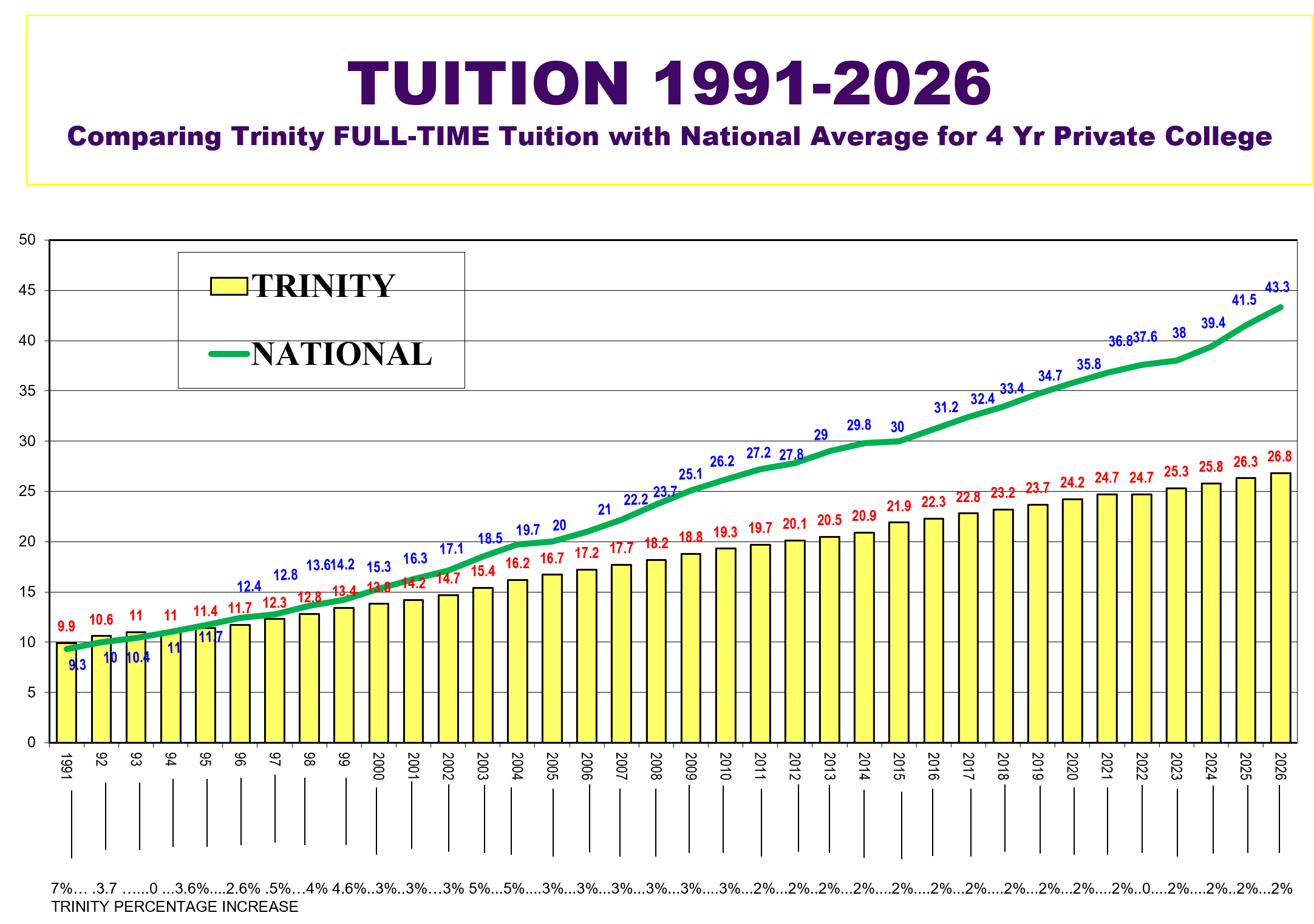
As the cost of higher education continues to rise across the United States, Trinity Washington University remains one of the least expensive private colleges in the country. For the 2025–2026 academic year, Trinity students paid a modest 2% increase over last year’s tuition, according to university officials.
“Everything we do is to keep tuition down,” said Thomas Mostowy, dean of Trinity’s School of Professional & Graduate Studies. He credited Trinity’s long-standing network of private donors for helping fund the university’s programs. “We have a lot of benefactors that put money into our journalism program, our nursing programs — and all of that gets put back into the students.”
Located in one of the nation’s largest urban centers, Trinity emphasizes accessibility and affordability for a diverse student body. That mission sometimes requires sacrifice, both from administrators and students.
To keep tuition costs stable, Trinity has postponed several capital projects — Including new buildings and facility upgrades — and instead prioritized fundraising for scholarships. Faculty and staff have also contributed to the effort, with some, like Mostowy, donating a portion of their own salaries to support students.
“I have $25 taken out of every paycheck to go into the general fund just because I believe in the mission,” Mostowy said.
Trinity also leverages partnerships with local organizations to subsidize student tuition. One example: The D.C. Metropolitan Police Department previously helped fund Trinity courses for officers pursuing their bachelor’s degrees.
“I think it’s so holistic,” said Rhonda Moses, Trinity’s associate vice president for admissions. “It’s like a close-knit family where students have access to faculty, they have access to resources and services and internships.”
Alongside competitive tuition rates, Trinity offers generous financial aid packages and scholarship opportunities aimed at reducing student debt. According to Moses, these financial supports contribute significantly to retention.
But the university’s affordability sometimes comes with trade-offs, especially when it comes to student life and facilities.
“You take that money and do what you will, and we’re stuck,” said a Trinity student who lives on campus, who requested anonymity because she fears retribution, asserting she is known on campus for raising concerns about campus conditions.
The student described ongoing issues in the residence halls, including unclean communal showers and sinks, poor water pressure, a lack of hot water on some days with no advance notice, and costly laundry services.
“Are there any sacrifices I have to make in order to attend Trinity?” the student asked. “I would say I sacrifice comfort at times, especially with dorm living.”

Despite the challenges, many students remain committed to Trinity’s mission. Kimberly Boddie, who is both a student and an employee, serves as an executive assistant in the occupational therapy program and expects to graduate soon. Trinity employees receive tuition reimbursement as a benefit.
“Getting that tuition reimbursement for me has been rewarding because I’m an older student,” Boddie said. She previously attended the University of Maryland Eastern Shore but was unable to complete her degree. “Just having that camaraderie with everybody is great, and it just keeps me in tune.”
Trinity Washington University’s continued commitment to affordability demonstrates how collective sacrifice — by administration, faculty, and students — can help make higher education more accessible for those who need it most.
—
Contributing to this story are student journalists Leeyah Ashe, Corey Best, Nneka Browner, Donyah Bunn, SeQiah Cephas, Nydja Chiazor, Wendy Collindres, JaDonna Harris, Arriyon Jasper, Tanzania Kennedy, Anette Perez, Lisa Queen, and Tayshawn Williams.