By Miriam Barcenas
Trinity Times Correspondent
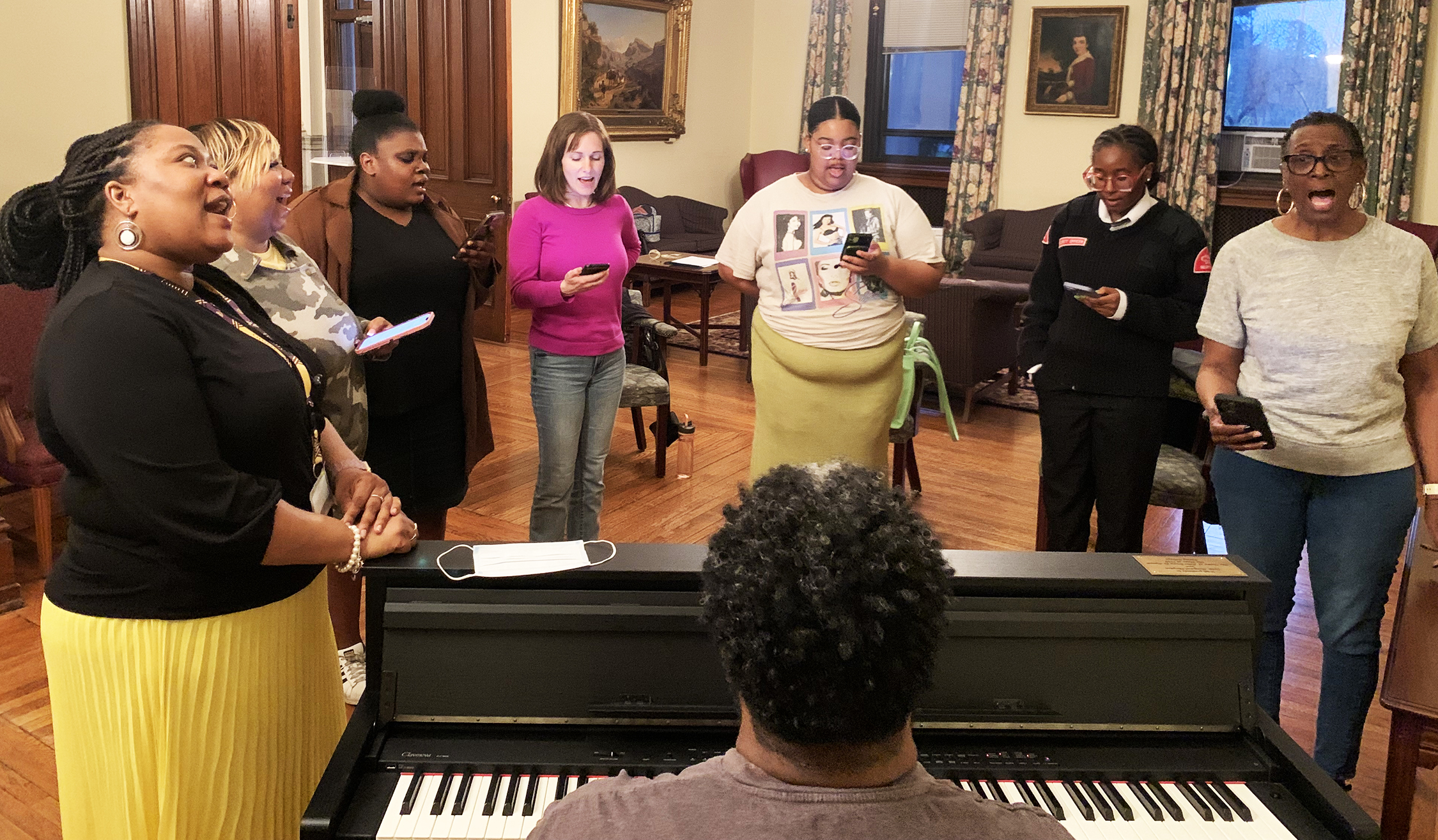
As Notre Dame Sister Ann Howard organized Trinity Washington University’s 2023 spring semester gospel choir, the director of campus ministry was alarmed at the low number of students who showed up to sing during the Monday evening rehearsals.
Trinity’s gospel choir has been a popular university tradition since it was established 11 years ago, and while the number of students who participated usually fluctuated during each season, this semester was among the first to only bring in a few students on a regular basis.
“Last year, we had a beautiful gospel choir concert at the end of the semester,” Sister Ann told Trinity Times. “We had about 20 members and this year we have only a few.”
It takes time to learn the music and sing together as a group and this semester’s low rehearsal participation stood out on several levels, she said.
“That’s not to say the ladies in the choir now aren’t doing a great job, because they are,”
Sister Ann said. “It is not the same when you don’t have a full choir that can harmonize and sing.”
The gospel choir is just one Trinity campus activity among many across the board with low participation numbers and it’s a trend that concerns university administrators, faculty and student leaders.
Though the primary mission for students attending any U.S. college is to be successful in their academic coursework to earn a degree, it’s the extra-curricular campus activities that offer enrichment in culture, politics, activism, leadership and community building that provides the well-rounded university experience.
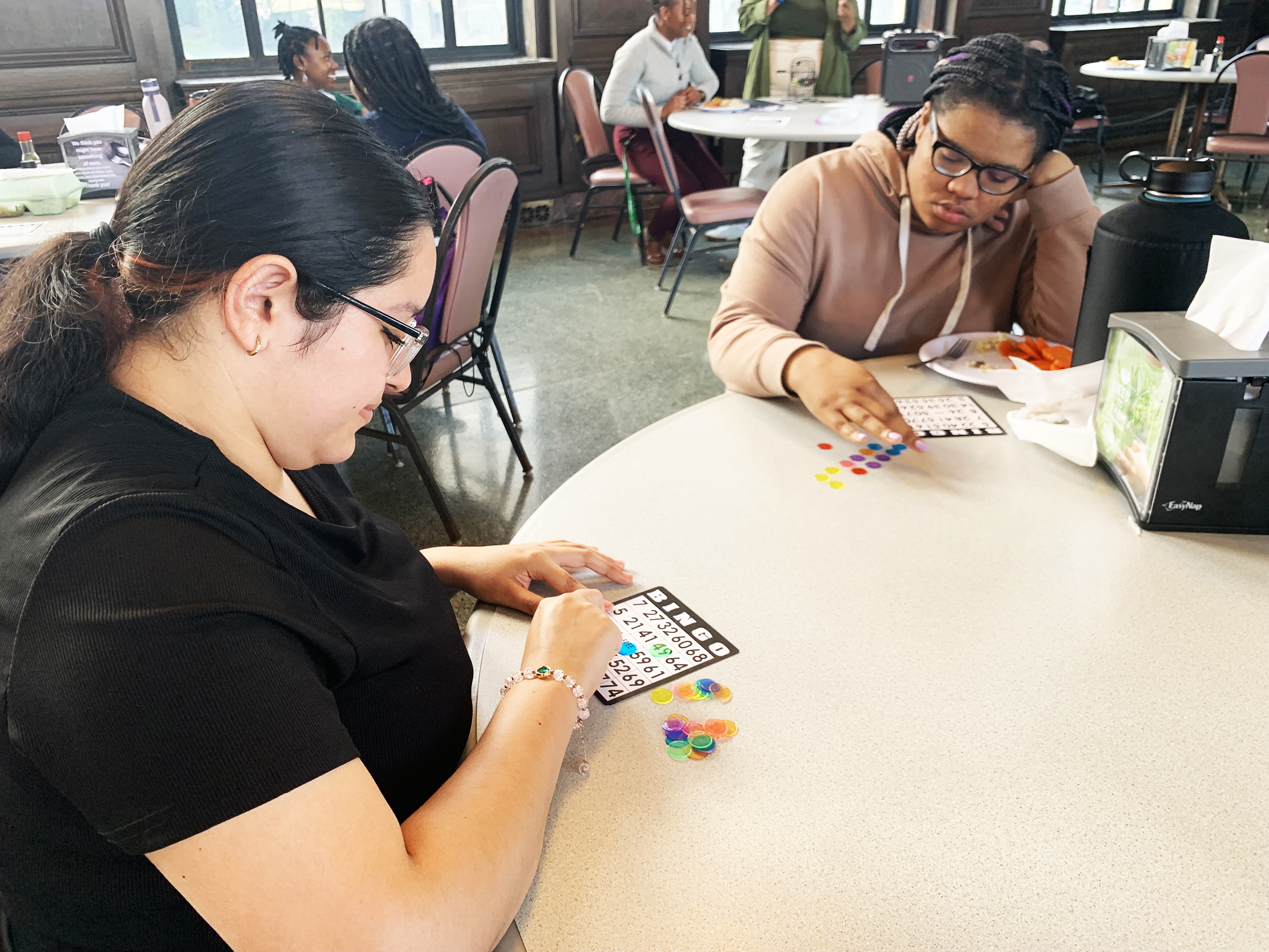
Earlier in the spring semester, Trinity’s academic support services department organized a workshop on managing test anxiety in preparation for midterms. No one showed.
“Since the pandemic, students have not been signing up or showing up for the group activities, said Kimberly LaBoone, director of academic support services. “Students will come in individually, and that’s how they access the information. The participation for workshops has been very low since we returned to in-person classes.”
Most classes at Trinity went online after COVID-19 was declared a pandemic in March 2020. Though many are once again in-person classes on campus, others remain virtual, including all of the graduate school courses, bringing fewer students onto campus.
“Often what we glean from students, is that they have experienced a level of mental exhaustion from having to navigate learning remotely and/or returning to in-person learning, are balancing work obligations and family responsibilities, and that has left little time for students to be fully engaged on campus,” said Karen Gerlach, Trinity’s vice president of student affairs.
“We have spent a lot of the last two years adjusting to the ‘new normal,’ supporting students emotionally and financially, and with resources like emergency funds, housing, Chromebooks, and the next step is to focus on increasing connections within the campus community,” Gerlach said. “There is no single answer on how to increase student engagement on campus, but I can assure you that student affairs, campus housing, athletics, campus ministry and the Center for Student Success staff and others share a joint commitment to students and their opportunities to engage.”
Student government at Trinity is a governance opportunity for students to develop leadership skills and help organize events for students.
However, no candidates have emerged to run for the Student Government Council (SGC) president position for 2023-2024 and other positions in SGC are also still vacant.
“We also need students to be willing to step up into the open student leadership roles,” Gerlach said, “to collaborate with us to create a more vibrant campus life.”
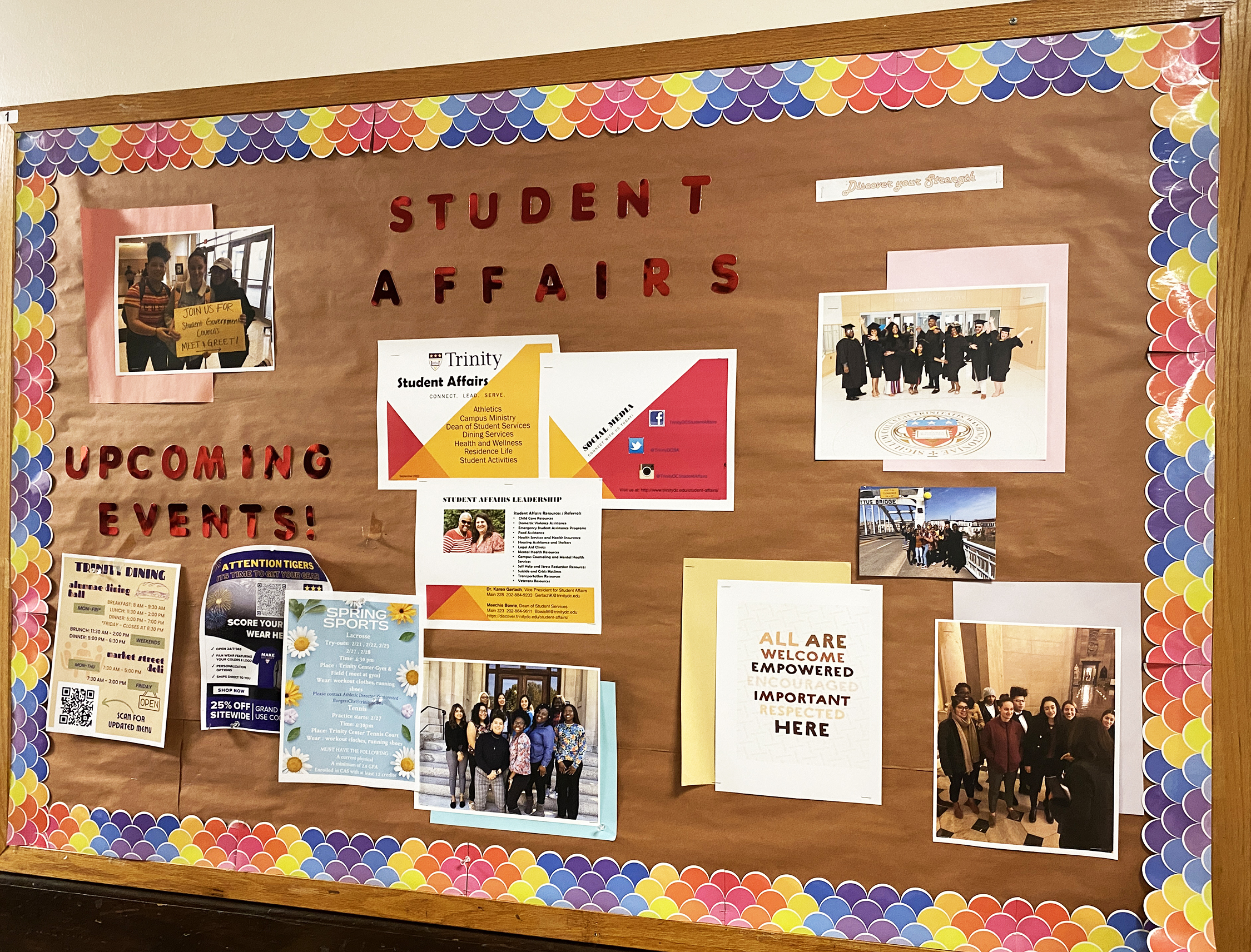
Campus activities at Trinity are typically publicized in a university-wide distributed email sent out each Monday by Gerlach, along with flyers posted around campus, and messages published on social media.
Students are encouraged to participate in a variety of clubs, including the Sustainable Initiatives Club, Psychology Club, Black Student Alliance, and the Butterfly Network.
Students and faculty members had an opportunity to express their ideas of how to improve campus life at the Trinity Educators Advancing College Health pre-final stress event held three days during the first week in May.

Trinity student and activist Courtney Butler and Nicole Betschman, assistant professor of Health Services in Trinity’s School of Nursing and Health Professions, used the school’s Truth Initiative grant money to form Teach Initiative events that promote peer-to-peer education and organize monthly events.
“Trinity focuses mainly on education and what we do as part of the Teach Initiative is public health education,” Courtney Butler said. “Yet, as an all-girl Catholic school there are a lot of things we can’t do. For example, we should be able to give out condoms. They don’t give out condoms here at Trinity Washington University.
“That’s a little silly because it is under the assumption that nobody here is engaging in sex, which is a big deal,” she said. “I feel like if we want to prepare and protect our women, we should be teaching them how to engage safely.”
A lack of sexual health information can lead students to make bad decisions that impact their health and futures, according to the National STD of Coalition Directors.
“Peer education is what I did when I was in college and it got me involved with different peers I would have never interacted with,” Betschman said. “My wish is to have a peer education program come out of the Trinity Educators Advancing College Health. As a professor, I am not permitted to create a student organization because I am not a student.”
Trinity students don’t know about peer education because they are not exposed to it, she said.
“If students don’t know, then they can’t participate in events like the pre-final stress event.” Activities like the pre-final stress event give students the chance to engage in painting, making stress balls with essential oils, or just chill on little inflatables, Betchman said. “Something as simple as a tent with lights and some chairs. That right there is building community.”
“I feel like they should let us know about the events in advance,” said Tiffany Melendez, a commuter Trinity junior in the business administration program, who doesn’t normally participate in school activities.
The weekly emails that publicize campus activities only list events that are going on that particular week and students who don’t live on campus have said that often doesn’t provide them with enough time to arrange their schedules to attend.
Most of the publicized activities seem to Melendez to be geared toward students who live on campus, but when she saw that the pre-stress event involved more time, she arranged her schedule to attend.
“This one I saw lasted all morning and it looked very inclusive and people were promoting it,” Melendez said. “I feel like that caught my attention. Just string, paint and students just relaxing is enough.”
Personalized word of mouth and invitations also go a long way in encouraging students to participate in campus activities, said Melody Valdez-Ovalle, another commuter Trinity junior studying business administration, who also rarely attends campus events.
“For example, Courtney (Butler), when she saw my friends and me, she immediately invited us to the event,” Valdez-Ovalle said. “Her friendly and welcoming personality drew us in. Her joyful attitude made us want to be here.”
Several students told Trinity Times that the administration could improve campus life by making sure all schools in the university are connected and making it clear events are for everyone.
Some students said they have a sense that most events are catered to College of Arts and Sciences (CAS) daytime students, which seemingly excludes students in the School of Nursing and Health Professions and the School of Professional Studies.
“When it comes to events on campus, not everyone is aware of what’s going on,” said Kimberly Ortiz, a Trinity graduate student in the public health program. “It usually takes students who are already involved to share the events with other students, particularly with those who are online students or just doing evening classes, because they don’t know what is going on because they are not on campus.”
As a student involved in Teach Initiative, Ortiz said she makes sure to invite her peers, professors and even the custodial staff to events to help foster a sense of community at Trinity.
“There is always that barrier of English speaking and Spanish speaking students, she said. “Being someone who is bilingual, if I notice that they linger around the events, I try to include them and most show so much appreciation for feeling included.”
Encouraging participation in university events can also improve the mental health of students, and a 2020 study by Queen’s University emphasized the need for community, showing 27% of people it surveyed said they were suffering from loneliness.
Research from Washington State University found that people of all ages suffer from social anxiety and FOMO (Fear Of Missing Out), which is linked to low self-esteem and low self-compassion.
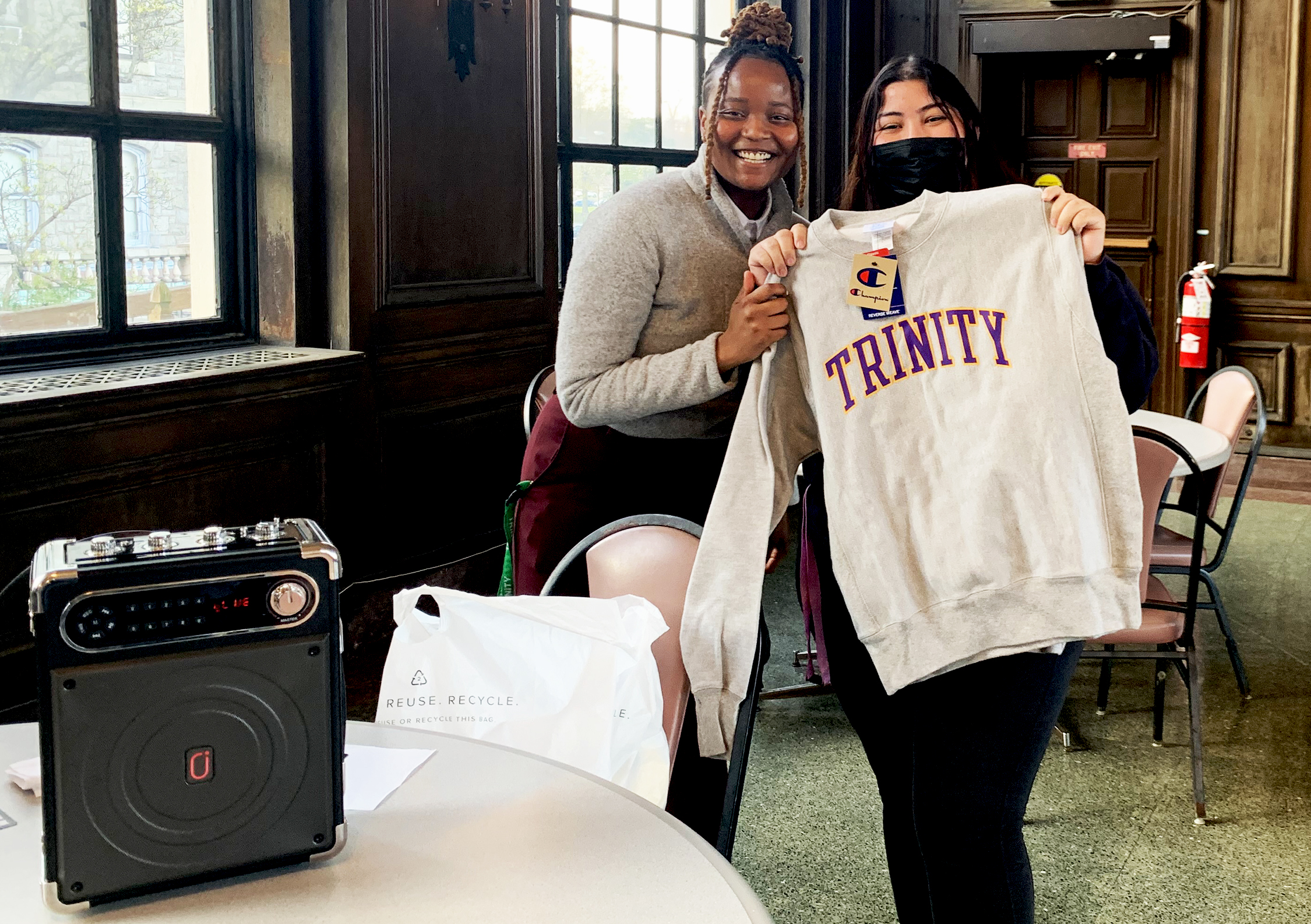
Ensuring everyone is included is key in building community, several students said, and a way to do it is by promoting an open-door policy between students and professors to build trust and insight into the community’s interests and needs.
Even with its smaller numbers this spring, Trinity’s gospel choir still concluded the semester by holding a concert in O’Connor Auditorium May 1.
Carmen Ealy, a 2011 Trinity graduate, sang tenor during the concert and she was joined in the choir by other alumni, current students, and staff members.
“I love meeting new students who become choir members,” Ealy said at the conclusion of the concert, which was attended by a small audience, including Trinity President Patricia McGuire, whose eyes were intently locked into the sound of the harmonized voices.
“I love to hear the choir sing,” McGuire said. “It’s scary how it lifts us and especially at this time. Music is a connector to the human senses.”
—
Trinity Times correspondents Janet Platt and Sonovia Pryor contributed to this article.